
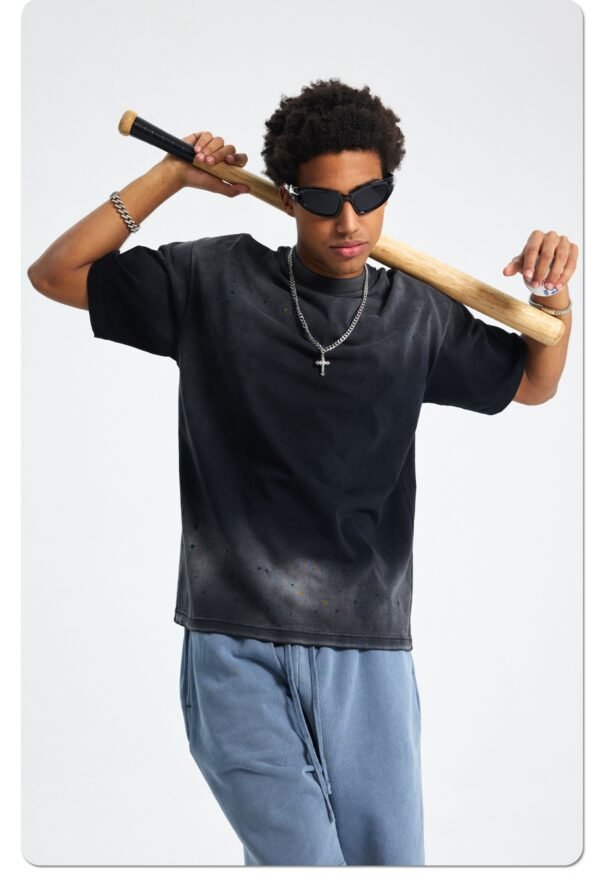
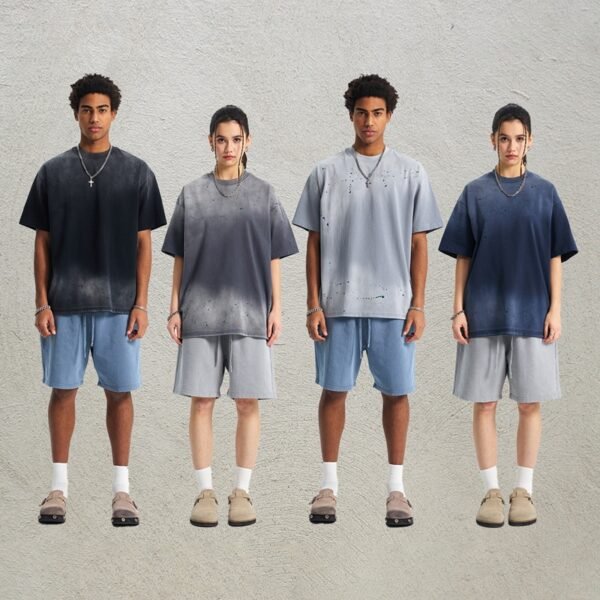
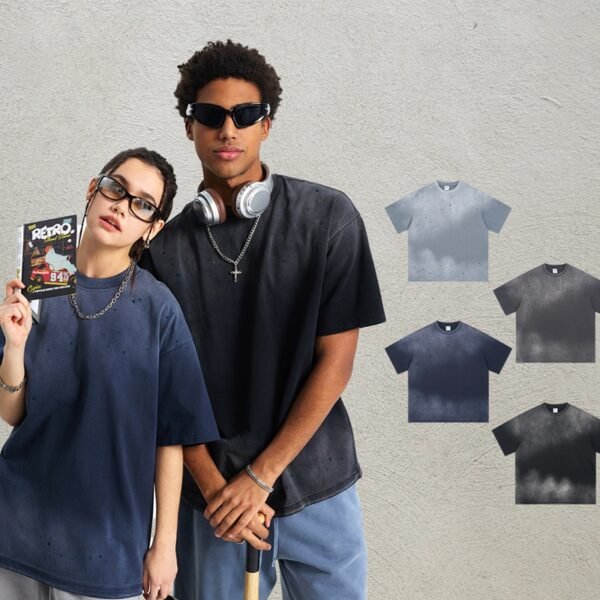
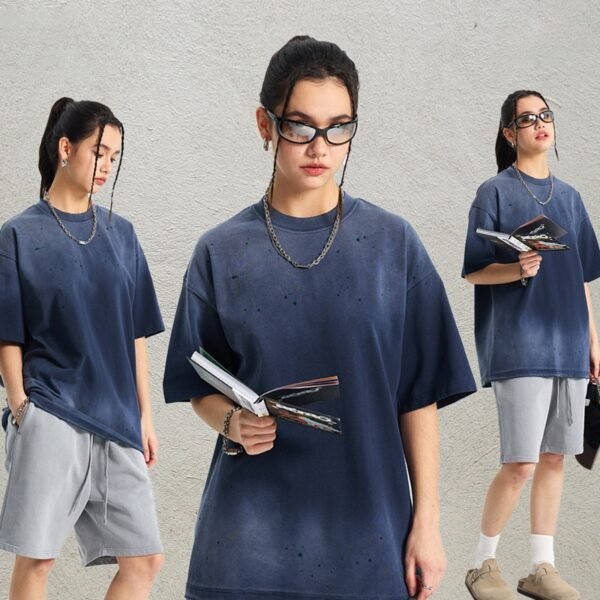
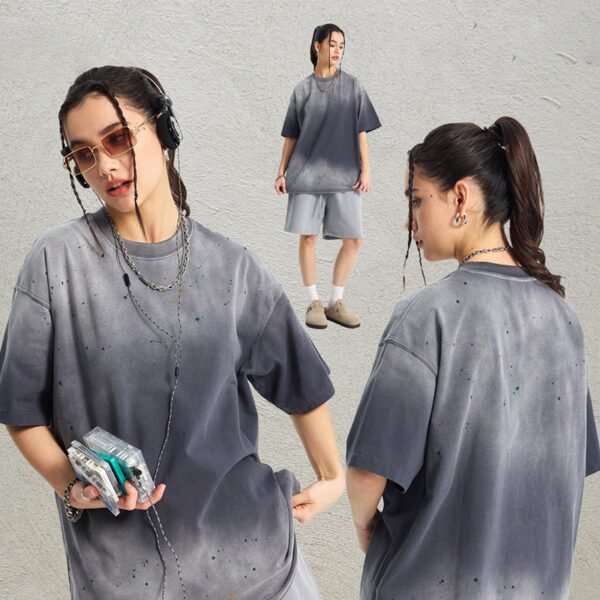
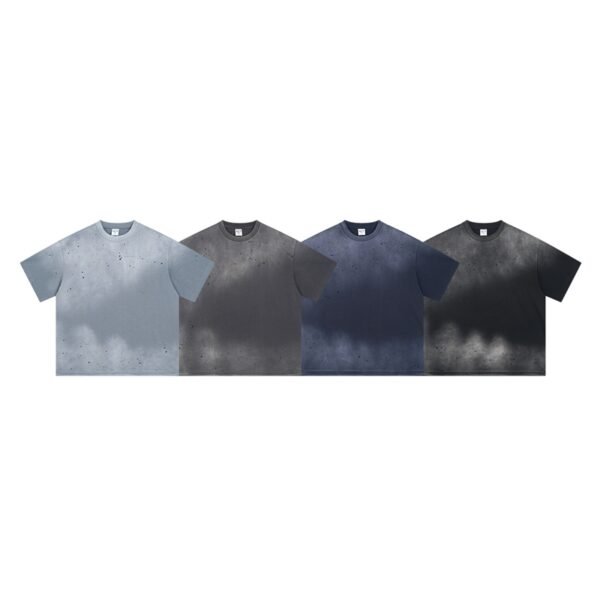
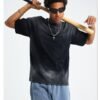
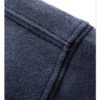






This t-shirt reference is driven by the relationship between shoulder extension and sleeve angle. VeeWen can translate the visible relaxed stance into a measurable pattern, then verify that shoulder width, sleeve pitch, neckline position, and washed splatter placement remain balanced during wear.
Shoulder Width Controls the Visual Center
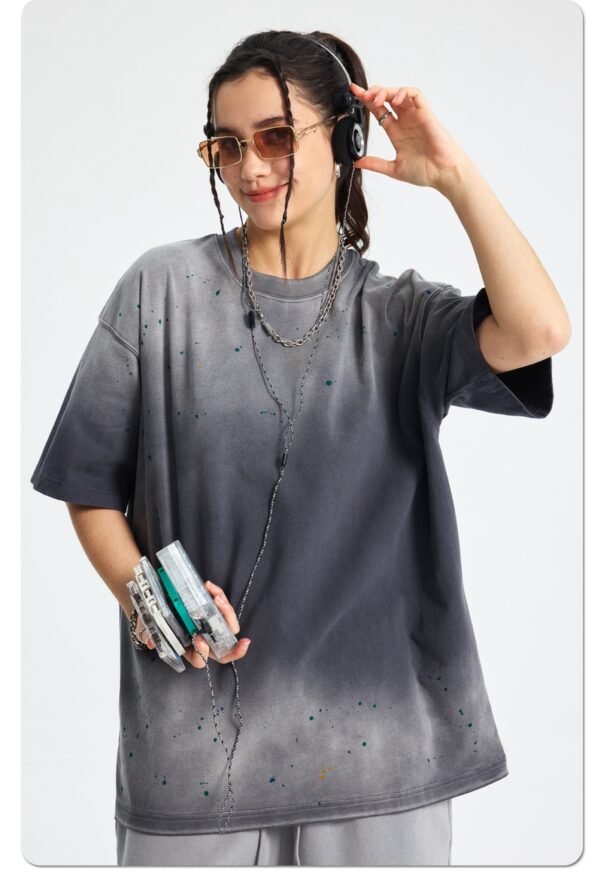
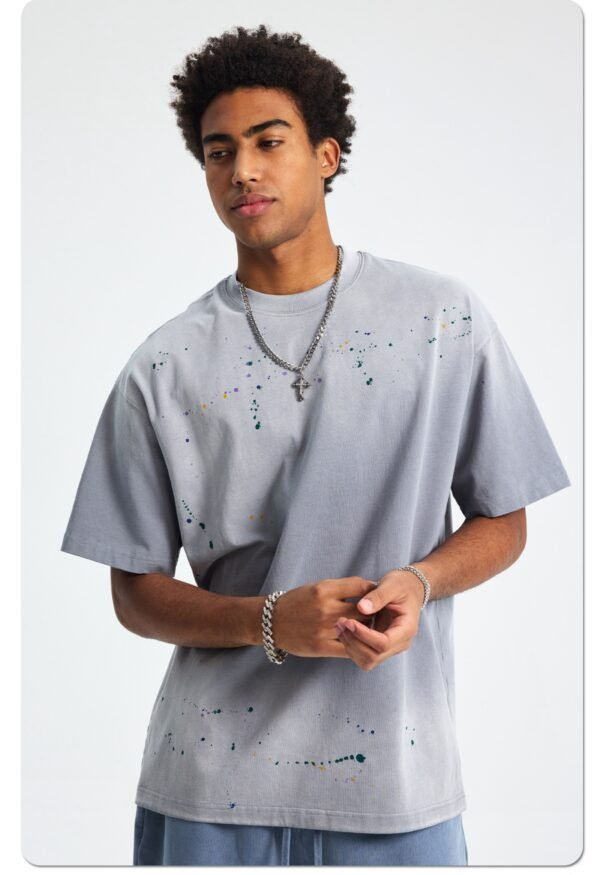
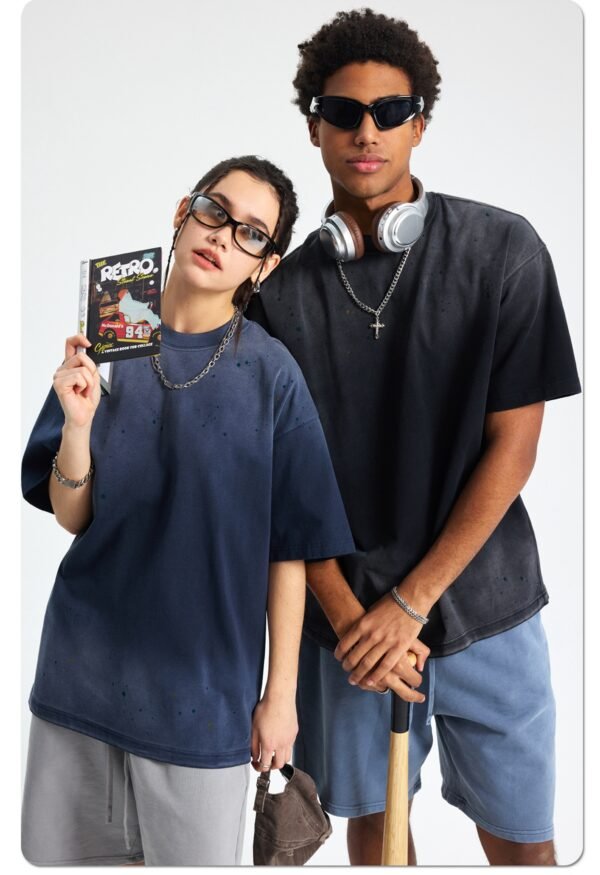
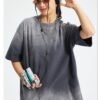
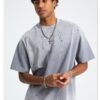
The supplied image presents a broad upper body with sleeves extending beyond the natural shoulder line. That extension creates the relaxed stance, but its success depends on keeping the neckline centered and the side seams visually quiet.
If the shoulder becomes too wide, the sleeve can collapse toward the elbow and make the torso appear narrow. If it is too restrained, the garment loses the intended relaxed attitude. Shoulder width must therefore be approved with sleeve pitch, not separately.
Sleeve Pitch Shapes Movement
Sleeve pitch describes how the sleeve leaves the armhole and angles toward its opening. In this reference, the short sleeves project outward rather than dropping vertically, creating room around the upper arm and supporting the visible active pose.
A flatter pitch may sharpen the shoulder line but restrict forward reach, while a steeper pitch can improve movement yet add fullness beneath the arm. The pattern should be judged through front, side, and raised-arm positions before measurements are locked.
Neckline and Armhole Relationship
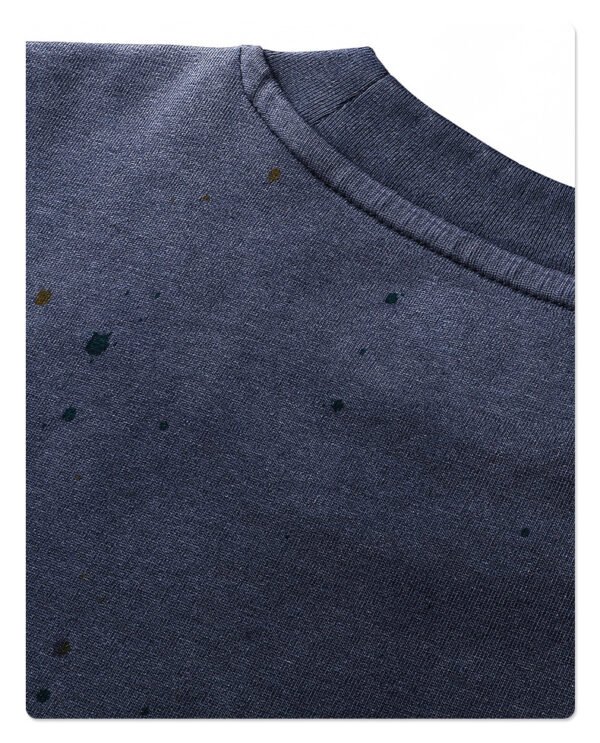
The dark tee's neckline sits as a compact anchor above the broad chest, so shoulder expansion must not pull the collar outward. Armhole depth also needs control: excess depth can create folds, while insufficient depth can counteract the relaxed sleeve shape.
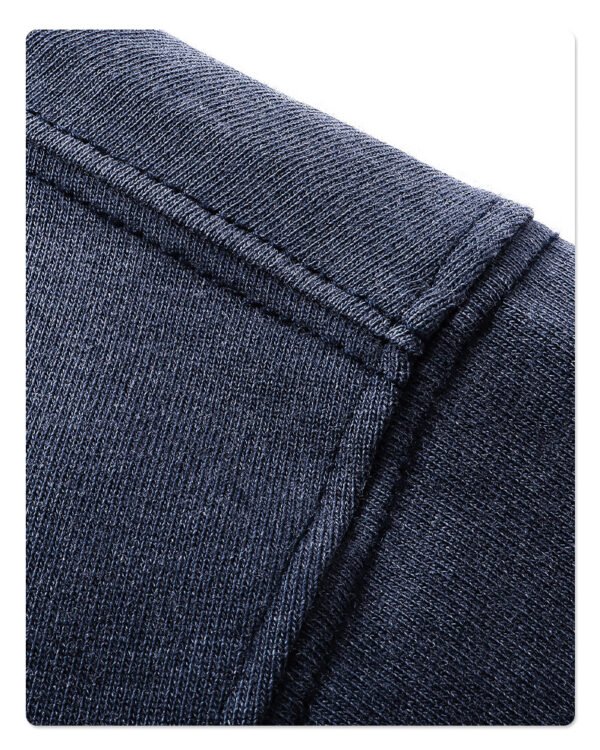
During fitting, inspect collar recovery, shoulder seam position, underarm drag lines, and sleeve opening angle together. These observations show whether the pattern distributes volume smoothly or merely enlarges dimensions without producing a deliberate streetwear silhouette.
Surface Effects Follow the Pattern
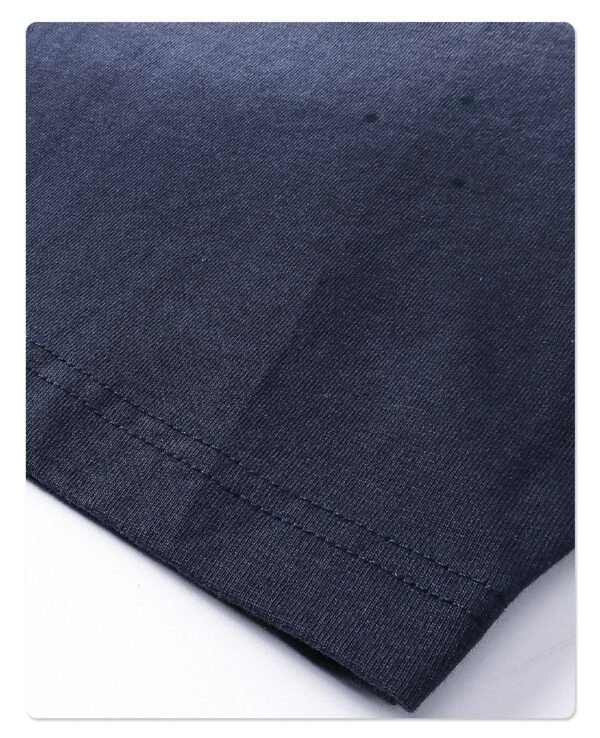
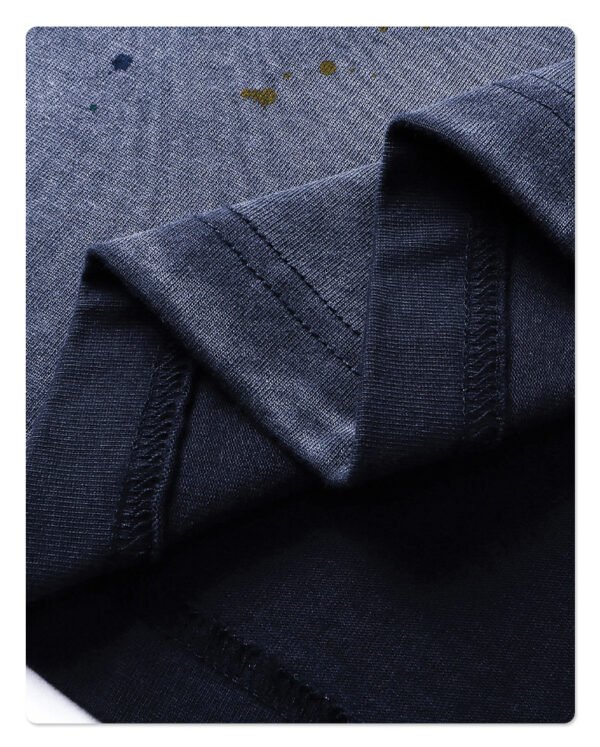
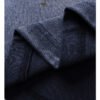
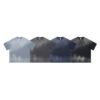
The supplied image shows scattered splatter marks over a washed dark base, including visible variation across the chest and lower body. Because the surface is irregular, shoulder and sleeve changes can alter how the effects are perceived across seams and folds.
Before approving the wash and splatter sequence, map the artwork or effect boundaries against the final pattern pieces. Confirm whether the buyer wants natural variation or closer repeatability, then review shoulder seams and sleeve openings after treatment rather than only before.
VeeWen Development Checkpoint
For VeeWen's workflow, establish a base block from the visible shoulder-to-sleeve relationship, then produce fit samples with controlled shoulder widths and sleeve pitches. Keeping the body length and neckline consistent makes the silhouette comparison more useful for buyer approval.
The review checkpoint should include a standing front image, side image, and raised-arm image for every variant. Approve the combination that maintains centered collar placement, clean underarm movement, balanced sleeve openings, and the desired relaxed chest without unnecessary bulk.
Grading and Production Trade-Offs
A generous shoulder may look strong in the base size but can become disproportionate when graded upward. Sleeve pitch, armhole depth, and opening circumference should be graded as a coordinated system so larger sizes retain mobility without appearing collapsed.
The buyer should finalize the shoulder and sleeve relationship before confirming wash intensity and splatter placement. The tech pack should record shoulder seam position, sleeve pitch, armhole measurements, opening width, artwork tolerance, and approved images across key sizes.
Buyer Questions
Is this t-shirt intended only for menswear?
The image is a menswear reference, but the relaxed block may support unisex development after shoulder, sleeve, and grading decisions are approved.
Why approve shoulder and sleeve pitch together?
Their relationship controls drape and movement. Changing one without the other can create sleeve collapse, underarm tension, or an unintentionally narrow torso.
Can the splatter pattern be repeated exactly?
That depends on the selected surface process. Confirm whether the buyer prefers controlled placement or intentionally varied effects during sample review.
What is the commercial minimum?
The exact commercial minimum is MOQ: 100 pieces per style after the buyer approves fit, surface direction, artwork tolerance, and production specifications.
Approve the Shoulder and Sleeve Block
Share target measurements, wash direction, artwork references, and size priorities. VeeWen can develop controlled shoulder and sleeve variants, then document the approved fit and surface-treatment relationship for production.


Reviews
There are no reviews yet.