


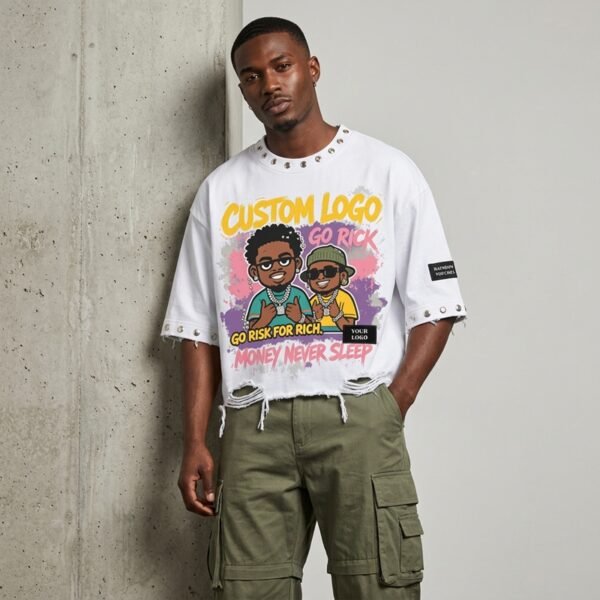
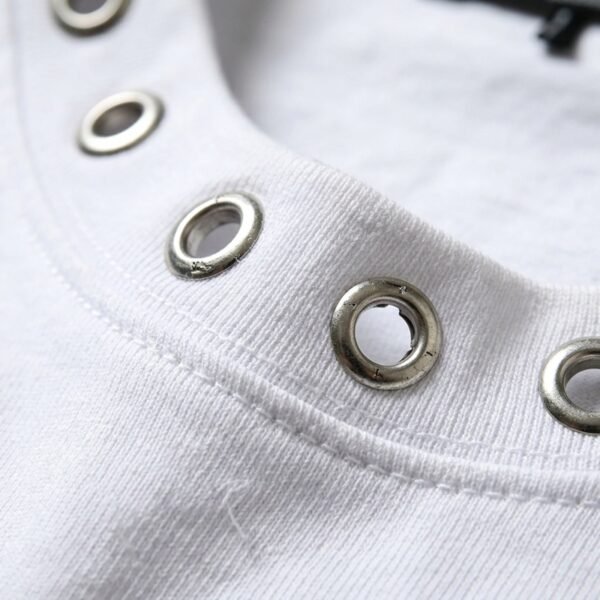










This T-shirt is developed around pocket-bag geometry within an oversized body. The supplied image shows broad white volume, repeated metal eyelets, and distressed lower openings; those elements make pocket access, opening angle, and bag depth important proportion decisions rather than hidden construction details.
Pocket Access Within Oversized Volume
The development premise is to preserve usable pocket access inside a loose silhouette. When the body widens and length increases, a standard pocket bag can sit too shallow, swing inward, or disappear behind the front panel during movement.
VeeWen should establish the pocket opening as a measured relationship to chest width, side seam, and hem. Bag depth can then be tested against hand entry and visual exposure, ensuring the pocket supports the relaxed shape without creating an unintended bulge.
Opening Geometry and Reach
Pocket opening angle controls how naturally the hand enters a broad T-shirt body. A nearly horizontal opening may disappear under relaxed drape, while a steep angle can pull the side seam or expose the bag, especially when the wearer sits.
The buyer should approve the opening length, angle, reinforcement, and bag attachment method together. A paper pattern review across sizes can reveal whether the intended access remains consistent before decoration or distress treatments add variables to the sample.
Distressed Edges and Bag Stability
The supplied image shows raw, distressed openings near the lower front hem, alongside frayed sleeve and hem edges. These details create a deliberately unfinished surface, but they can visually compete with a pocket opening or weaken nearby fabric if distances are compressed.
Keep the pocket bag and its attachment outside the distress boundary unless deliberate exposure is required. VeeWen can map tear, eyelet, and pocket zones separately, allowing the buyer to approve controlled irregularity while protecting functional construction.
Eyelet Rhythm Around Openings
Metal eyelets repeat around the neckline, sleeve edges, and hem in the supplied image, creating a rhythm of small punctures around a loose garment. Their spacing influences perceived proportions and can make a pocket opening feel either integrated or visually isolated.
The development review should compare eyelet spacing with pocket position and opening width, even where the pocket is not visible in the reference image. Consistent hole margins and reinforcement decisions are essential when multiple edge treatments share the same panel.
VeeWen Development Checkpoint
For VeeWen's workflow, this style should begin with a pocket geometry sheet linked to the oversized base pattern. The buyer supplies intended pocket use, opening preference, size range, artwork placement, and distress boundaries, while the image supplies proportion and surface-detail evidence.
The checkpoint is a technical sample that isolates access and bag behavior before final embellishment. Record opening angle, bag depth, side-seam relationship, reinforcement, and edge-treatment boundaries, distinguishing source-referenced details from fabric and process choices still awaiting confirmation.
Approval Gate and Production Release
The decisive approval question is whether the pocket remains reachable and visually controlled when the oversized body is worn, lifted, and seated. Review only the front panel is insufficient, because bag depth and opening geometry respond to body movement and drape.
Approve the pocket map, graded measurements, distress limits, eyelet reinforcement, and decoration direction as one package. Once aligned, the commercial planning basis is MOQ: 100 pieces per style, with production details dependent on the approved specification.
Buyer Questions
Why does pocket geometry matter on an oversized T-shirt?
Additional width and length can reduce access or make a standard bag swing inward, so opening angle and depth must be graded with the body.
Does the image show the pocket construction?
No. The supplied view does not visibly confirm a pocket, so bag depth, opening geometry, attachment, and reinforcement require a technical specification.
How should distressing interact with the pocket?
Map distress zones separately and maintain structural clearance unless exposed construction is intentional, then test fraying, reinforcement, and pocket stability together.
What is the commercial minimum?
The stated commercial minimum is MOQ: 100 pieces per style. Final production remains dependent on approved artwork, measurements, materials, and construction details.
Approve Pocket Geometry Before Decoration
Share the intended pocket use, size range, artwork, and distress boundaries for VeeWen review. We will test opening access and bag depth against the oversized silhouette before production planning at MOQ: 100 pieces per style.



Reviews
There are no reviews yet.