
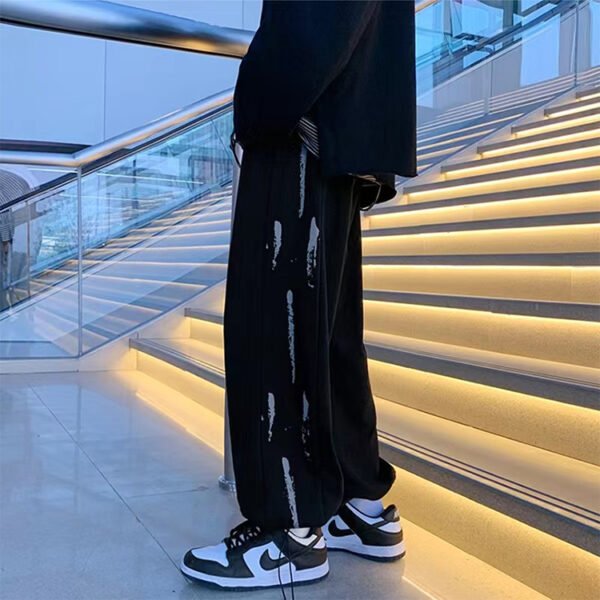
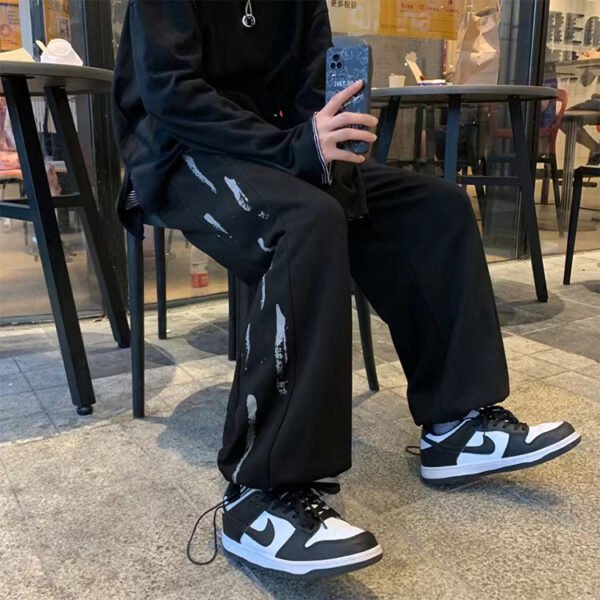
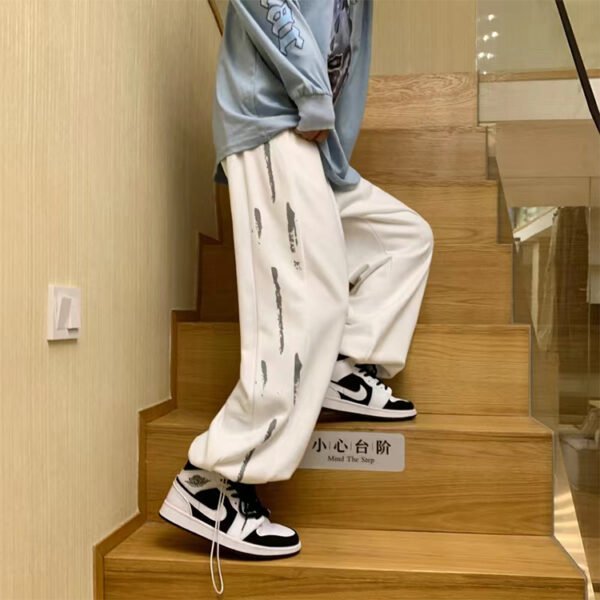
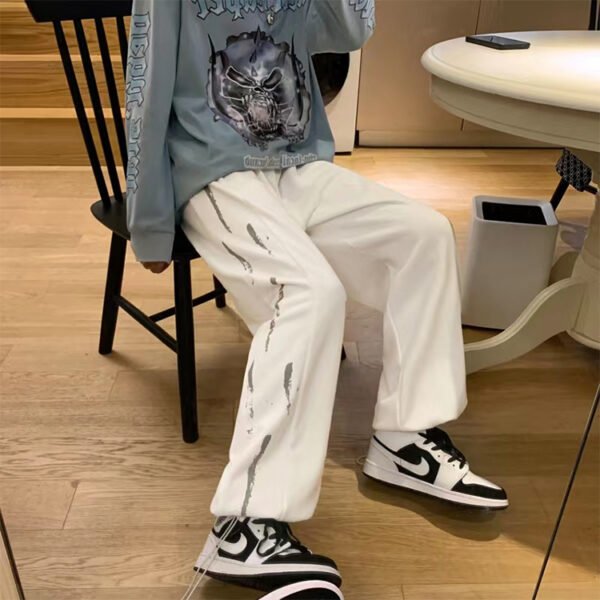
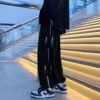
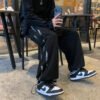
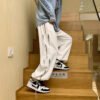
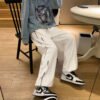
This trouser concept is governed by a balance between visual disruption and physical movement. The black wide-leg base already creates volume; the irregular pale marks must therefore remain light, strategically placed, and secure enough to avoid stiffening the leg or disturbing its fall during wear.
Why Embellishment Weight Controls the Drape
A wide-leg trouser relies on uninterrupted fabric movement from the seat through the hem. Heavy print deposits, thick applique, or dense raised treatment can create localized stiffness, pulling the front panel inward and making the intended straight fall appear uneven during walking or sitting.
The supplied image indicates a black body carrying narrow, broken light marks rather than full-panel coverage. That distribution is technically useful because it limits added mass while creating directional contrast. The final effect still depends on substrate, treatment thickness, curing, and placement tolerances.
Graphic Placement and Panel Balance
Vertical marks visually reinforce the length of the leg, but their placement must respect seam lines, pocket openings, and the trouser's natural fold zones. A mark crossing a high-flex area may crack, peel, or visually widen the panel as the fabric bends repeatedly.
For development, the artwork should be divided by front and back pattern pieces before sampling. The supplied image supports a front-led arrangement with breathing space between marks. VeeWen can translate that rhythm into placement files, seam allowances, and approval samples without assuming unverified artwork dimensions.
Waist Cord as a Weight-Saving Adjustment
The visible waist cord provides fit flexibility without relying on a bulky external belt treatment. Its channel, exit points, and cord ends must remain proportionate to the relaxed trouser body, because oversized hardware or dense reinforcement can shift the garment's balance at the waist.
The cord also introduces a production checkpoint: the opening position must remain comfortable and consistent after laundering or finishing. During development, VeeWen should confirm channel width, stitch security, cord length, and tip method alongside the embellishment sample, rather than approving these details separately.
Managing Movement Around the Hem
The image shows the hem pooling near footwear, which is central to the relaxed styling direction. That effect requires controlled finished length and sufficient circumference, but excessive treatment near the bottom edge can make the hem stand away or catch against shoes during movement.
A development sample should therefore evaluate the trouser on the intended footwear profile and in motion. VeeWen's workflow can compare untreated and embellished panels, checking whether graphic placement, pressing, and finishing preserve the soft break without turning the hem into a rigid visual border.
Trade-Offs Buyers Should Approve
More prominent graphics can improve shelf recognition, yet increasing coverage or thickness raises the risk of stiffness, cracking, color migration, and visible wear. A cleaner treatment may look less dramatic in a still image, but it generally protects the trouser's movement and simplifies quality control.
The commercial decision is not simply whether the marks look attractive. Buyers should define acceptable variation in distressed edges, contrast, placement, and surface feel. Those tolerances allow the factory to reproduce the intended character while preventing uncontrolled differences between approved sample and production garments.
VeeWen Development Checkpoint
VeeWen should begin with the approved silhouette block, base-fabric reference, waist-cord specification, and mapped graphic positions. The first sample must be reviewed for both visual balance and physical drag, especially where marks approach seams, folds, pockets, or the lower leg.
Before bulk approval, the buyer should sign off on artwork scale, treatment handfeel, attachment or print method, placement tolerance, wash-care direction, and finished measurements. The required commercial minimum is MOQ: 100 pieces per style, with final feasibility confirmed against the approved technical package.
Buyer Questions
What base fabric should buyers consider for this trouser?
Select a fabric with enough body to hold the wide-leg shape while retaining movement; composition, weight, recovery, and surface compatibility remain To Confirm through development.
Can the graphic treatment be changed for a private label collection?
Yes, placement, scale, contrast, and treatment style can be developed around approved artwork, provided the revised coverage remains compatible with drape and production tolerances.
How should buyers review the first sample?
Review the garment on intended footwear, then inspect walking movement, seated folds, hem pooling, waist adjustment, graphic adhesion, and panel balance before approving revisions.
What is the minimum order quantity?
The exact commercial minimum is MOQ: 100 pieces per style. Final pricing, lead time, and production feasibility require confirmed materials and approved specifications.
Approve the Drape Before Scaling the Graphic
Send your artwork, preferred base-fabric reference, size range, and target finish to VeeWen for a focused development review and sample checkpoint built around controlled embellishment weight.


Reviews
There are no reviews yet.