

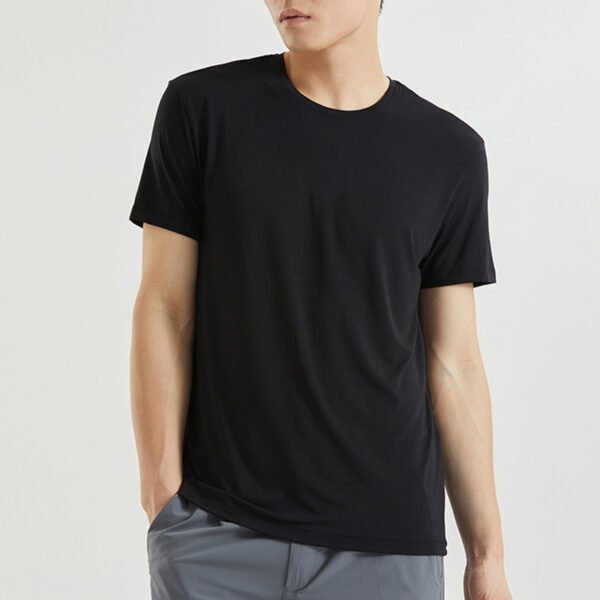
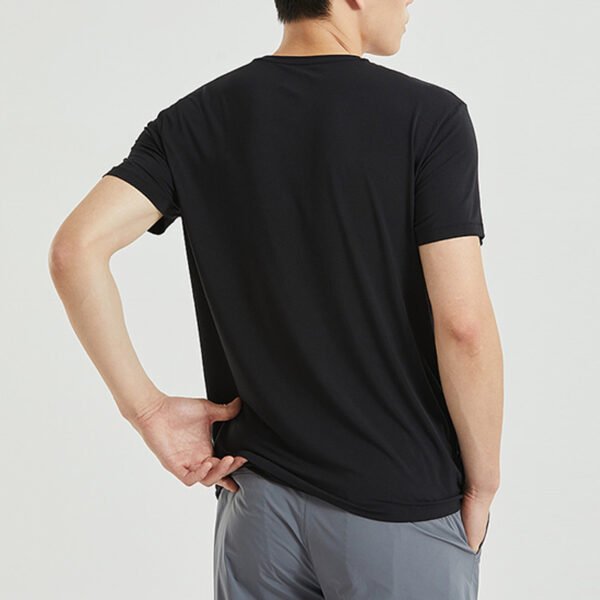
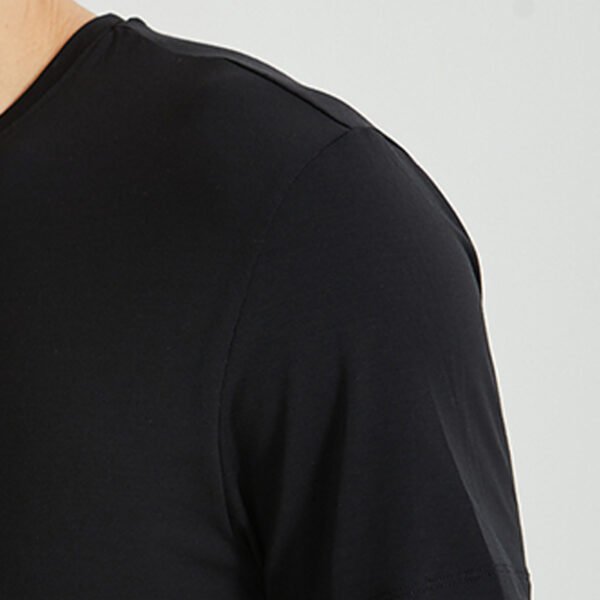
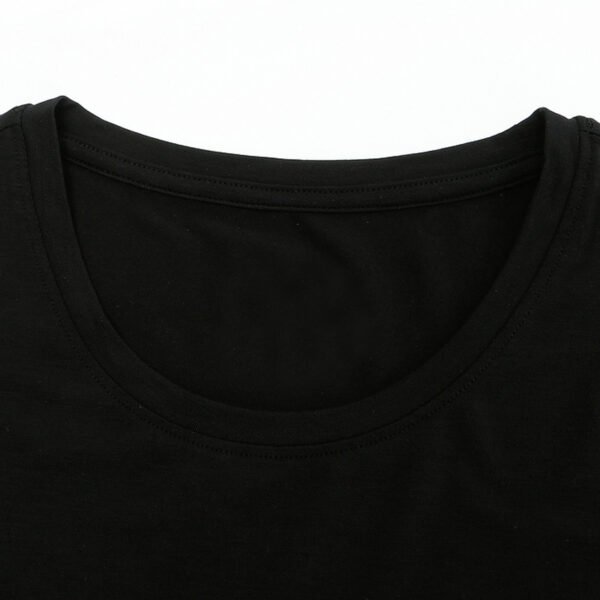



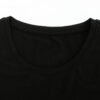


This development record treats the T-shirt as a pattern-engineering problem: the fabric must extend with the body while the front remains visually quiet. The supplied image shows a slim black crew-neck form, making stretch direction and placement control central to approval.
Stretch Direction Sets the Wearing Shape
Modal is named by the source, but the image alone cannot verify its blend, weight, or recovery. For this slim silhouette, the first technical question is whether cross-body extension supports movement without making the torso look oversized.
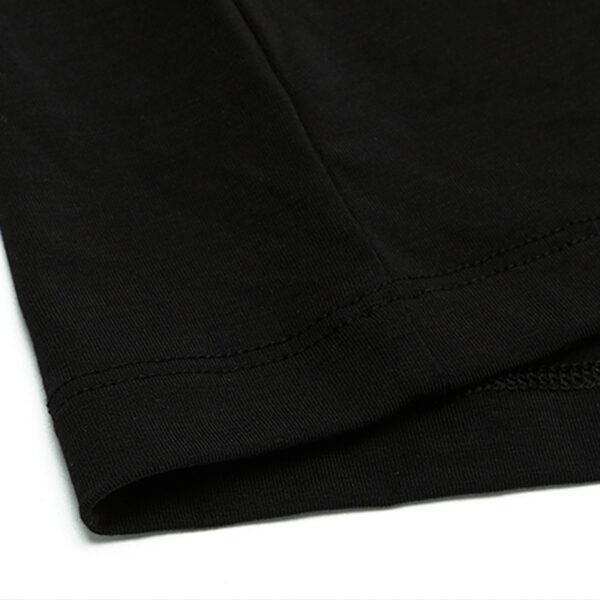
A pattern team should map the fabric's strongest stretch against chest, shoulder, and sleeve movement, then check lengthwise stability at the hem. Excessive horizontal give can weaken the clean outline, while insufficient give may create pulling across the upper torso.
Pattern Placement Protects the Quiet Front
The supplied image presents an uninterrupted black front, so placement discipline becomes part of the product identity. Seams, labels, artwork, and tonal details should be positioned only after confirming how the knit opens and contracts during wear.
If a logo or graphic is planned later, its location should avoid high-distortion zones around the chest curve, armhole, and side seam. A placement test should compare relaxed and worn states, because stretch can make a centered mark appear visually displaced.
Crew-Neck Stability Supports the Argument
The neckline appears close and even in the main image, reinforcing the controlled slim profile. Its stability depends on how the rib or binding is cut relative to stretch direction, plus how neckline length is balanced against the body opening.
VeeWen's development workflow should therefore lock the neckline measurement alongside the fabric-direction map, rather than treating collar finishing as a late cosmetic choice. The approval sample must be reviewed flat, on-body, and after repeated dressing simulation.
Sleeve Movement Requires Local Allowance
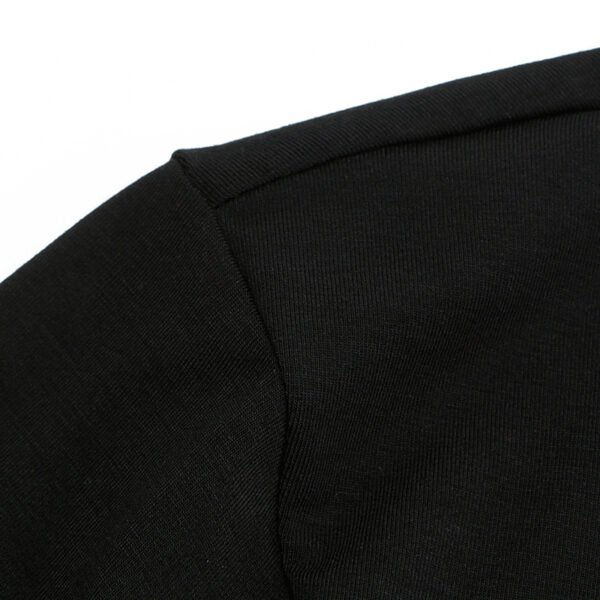
The short sleeves sit close to the upper arms, which makes sleeve stretch more consequential than on a relaxed T-shirt. The sleeve grain, cap shape, and underarm seam must permit reach without transferring excessive tension into the chest panel.
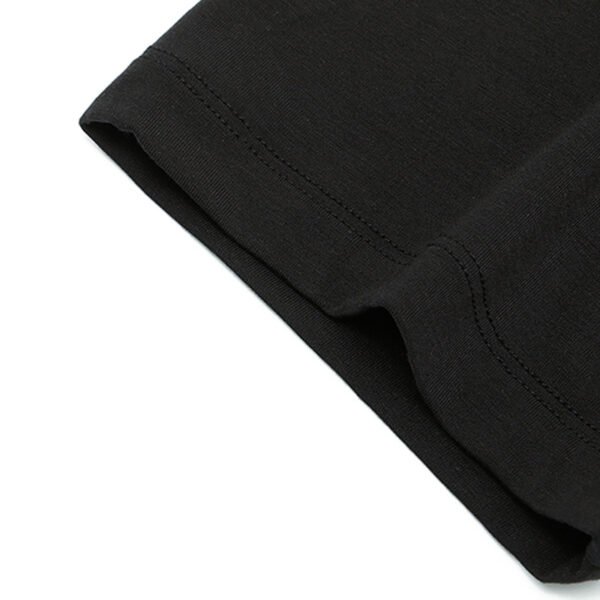
A useful development checkpoint is a movement review using crossed arms, raised arms, and relaxed standing. These positions expose whether the chosen direction gives the body room while preserving the straight hem and the compact sleeve appearance shown in the image.
VeeWen Workflow Turns Evidence into Tests
For VeeWen, this product should enter development through a fabric hand and stretch audit, followed by a directional marker plan for each pattern panel. The image supplies the target appearance; the sample must establish whether that appearance survives motion and size grading.
The next approval package should contain a placement map, neckline measurement record, graded fit sample, and photographs in relaxed and moving positions. That workflow ties the exact manufacturing axis to decisions a buyer can sign off before cutting bulk material.
Approval Balances Comfort and Visual Control
The principal trade-off is straightforward: more stretch can improve ease, but it may soften the intended slim geometry and shift decoration. A firmer structure can preserve placement and outline, yet may increase strain at the chest, sleeve, or neckline.
Approve the style when the selected direction delivers comfortable movement, stable neckline recovery, and consistent visual placement across graded sizes. If any one of these fails, revise the pattern or material specification before confirming production readiness.
Buyer Questions
Is the fabric composition confirmed?
Only modal is stated in the source wording. The fiber blend, percentage, fabric weight, recovery, and finishing route require confirmation through the development specification.
Why does stretch direction matter for this T-shirt?
A slim silhouette concentrates movement around the chest, shoulders, sleeves, and neckline. Directional stretch planning helps distribute that movement while protecting the garment's clean outline.
How should artwork placement be approved?
Review artwork on the relaxed garment and during movement, especially across the chest and near seams. Confirm scale, centering, distortion, and recovery before approving the placement map.
What is the minimum order quantity?
The commercial minimum for this VeeWen development record is MOQ: 100 pieces per style. Final specifications, approvals, and production conditions should be confirmed before ordering.
Approve the Stretch and Placement Map
Send your target measurements, artwork requirements, and preferred hand feel to VeeWen. We can develop the directional pattern plan and return an approval sample for fit, recovery, and placement review.



Reviews
There are no reviews yet.