

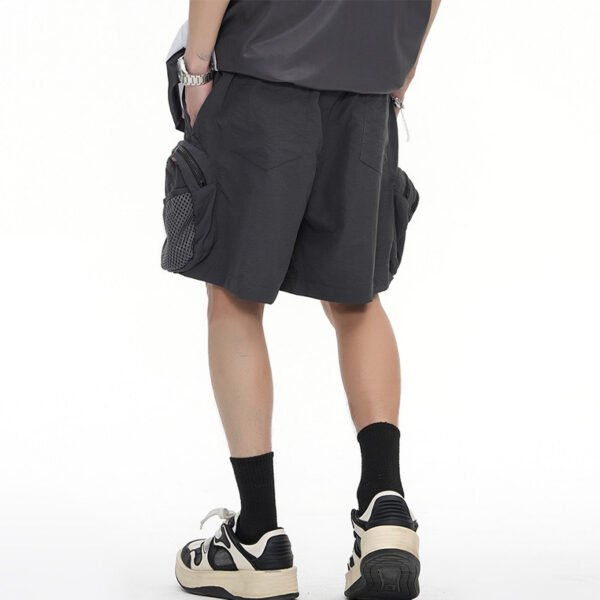
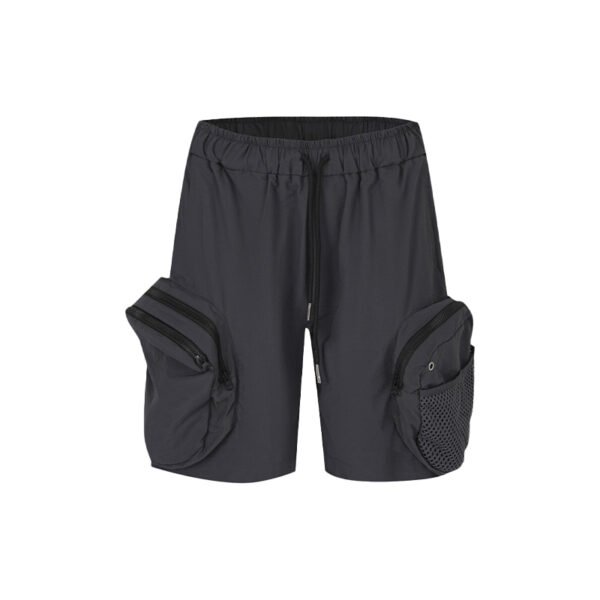
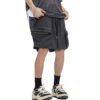

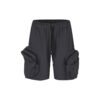

These utility shorts are developed around a practical production question: how fabric movement before cutting affects a garment built from several visible storage structures. The supplied image shows layered cargo pockets, a drawstring waist, and relaxed legs, so dimensional preparation becomes central to fit approval.
Why Relaxation Matters on Utility Shorts
Fabric relaxation allows a woven textile to settle before pattern pieces are placed and cut. On these shorts, that preparation protects the relationship between the elastic waistband, curved leg openings, and large cargo pocket, where small dimensional shifts become immediately visible.
The visual evidence shows several overlapping storage components rather than a simple short block. Each pocket adds seam length, reinforcement, and local weight, making accurate pre-cut settling important for keeping both legs balanced and preventing one side from appearing distorted.
Pocket Placement Depends on Stable Panels
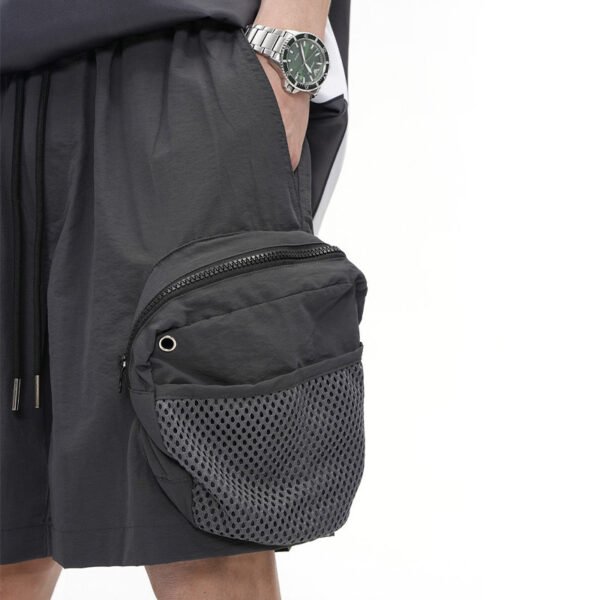
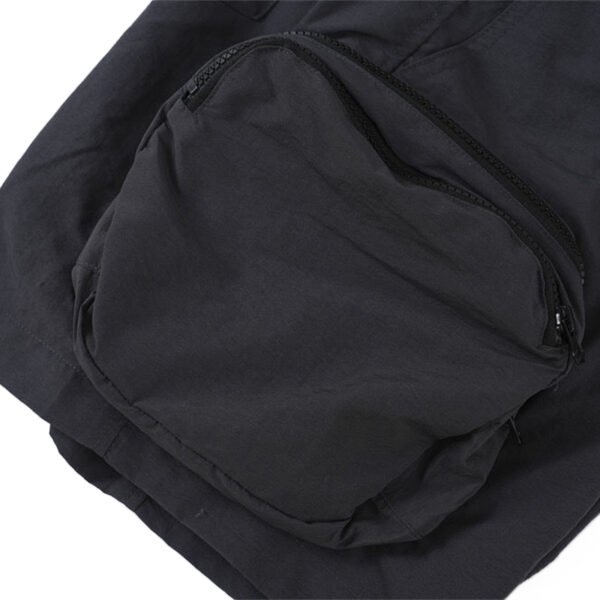
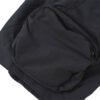
The prominent thigh pocket extends outward from the body and includes a horizontal zip opening. Its final position depends on the underlying front panel remaining dimensionally consistent, because relaxation differences can move the zipper line, pocket mouth, and lower edge away from the approved reference.
A smaller outer-leg storage detail appears on the opposite side, creating an intentional asymmetrical utility layout. During development, VeeWen should record pocket landmarks from the approved pattern and recheck them after relaxation, cutting, and pocket-bag attachment.
Waistband Balance and Leg Proportion
The supplied image shows an elasticized waist with a central drawcord, giving the garment adjustable comfort without relying on a rigid waistband closure. Fabric movement can still affect rise, casing width, and the visual amount of body gathered above the legs.
The relaxed silhouette ends above the knee and leaves room around the thigh. Buyers should approve the finished measurement chart with the pocket pieces included, since added layers can influence how the side seams hang and how the leg opening reads on-body.
Trade-Offs in Pre-Cut Preparation
Longer relaxation control can improve cutting consistency, but it also requires disciplined handling, documented resting conditions, and a clear distinction between fabric relaxation and later laundering effects. The correct protocol depends on the textile composition, construction, finishing, and intended wash treatment.
If the fabric is cut too soon, the first samples may look acceptable while later production shifts in length or width. If it is over-handled, unnecessary processing may add cost or alter the surface. The development target is repeatable preparation tied to measurable tolerances.
VeeWen Development Workflow
VeeWen can convert this axis into a development gate by recording the fabric reference, roll condition, relaxation method, and before-and-after measurements before cutting the first approved sample. The pocket template, waistband casing, and leg-opening checkpoints should then be linked to that record.
After assembly, the sample review should compare pocket alignment, zipper placement, rise, inseam, and side-to-side balance against the approved pattern. Any correction should identify whether movement came from preparation, cutting, sewing tension, or finishing before bulk documentation is released.
Buyer Approval Checkpoint
The buyer should request a measured pre-production sample using the intended fabric reference and the documented relaxation procedure. Review should focus on waistband recovery, pocket symmetry, zipper level, leg opening, and the way loaded pockets affect the short's hanging balance.
Approval is appropriate when the sample remains within agreed tolerances after the planned finishing route and when the pocket layout still matches the visual reference. Buyers should also confirm composition, GSM, care requirements, and performance claims before final specification sign-off.
Buyer Questions
What fabric information should be confirmed first?
Confirm fiber composition, GSM, width, stretch, recovery, shrinkage, finishing route, and care requirements before setting relaxation and cutting tolerances.
Why does pocket construction affect relaxation control?
Large layered pockets amplify small panel movements, so unstable dimensions can change zipper alignment, pocket balance, seam loading, and the approved silhouette.
Can the shorts use a different pocket layout?
Yes, VeeWen can develop alternate pocket sizes or placements, but each revision should receive a new pattern review and measurement approval.
What is the commercial minimum for this style?
The commercial minimum is MOQ: 100 pieces per style, with final requirements governed by approved materials, specifications, and production documentation.
Approve the Utility Short Development Brief
Send the target fabric reference, measurement chart, pocket requirements, and finishing route to begin a controlled sample review with VeeWen's development team.


Reviews
There are no reviews yet.