


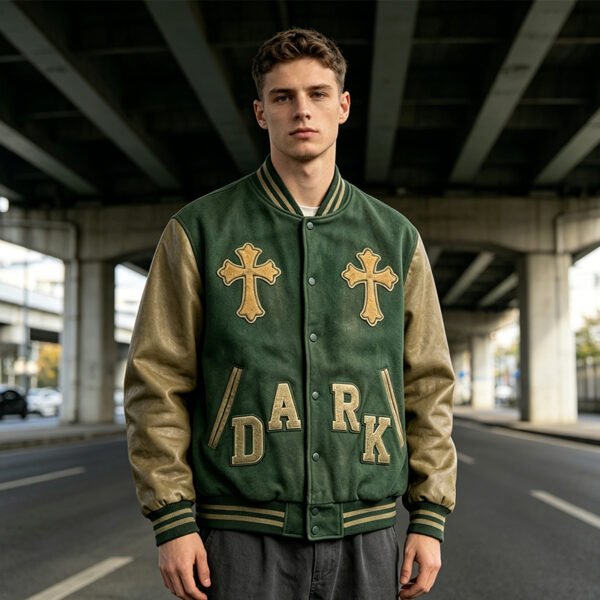


Developed for streetwear and lifestyle labels, this varsity jacket uses directional surface handling as a visual and production decision. The green body shows a soft, brushed nap, while the striped rib hem compresses the silhouette. VeeWen can validate cutting direction, panel consistency, patch placement, and approval standards before bulk production.
Directional Nap Is the Core Control
One-way nap or pile cutting controls how the brushed face reflects light across each panel. If pieces are rotated, green areas can show visibly different shade depth, making sleeves, fronts, and pocket sections appear mismatched even when the dye lot is consistent.
The practical control is a single nap direction on the marker, followed by inspection under stable lighting. This preserves a coherent visual flow from shoulder to hem and gives the production team a measurable basis for rejecting reversed or inconsistent panels before assembly.
What the Supplied Image Establishes
The supplied close-up shows a deep green, suede-like face with a fine directional texture, a narrow beige zipper detail, and a ribbed hem carrying two beige stripes. These observations support nap-direction control, but they do not verify fiber content, weight, durability, or final construction.
The patch-led varsity concept adds a placement-sensitive surface element to the development brief. Patch edges, seam intersections, and rib transitions should therefore be reviewed against the nap direction, because nearby reflections can change how sharply each detail reads.
Marker Planning Protects Panel Continuity
A one-way marker normally sacrifices some fabric efficiency because pattern pieces cannot freely rotate. That trade-off should be priced into development planning rather than discovered after cutting, especially where large fronts, sleeves, and back panels must maintain the same visual direction.
VeeWen's sample review can compare a directional marker with a rotated-piece alternative, documenting the visual difference under consistent lighting. The buyer can then choose whether maximum surface continuity outweighs additional consumption for the intended retail presentation.
Ribbing and Surface Contrast
The compact green rib hem visibly anchors the softer body surface, while two beige stripes create a horizontal break at the lower edge. This contrast makes the hem position and stripe spacing highly noticeable, so uneven joining can disturb the jacket's visual balance.
Nap direction does not govern rib knit orientation in the same way, creating a deliberate material transition. Buyers should approve the relationship between brushed body depth, rib tension, stripe alignment, and zipper hardware before treating the appearance as production-ready.
How VeeWen Should Develop This Style
VeeWen can translate the image reference into a development sheet that marks nap direction on each pattern piece, identifies patch locations, and records the intended beige stripe relationship. This makes the manufacturing axis part of the technical package rather than an informal finishing preference.
At sample stage, the team should inspect front, sleeve, and hem assemblies under agreed lighting, then record corrections for marker direction, seam matching, and patch placement. Bulk release should follow only after the buyer accepts the documented visual standard and construction interpretation.
Buyer Approval Checkpoint
The key approval is not simply whether the sample resembles a varsity jacket; it is whether the assembled panels maintain a controlled reflection pattern. Review the garment flat and worn, checking shade continuity from collar through sleeves, body, pockets, and hem.
Before confirming the order, approve the final material reference, nap direction, marker approach, rib stripe dimensions, patch artwork, and acceptable variation. The commercial checkpoint is MOQ: 100 pieces per style, after specifications and production documents are approved.
Buyer Questions
Why does one-way nap cutting matter for this jacket?
Directional brushing changes light reflection, so reversed panels may appear lighter or darker. One-way cutting keeps visible body sections aligned and reduces shade inconsistency across assembled garment areas.
Does the image verify the jacket's fabric composition?
No. The image shows surface appearance only, while the source title references PU leather patches. Body fiber content, lining composition, and material performance require confirmation from approved development references.
What should buyers inspect on the first sample?
Inspect directional shade continuity, sleeve and body matching, rib stripe alignment, zipper placement, patch positioning, seam transitions, and the agreed acceptable variation under consistent lighting conditions.
What is the minimum order for this development?
The stated commercial minimum is MOQ: 100 pieces per style. Final acceptance remains subject to approved materials, confirmed measurements, construction details, artwork, and production documentation.
Approve the Directional Surface Standard
Send your artwork, measurement chart, and material preferences to VeeWen for a focused development review covering nap direction, marker planning, rib details, patches, sampling, and MOQ: 100 pieces per style.


Reviews
There are no reviews yet.