
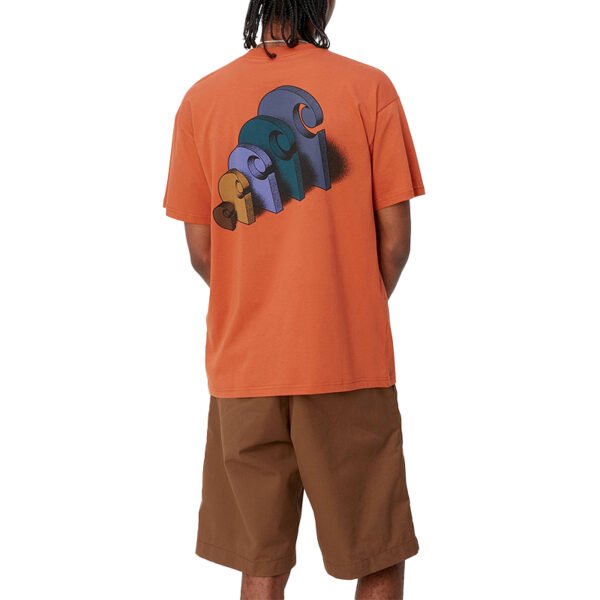

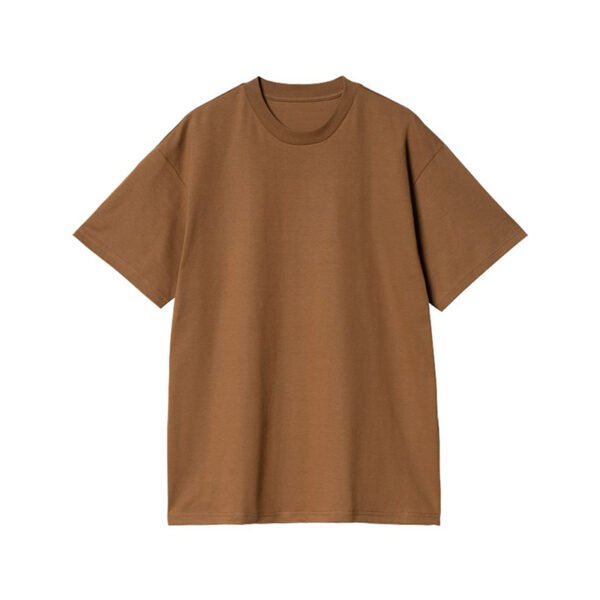
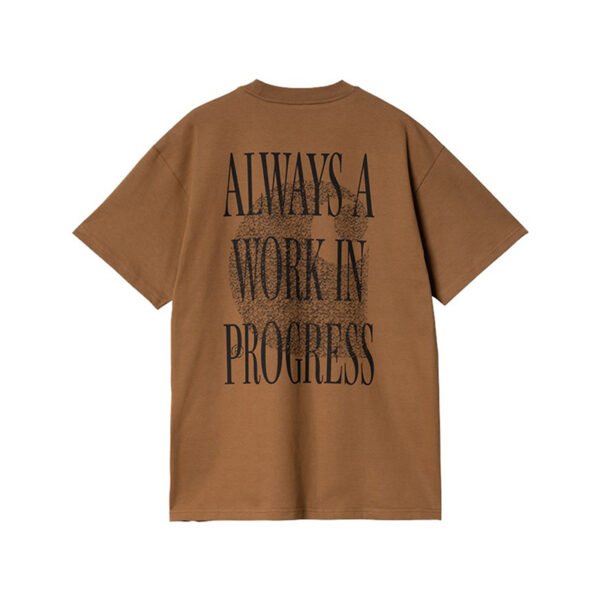

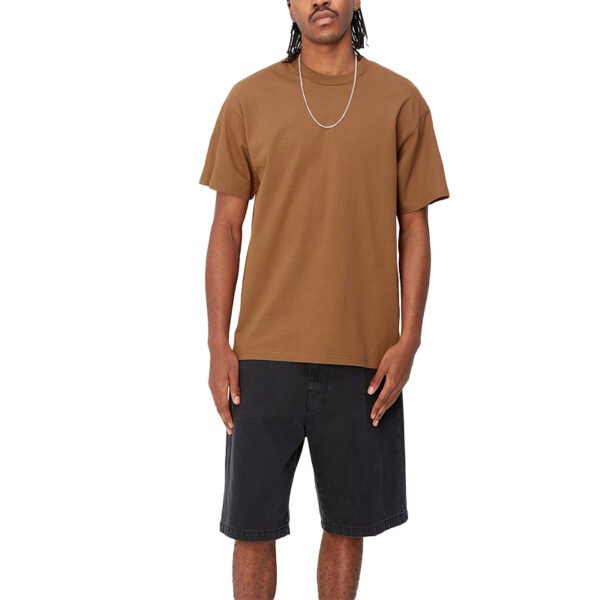


This custom orange graphic T-shirt should be developed as a size-system exercise, not only a print exercise. The uncomplicated short-sleeve body and prominent rear artwork make label clarity, grade increments, and placement rules visible at every commercial size. MOQ: 100 pieces per style.
Why Size Logic Leads This Development
A large back graphic creates a practical grading test because artwork can appear crowded on smaller bodies or underweighted on larger ones. The orange T-shirt's uncluttered front and simple sleeves leave the back proportion as the principal visual control point.
The buyer should define a base size, finished measurements, and permitted grade increments before artwork scaling is finalized. This sequence separates garment fit decisions from decoration adjustments, preventing labels, print proportions, and body dimensions from drifting independently across the size range.
Label Naming Must Match the Measurement Chart
Size labels are commercial instructions as much as wearer information. A buyer should decide whether the range uses letter labels, numeric labels, or both, then map every label to approved chest, length, shoulder, and sleeve measurements for factory and packing consistency.
The visible image cannot verify measurements, so the label system must be treated as a controlled specification. Each size should receive one identifier across tech pack, neck label, hangtag, carton breakdown, and inspection sheet, with exceptions recorded before bulk cutting begins.
Grading the Orange Body Around the Graphic
The orange body offers a stable canvas, but proportional grading still affects how the rear artwork reads. Increasing width without reviewing print height can make the graphic look compressed, while excessive vertical scaling may approach the shoulder or lower-back zones.
VeeWen's development workflow should lock the base block first, then create a graded measurement table and overlay the artwork against each size outline. The approval sample should confirm body balance and print placement together, because either decision can change the other.
Artwork Placement Needs Size-Specific Rules
The supplied rear view shows the graphic positioned across the upper back, with its visual mass concentrated between the shoulders and mid-back. That location should be documented using measurable vertical and horizontal references rather than a vague instruction such as centered.
For production, the buyer should approve whether the artwork remains fixed in dimensions, scales by size, or uses controlled hybrid rules. Fixed artwork simplifies decoration setup, while scaling can preserve coverage; the trade-off must be judged against readability and cost.
Production Checks for Label and Grade Control
A useful preproduction check compares physical samples or measured panels against the approved chart, then verifies that each sewn label corresponds to the correct garment measurements. The simple silhouette makes discrepancies easier to isolate before decoration and packing multiply the error.
VeeWen can route this product through a measurement-led review: confirm the block, review graded points, align label assets, and inspect artwork overlays before bulk authorization. The checkpoint is not a generic quality claim; it is a specific control over size communication.
Buyer Approval Gate Before Bulk Release
Before approving production, compare the size chart, labeled sample, measured garment, and rear artwork placement as one connected system. Confirm that the smallest and largest planned sizes retain an intentional silhouette and that the graphic remains visually balanced on both.
The final decision should record accepted tolerances for measurements, label attachment, and print position, while leaving composition, GSM, and decoration testing marked To Confirm where evidence is absent. This written approval gives the factory one interpretable reference for cutting, sewing, labeling, and finishing.
Buyer Questions
What should be approved first for this T-shirt?
Approve the base size chart and label convention first, because grading and artwork placement depend on one consistent measurement architecture across the intended commercial range.
Should the back graphic scale with garment size?
Not automatically. Compare fixed, scaled, and hybrid artwork rules against the smallest and largest bodies, then approve the option preserving readability, balance, and placement clearance.
Can VeeWen develop the labels with the garment?
Yes, label assets can be included in the development workflow, subject to approved wording, size identifiers, attachment position, packaging requirements, and any legally required information.
What remains unverified from the supplied image?
The image does not verify fiber composition, GSM, exact measurements, print technology, wash durability, or tolerances. Those points require source confirmation, testing, or buyer-approved development specifications.
Approve the Size-System Brief
Send VeeWen the target size range, label convention, base measurements, and artwork files. We will use those inputs to prepare a focused development review before MOQ: 100 pieces per style is scheduled.


Reviews
There are no reviews yet.