

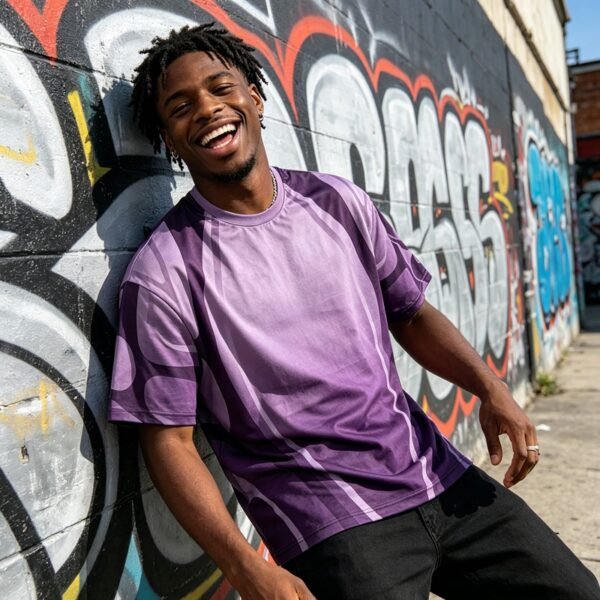
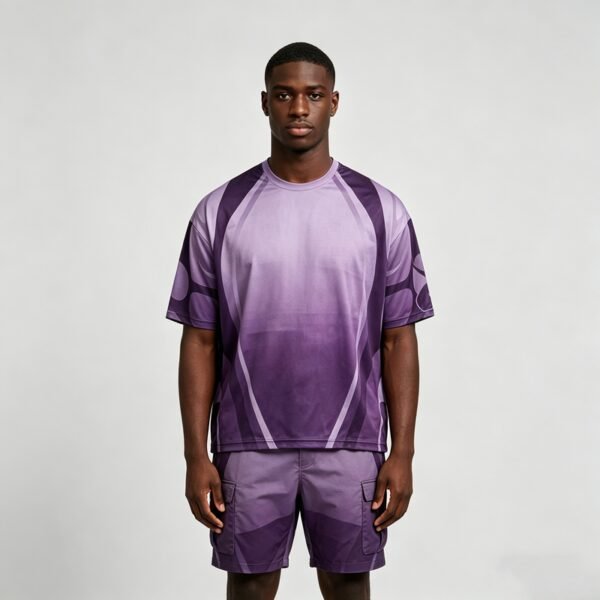
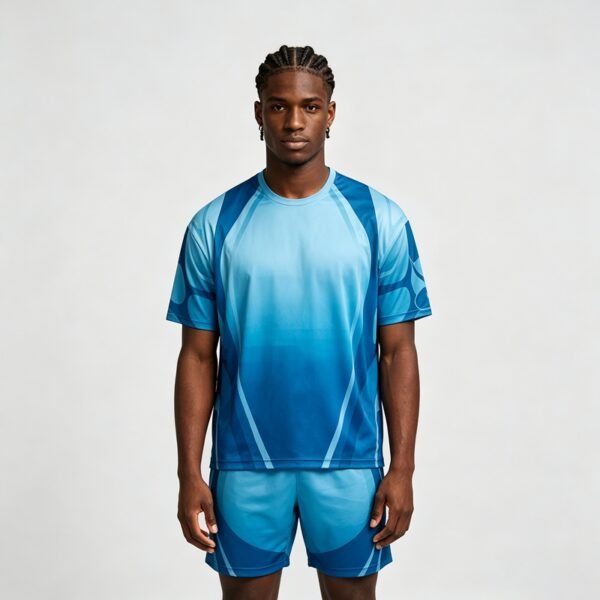
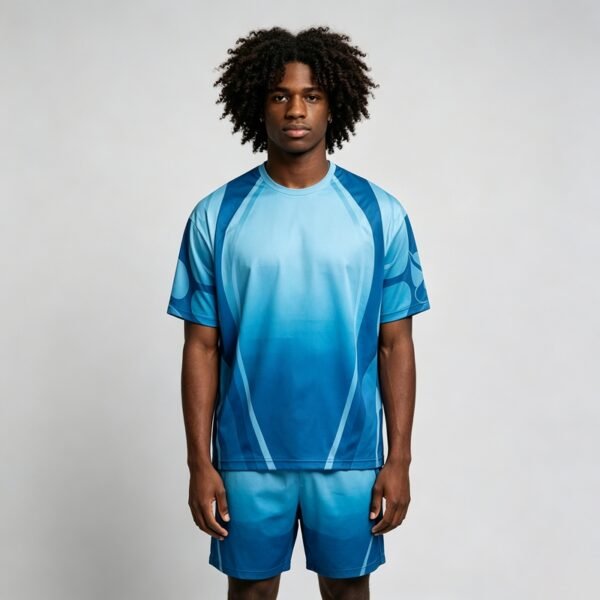

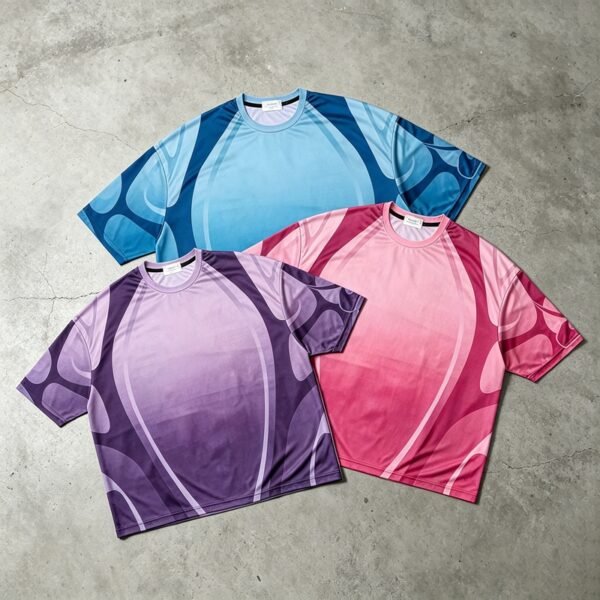
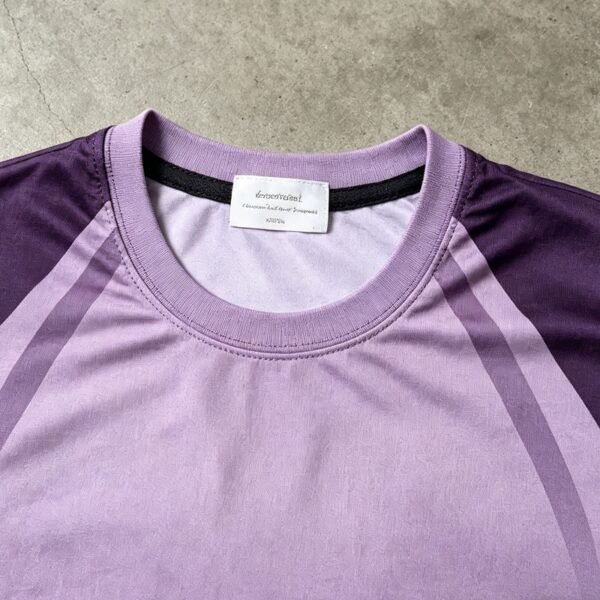
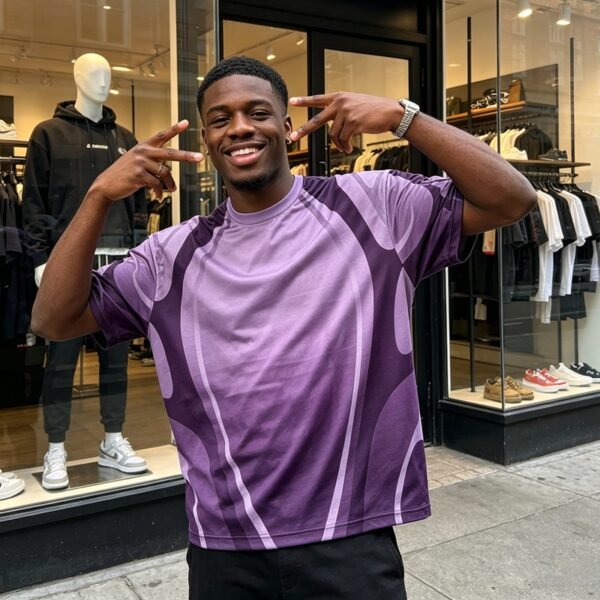


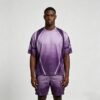
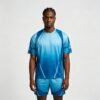


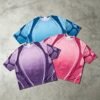


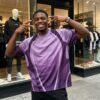
This oversized jersey T-shirt should be developed as a movement system, not simply enlarged. The supplied image shows a loose purple graphic body in an active leaning pose, making underarm ease, side shaping, and artwork continuity the critical decisions for a wearable custom program.
Why Oversized Ease Needs Directed Mobility
Oversizing adds room, but extra width does not automatically create comfortable movement. A broad body can pull across the underarm when the wearer leans or raises an arm, especially if the sleeve and side seam meet at a fixed point.
The supplied image captures the wearer leaning over a railing, with the torso angled forward and the near arm extended. That visual makes mobility measurable: the pattern should permit reach without lifting the hem excessively or distorting the graphic field.
Choosing a Gusset or Side Pleat
A gusset can add movement through the underarm while preserving a clean shoulder and sleeve line. A side pleat or controlled vent can provide another route, but each changes bulk, visual interruption, and the way the printed surface folds.
VeeWen's development workflow should prototype the least disruptive option against the approved silhouette, then record reach and arm-lift observations. The buyer's decision is whether mobility gain justifies the added seam or fold at the side construction.
Reading the Graphic Stress Zones
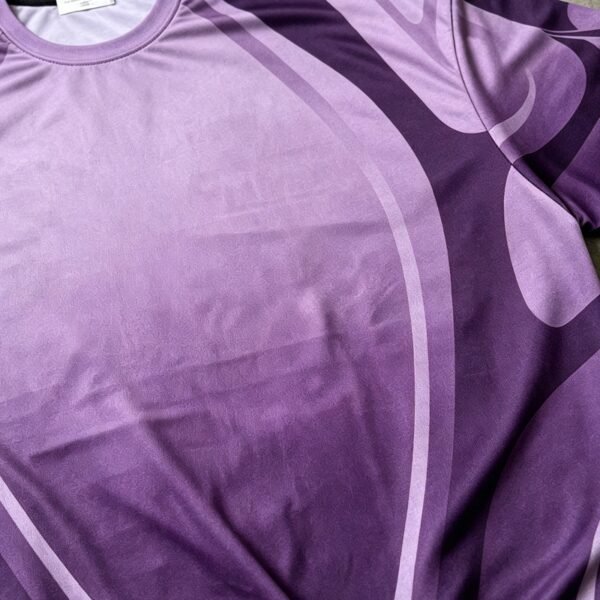
The image shows tonal curved artwork crossing the purple jersey near the sleeve and back. Those lines provide a useful distortion indicator: when the wearer moves, stretching, folding, or shifting at the underarm will reveal whether the pattern interrupts the intended visual rhythm.
Artwork placement should therefore be tested on the movement sample, not only on a flat lay. VeeWen can align the printed panels and mobility construction during review, while the buyer confirms whether the graphic remains acceptably continuous during ordinary motion.
Performance Claim and Construction Balance
Quick-dry polyester is stated in the source title, but performance depends on the confirmed composition, knit structure, finishing route, and garment construction. A mobility feature may also alter local layering or seam exposure, affecting how the fabric feels during wear.
The workflow should keep these variables visible by linking the material reference to the mobility sample. Buyers can then approve the requested performance direction with appropriate evidence, rather than treating the quick-dry wording as a complete technical specification.
Testing the Oversized Proportion
The oversized proportion should be judged in motion as well as from the front and back. Measure chest ease, sleeve opening, shoulder drop, body length, and underarm depth, then observe how those dimensions interact during leaning and reaching.
VeeWen can use the first fit review to refine gusset dimensions, side shaping, and artwork boundaries together. This product-specific checkpoint prevents the common mistake of approving a roomy static silhouette that becomes restrictive once the wearer changes position.
Buyer Approval Checkpoint
Approval should confirm two outcomes at once: the garment must retain its intentionally loose attitude, and it must move without excessive pulling through the underarm or unwanted hem lift. Review those outcomes on a model performing the reference pose and basic arm movements.
Once the mobility construction, graphic alignment, and confirmed material direction meet the buyer's standard, the style can progress toward MOQ: 100 pieces per style. Any unresolved distortion should return to pattern development before production commitment.
Buyer Questions
Why add a gusset to an oversized T-shirt?
A gusset can increase underarm movement without relying only on extra body width, helping the shirt accommodate reach while preserving a controlled shoulder and sleeve shape.
Could a side pleat replace the gusset?
Yes, a side pleat may provide mobility with a different visual and bulk profile. The preferred solution depends on movement testing, seam placement, and the approved artwork layout.
Is quick-dry performance verified?
The source title states quick-dry polyester, but formal performance evidence and exact composition are not supplied. Confirm the material and testing requirements before making a final claim.
What is the minimum order quantity?
The commercial minimum is MOQ: 100 pieces per style. Final artwork, size ratios, color options, construction, and performance requirements should be confirmed before ordering.
Approve Mobility and Artwork Together
Share the artwork, target measurements, and intended movement range for review. VeeWen can prototype side mobility, evaluate graphic distortion, and align the final jersey specification around MOQ: 100 pieces per style.


Reviews
There are no reviews yet.