


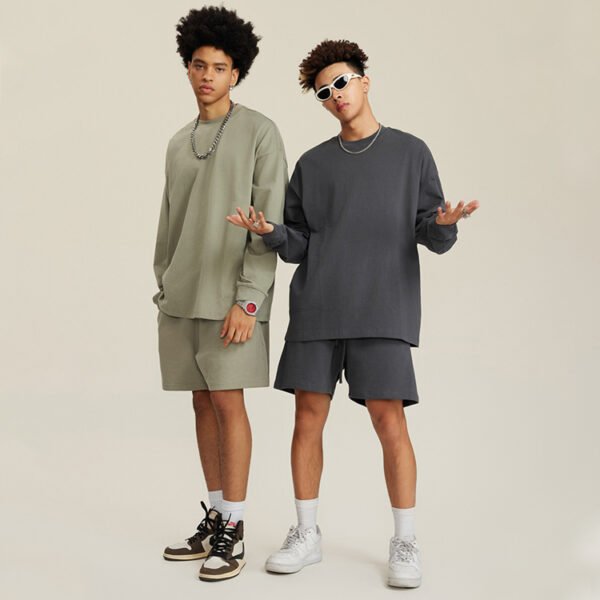

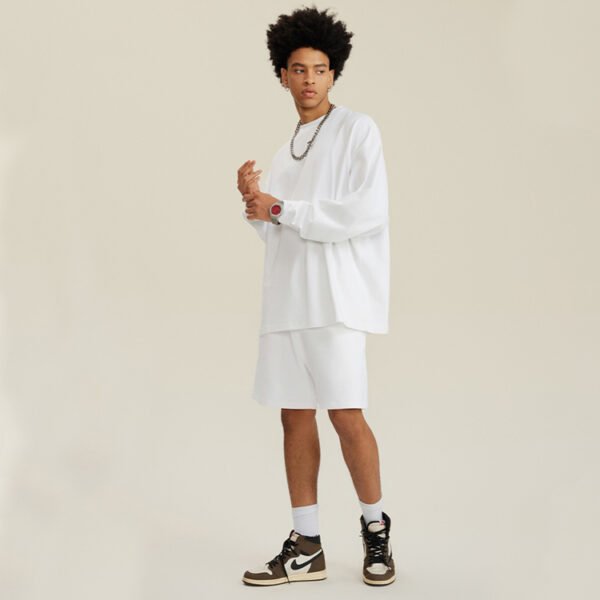
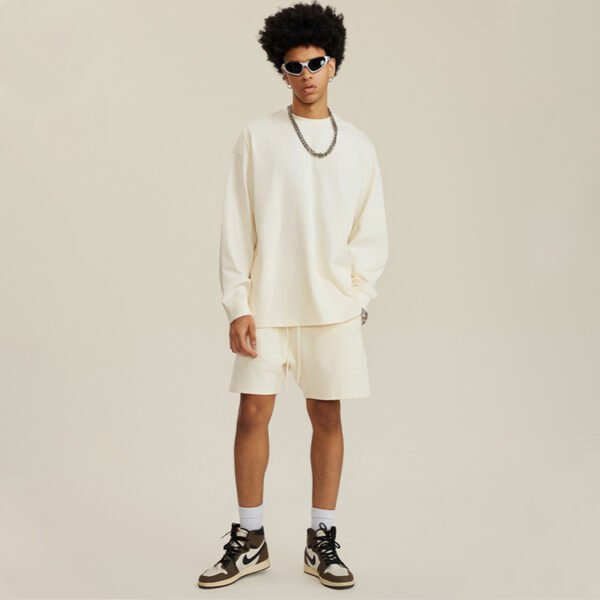

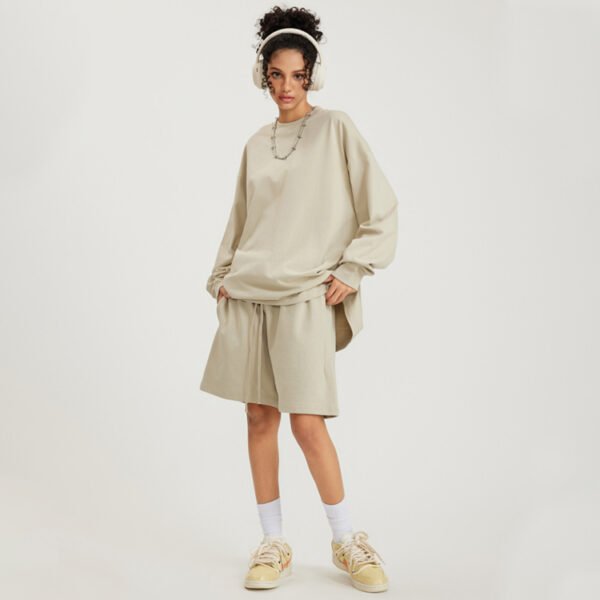

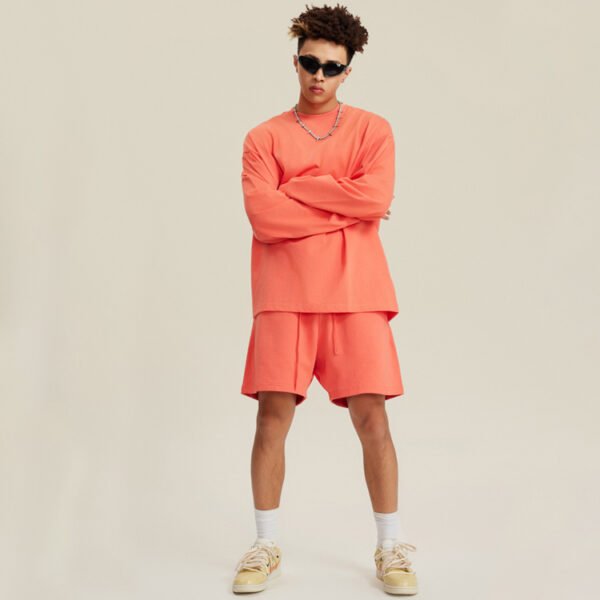

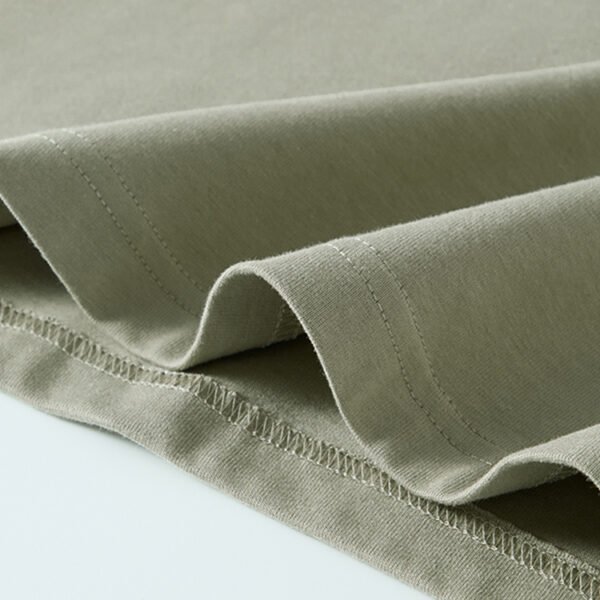










This custom oversized sweatshirt is built around pressing control and pile protection, using a smooth solid-color appearance, dropped shoulders, and broad long sleeves as its visual evidence. The development decision is how to retain surface softness and volume while achieving consistent presentation across multiple colorways and sizes.
Oversized Volume as a Technical Variable
The main image shows a broad body, dropped shoulder line, long sleeves, and generous ease through the torso. These proportions depend on fabric recovery and seam behavior, so pressing must support the intended volume rather than compressing the garment into a sharper silhouette.
A heavy-looking visual presence is suggested by the source wording, but weight and GSM are not verified. The buyer should approve measurements, sleeve extension, shoulder drop, and body length from the development sample before treating the silhouette as production-ready.
Pile Protection During Pressing
A raised or brushed inner surface can lose softness when exposed to excessive heat, pressure, or repeated contact with pressing equipment. The correct route should balance seam flattening against pile recovery, especially around cuffs, neckline, shoulder seams, and side seams.
Because the visible garment is plain, surface irregularity will be easy to notice. Buyers should inspect shine, glazing, crushed areas, seam impressions, and directional nap changes under consistent lighting before approving pressing parameters for the full color range.
Solid Color Surface Control
The supplied color lineup indicates a commercial program built around multiple solid shades rather than graphic placement. That makes the garment's face, hand, and shade uniformity central to approval, since there is no print or embroidery to distract from pressing marks.
Colorways can respond differently to heat, moisture, and compression depending on the approved fabric and dye route. Each representative shade should therefore be reviewed for surface recovery and visual consistency, rather than assuming one pressing setting suits every option.
Crewneck Construction Review
The image clearly shows a round neckline without a visible hood, while the source wording uses hoodie terminology. This is a material product-definition issue: neckline depth, rib behavior, hood attachment, and collar finishing cannot be approved interchangeably.
If the intended product is a crewneck sweatshirt, the sample should preserve the visible clean neckline and plain front. If a hooded adaptation is required, VeeWen should revise the pattern and review balance, weight, and pressing around the added hood seam.
VeeWen Development Workflow
VeeWen's workflow for this concept should begin with a fabric and pile review, followed by a pressing trial on key seam areas. The purpose is to connect equipment settings with the oversized block, color program, and desired surface appearance.
At the fitting checkpoint, the buyer can assess whether pressing has preserved sleeve volume, shoulder drop, neckline shape, and body length. A separate finishing review should document acceptable surface texture across light, mid-tone, and dark color references.
Approval Checkpoint
The final technical approval should capture fabric composition, weight, pile direction, pressing settings, neckline construction, measurements, color standards, and care instructions. Until those fields are confirmed, the visual reference supports direction but not a complete manufacturing specification.
Release the style only after the approved sample shows consistent surface softness, clean seams, stable proportions, and the correct crewneck or hooded configuration. The buyer should also confirm grading, colorway quantities, labeling, and MOQ: 100 pieces per style.
Buyer Questions
Is this product a hoodie or crewneck sweatshirt?
The supplied image visibly shows a round crew neckline without a hood. The source wording says hoodies, so the final neckline configuration must be confirmed before sampling.
Why does pressing matter for this garment?
Oversized sweatshirt panels can show flattened pile, shine, seam impressions, or reduced volume when pressed too aggressively; finishing must preserve softness and relaxed proportions.
Should every colorway use identical pressing settings?
Not automatically. Different shades and approved fabrics may respond differently, so representative colors should be checked for surface recovery, shade consistency, and visible pressing variation.
What is the minimum order?
The commercial minimum is MOQ: 100 pieces per style, subject to the final approved specification, colorway plan, grading, and production documentation.
Approve the Surface and Silhouette Route
Share the target color palette, fabric reference, neckline decision, size range, and finishing expectations with VeeWen. Confirm the sample's pile recovery, pressing marks, oversized measurements, color consistency, and MOQ: 100 pieces per style.



Reviews
There are no reviews yet.