
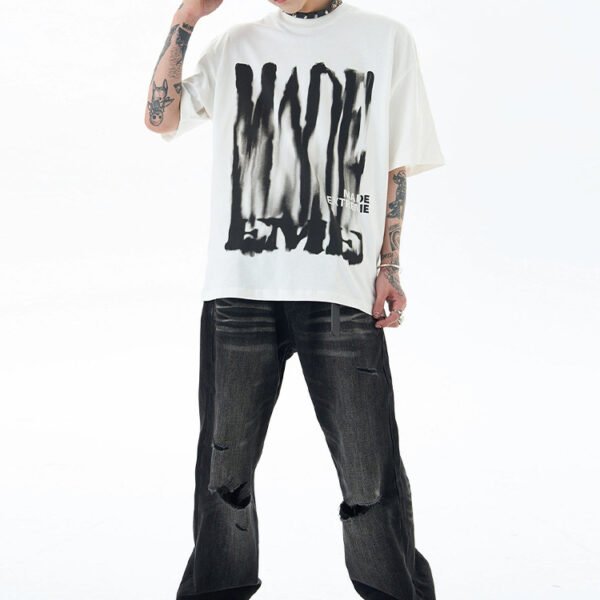

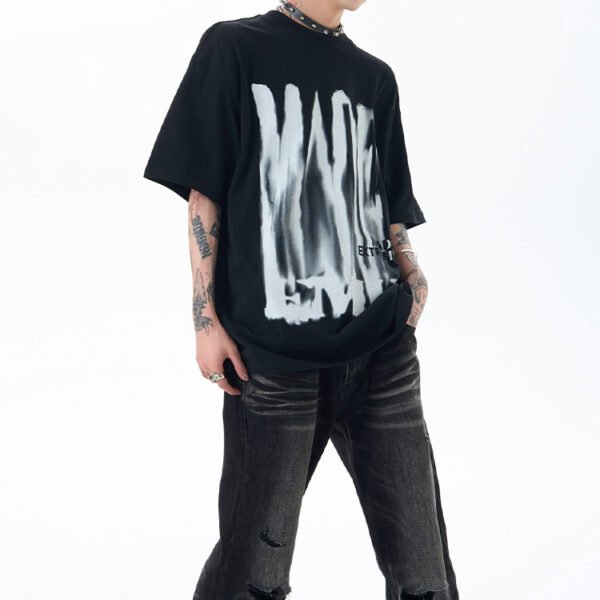
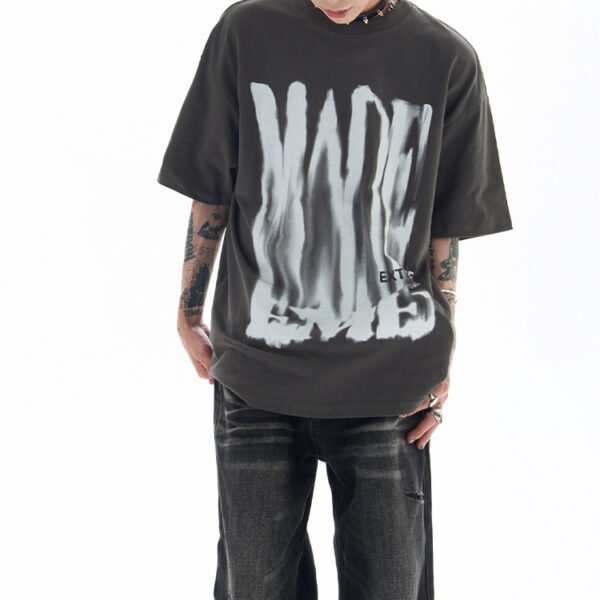
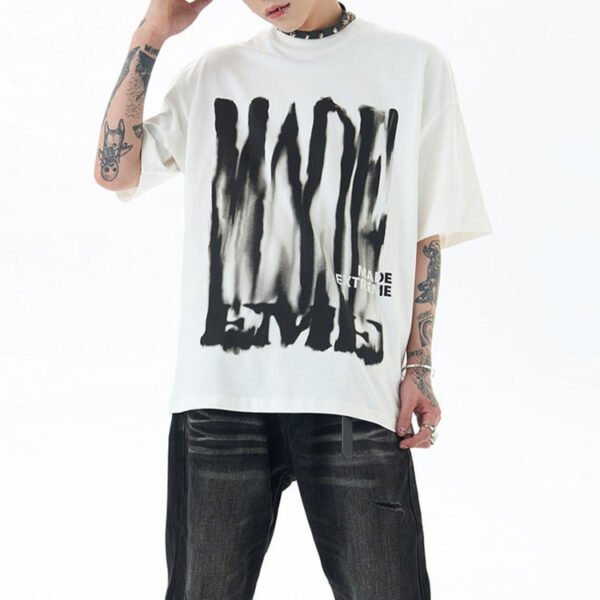
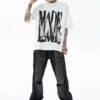
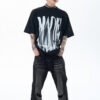
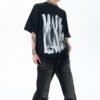

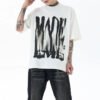
This custom oversized letter graphic T-shirt is built around vertical artwork that dominates the chest without crowding the neckline. The cream base, broad shoulder line, dropped sleeves, and controlled upper clearance create a technical balance between dramatic scale, readability, and everyday movement.
Control Vertical Artwork Scale
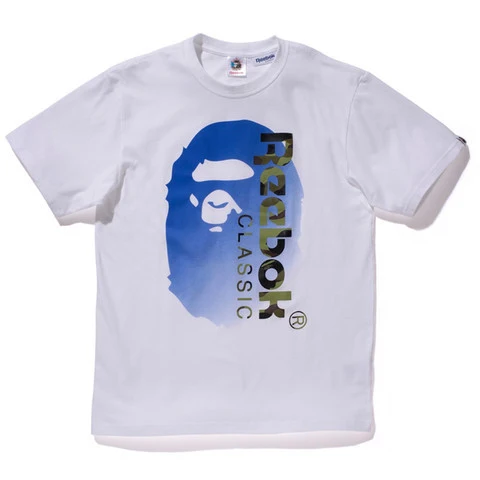
The supplied image shows tall black letterforms extending through much of the upper and middle chest, while the collar remains visually separate. This relationship is the central production issue: oversized typography must feel intentional without rising into the neckline or losing balance against the broad garment body.
VeeWen can convert that observation into a placement map using artwork height, width, top offset, and centerline measurements. The buyer should review the map against the actual front pattern, because oversized silhouettes change the available chest field and can make identical artwork appear unexpectedly small.
Use Clearance as a Movement Rule
The upper black artwork begins below the crew collar, creating a visible breathing zone that protects the design from rib stretch and neck movement. That space is comparable to operational clearance around a zip puller: it preserves access, movement, and visual separation at a working junction.
For this T-shirt, the rule should cover collar expansion, shoulder rotation, and on-body movement rather than hardware access. VeeWen's sample review can test whether the clearance remains stable when the wearer bends, layers, or pulls the relaxed neckline into ordinary use.
Balance Bold Letters with Negative Space
The cream ground around the black letters is not empty by accident; it prevents the tall forms from merging into the sleeve line, collar, or side seams. The small secondary lettering also works because it sits inside a larger composition with defined visual hierarchy and controlled surrounding.
A buyer should approve the letterform footprint together with its negative space. VeeWen can assess edge distances, internal spacing, and optical weight on the selected size, then adjust the artwork or placement before production if the dominant forms become crowded.
Align Artwork with the Oversized Block
Dropped shoulders and broad sleeves visibly expand the garment's horizontal frame, while the front artwork remains concentrated near the center. If the print is centered only by chest width, it may look too narrow; if enlarged to fill the body, it may overpower the neckline or reduce.
The development brief should therefore connect print dimensions to the oversized pattern proportions. VeeWen can compare shoulder width, chest width, sleeve opening, and artwork width as one system, helping the buyer decide whether the current scale supports the intended silhouette.
Confirm Surface and Print Behavior
The image suggests a distressed black treatment with irregular edges and tonal variation, plus a small light detail within the main letters. Those effects may depend on artwork preparation, ink deposit, fabric surface, curing, and washing, none of which can be confirmed from visual evidence alone.
VeeWen should prepare a physical print reference on the proposed cream fabric before final approval. The buyer can evaluate edge character, opacity, hand feel, cracking risk, and small-detail retention, ensuring the graphic's visual roughness is deliberate rather than inconsistent.
Approve the Graded Production Rule
The final checkpoint is whether the dramatic letter composition remains proportionate across sizes while retaining collar clearance and readable secondary detail. A single model image confirms the design direction, but it does not validate grading, fabric response, or production repeatability.
VeeWen can link artwork grading, pattern review, sample assessment, and buyer sign-off into one release gate. Confirm the finished print dimensions, top offset, centerline, color interpretation, and size behavior before proceeding with MOQ: 100 pieces per style.
Buyer Questions
Why does an oversized T-shirt need a clearance rule?
Large artwork can crowd the collar or seams as proportions change. Clearance protects visual separation, movement, and consistent placement across the size range.
Should the artwork scale change by size?
That depends on the approved design intent. Review fixed, proportionally scaled, and adjusted options against graded patterns before selecting one production rule.
Is the distressed print effect guaranteed?
No. The image shows an appearance only. Artwork treatment, ink behavior, curing, and wash durability require physical sample evaluation and confirmation.
What is the commercial minimum?
The exact commercial minimum is MOQ: 100 pieces per style, subject to the approved garment, artwork, materials, and development requirements.
Approve the Oversized Artwork Map
Share the letter artwork, size range, target fit, and print expectations with VeeWen to confirm collar clearance, negative space, graded scale, and sampling requirements for MOQ: 100 pieces per style.



Reviews
There are no reviews yet.