




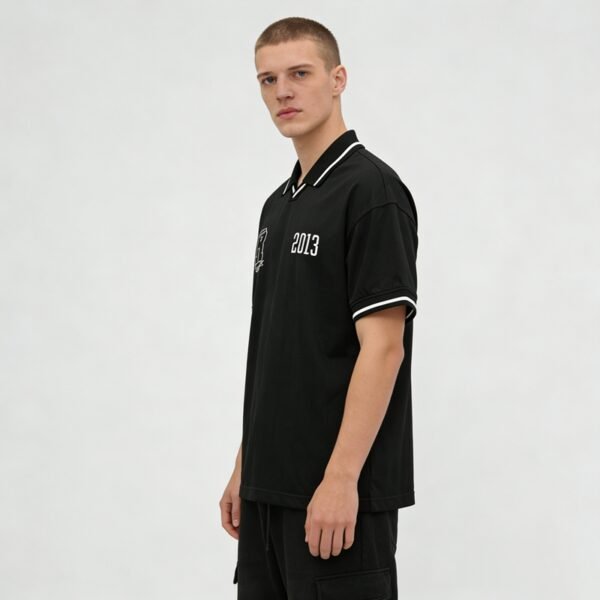





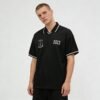
This custom oversized polo shirt is developed around the tension between softness and shape retention. The relaxed black body needs a pliable hand for comfort, yet its white piping and large framed back graphic demand enough recovery to stay controlled after wear.
Softness Must Support an Oversized Block
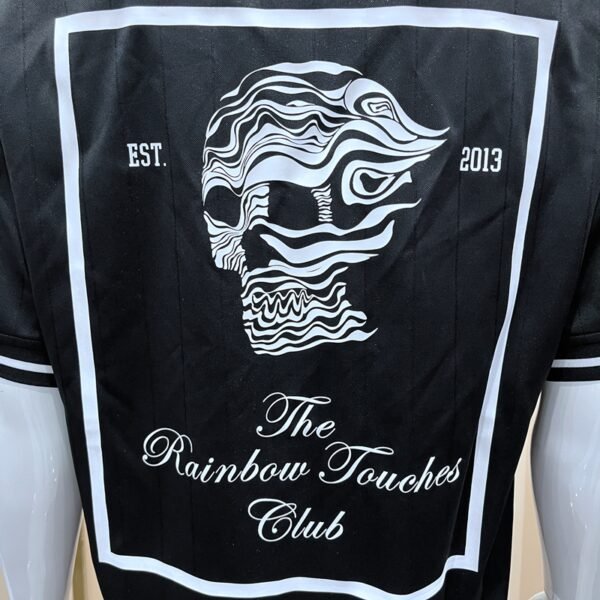
The supplied rear image shows generous width through the chest, dropped shoulders, and sleeves that extend well beyond a conventional polo proportion. That shape benefits from softness, allowing the body to fall naturally instead of standing away from the wearer.
However, excessive fluidity can make an oversized shirt look unstructured. The development target is a hand that bends comfortably at the shoulder and hem while preserving a stable outline when the wearer turns, reaches, or sits.
Recovery Protects Collar and Sleeve Definition
White piping remains visually sharp around the collar and sleeve openings, creating the shirt's strongest contrast against the black base. These edges depend on controlled recovery; if they relax too quickly, the oversized silhouette may look stretched rather than intentionally generous.
Fit review should inspect the collar after opening, closing, and repeated arm movement. The buyer should compare the relaxed measurement with the original pattern so softness is judged alongside shape retention, not as an isolated hand-feel preference.
The Back Panel Needs a Stable Foundation
The large rectangular frame occupies much of the rear body and surrounds a skull graphic with lettering. Because this decoration spans a broad area, the underlying panel must remain reasonably flat; excessive drape can buckle the frame and interrupt its visual geometry.
A development sample should test the decorated back while worn and laid flat. The team can then determine whether backing, stitch density, print coverage, or panel stabilization is needed, without assuming a construction detail not confirmed by the source.
Oversized Proportion Changes Decoration Scale
The rear artwork is scaled to match the shirt's broad body rather than functioning as a small chest emblem. That relationship makes the garment feel intentionally oversized, but it also increases the importance of centering, frame width, and clearance from the side seams.
VeeWen should grade the artwork with the body block instead of simply enlarging one master file. Each size needs a deliberate graphic relationship so the frame remains balanced while the collar and sleeve piping retain their intended visual authority.
VeeWen Workflow for Hand-Finish Balance
VeeWen's product-development workflow should separate the hand-feel decision from the decoration decision, then reunite them on one fitted sample. First, confirm the knit direction, softness target, and recovery expectation through a fabric and body review.
Next, apply the collar piping, sleeve edging, framed back graphic, and source-referenced embroidery or screen print to the approved block. The checkpoint is a wear test focused on edge relaxation, panel distortion, and whether softness still supports the intended oversized shape.
Buyer Checkpoint Before Approving the Block
The buyer should decide whether comfort or visual crispness has priority at the intended retail positioning. A softer shirt may feel more relaxed but lose edge definition sooner, while a firmer option may hold the frame better and feel less fluid.
Approve the block only after comparing hand, collar recovery, sleeve opening, back-panel flatness, and post-wear appearance. Record the chosen balance as a measurable development direction, with unverified performance claims excluded until tested.
Buyer Questions
Why does this polo need recovery?
Recovery helps the collar, sleeve edges, and oversized body return toward their intended shape after movement, reducing a stretched appearance around contrast piping.
Is the oversized fit already technically confirmed?
The oversized proportion is visible in the supplied rear image, but exact measurements, grading, and tolerance remain To Confirm through an approved fit sample.
How should the back graphic be developed?
Develop it with the body block, checking frame centering, seam clearance, decoration stability, and size grading before finalizing production artwork.
What is the minimum order quantity?
MOQ: 100 pieces per style. Color quantities and decoration specifications should be finalized after the fit and hand-feel balance receives approval.
Approve the Hand and Recovery Balance
Share the target fit measurements, artwork files, and preferred softness direction. VeeWen can align the fabric review, decorated sample, and shape-retention checkpoint for this oversized polo.


Reviews
There are no reviews yet.