

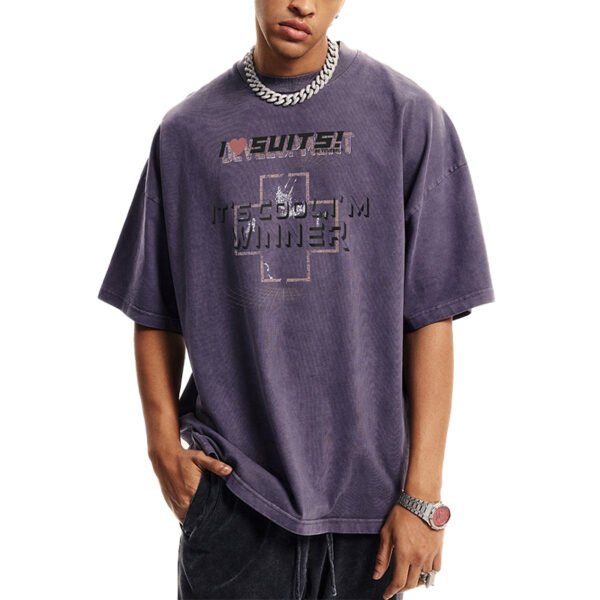
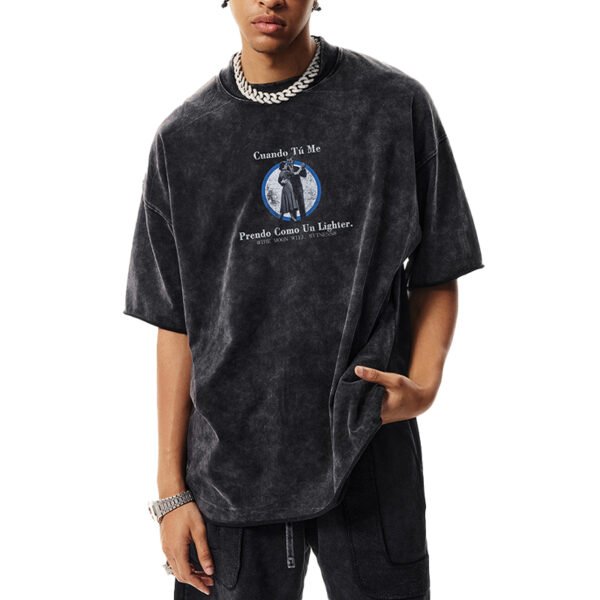
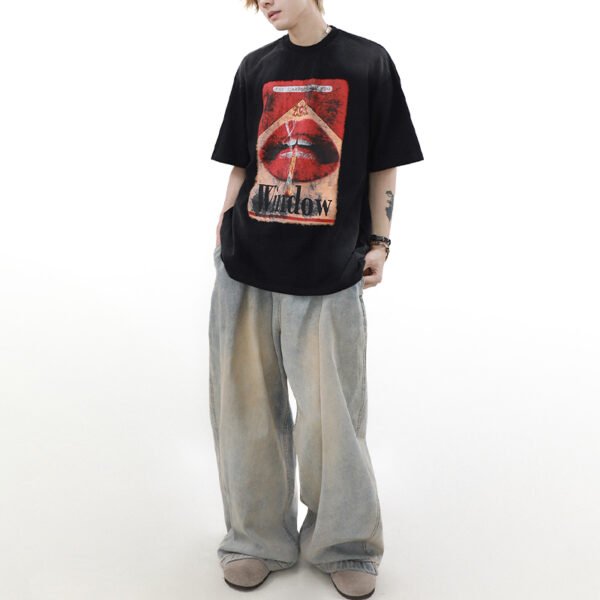





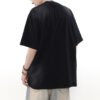

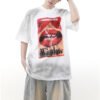
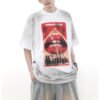

This custom oversized graphic T-shirt is developed around artwork scale and production repeatability. Its broad front composition, washed black ground, and relaxed proportions create a strong streetwear canvas, while disciplined placement and wash approvals help preserve visual impact across repeated production runs.
Artwork Scale as a Pattern Decision
The image presents a graphic that occupies much of the front panel, crossing the visual center and approaching the lower body. That scale is not decorative only; it must be positioned against shoulder width, chest depth, and finished length.
On an oversized garment, small pattern changes can shift the graphic noticeably relative to the neckline or hem. VeeWen should therefore lock artwork coordinates to graded measurements, documenting top, side, and center references before sample approval.
Contrast Through a Washed Ground
The black base appears intentionally washed, with lighter abrasion-like variation across the sleeves and body. That surface gives depth, but it also means a uniform digital preview cannot fully predict how light lettering and muted gold tones will read afterward.
The development checkpoint is a controlled wash comparison using the approved print or embroidery method on the intended base fabric. Buyers should assess contrast after treatment, because stronger washing may soften edges, alter darkness, or reduce small graphic details.
Repeatability in Multi-Tone Graphics
The visible design combines pale lettering, textured outlines, and a warm central image rather than one flat color. Each additional tone introduces another registration and coverage consideration, especially where the artwork crosses fabric folds or distressed-looking surface variation.
VeeWen's product-development workflow should separate artwork proofing from garment finishing approval, then reunite them in a decorated, washed sample. The buyer can use that sample to approve tonal hierarchy, edge behavior, and acceptable variation before the size set.
Fit Changes the Graphic Read
Dropped shoulders and an extended body create a broad, relaxed frame around the front artwork. The graphic therefore reads as a central panel rather than a compact chest mark, making proportion part of the product identity and not merely a comfort choice.
Before production, buyers should review the graphic on the actual approved measurement chart, including larger and smaller sizes. VeeWen can then verify whether the artwork remains balanced across grading, instead of allowing a fixed print to appear crowded or undersized.
Production Controls for Approval
Repeatability depends on measurable controls: artwork dimensions, placement references, color targets, print coverage, wash recipe, and inspection points. These controls are especially important when the desired appearance includes both a dark base and visible tonal irregularity.
The practical approval record should show a decorated pre-wash reference, a finished post-wash reference, and the permitted difference between them. Buyers should confirm which variation is intentional and which variation requires correction before releasing the style.
VeeWen Development Checkpoint
For this style, VeeWen's workflow should begin with the buyer's artwork file, measurement chart, and wash direction, then translate them into a placement specification. The first sample should test the complete interaction between oversized proportions, decoration scale, and surface treatment.
The final buyer decision is a signed visual standard covering artwork position, tonal contrast, wash character, and grading behavior. Once those points are approved, the style can proceed at MOQ: 100 pieces per style with the documented reference attached.
Buyer Questions
What artwork information should accompany development?
Provide the final vector or high-resolution artwork, intended dimensions, placement references, color expectations, and any details that must remain legible after washing.
Can the graphic scale across sizes?
Yes, scaling can be evaluated during development, but the buyer should approve size-specific dimensions and placement so the composition remains balanced across the range.
Is the washed appearance standardized?
The visible wash character is a development reference, not a verified recipe. VeeWen should submit a finished sample for approval before production standards are finalized.
What is the minimum order quantity?
The commercial minimum is MOQ: 100 pieces per style. Final specifications, artwork approval, and production documentation should be completed before order confirmation.
Approve the Artwork and Wash Standard
Send your artwork, measurement chart, and wash direction to VeeWen for a coordinated sample review. Confirm scale, placement, contrast, and grading behavior before moving forward at MOQ: 100 pieces per style.



Reviews
There are no reviews yet.