
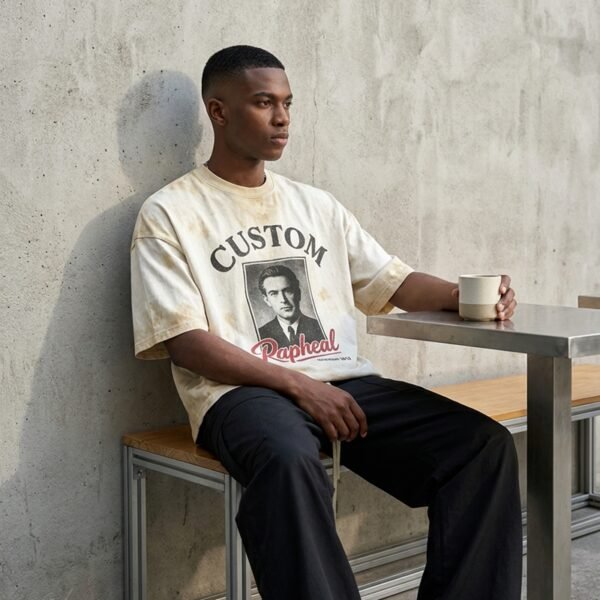

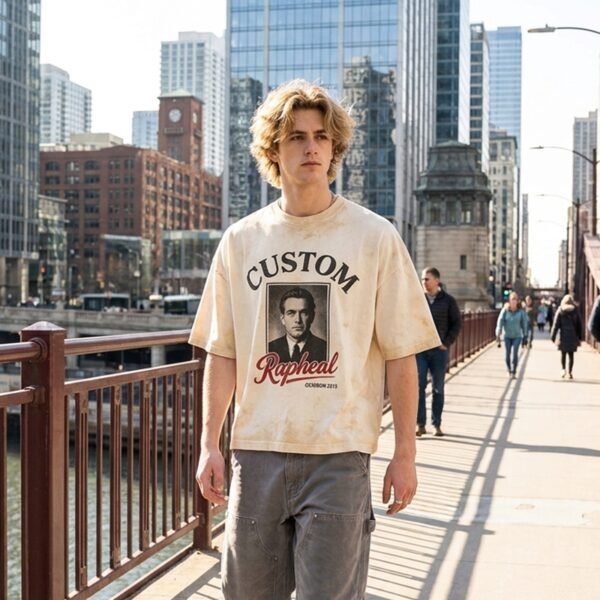


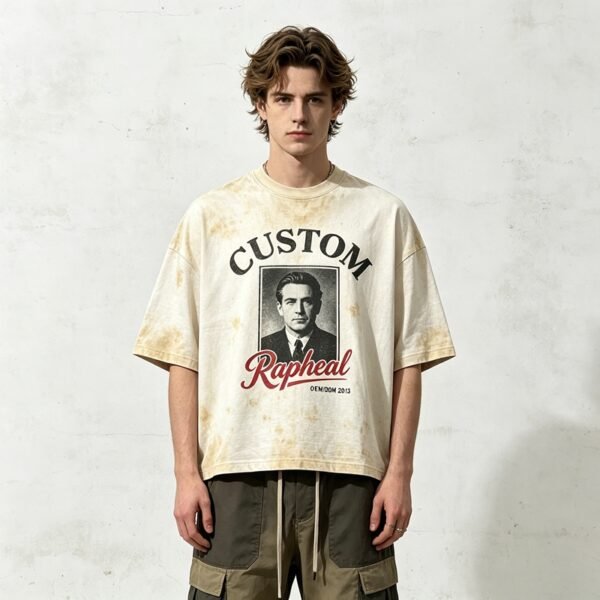



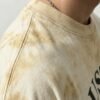
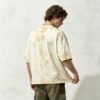


This custom oversized tee is developed around vent, pleat, or gusset mobility. The supplied image shows dropped shoulders, broad sleeves, a seated body fold, and a large centered graphic. VeeWen can use these cues to determine whether movement details should be hidden, visible, or integrated into the silhouette.
Oversized Proportion Still Needs Movement Control
An oversized body creates visual room, but it does not automatically guarantee comfortable movement. Dropped shoulders can shift the underarm point downward, while broad sleeves may lift the whole body during arm motion. The supplied image therefore supports a mobility review beyond simple circumference measurements.
VeeWen should compare a clean underarm with a discreet gusset, shaped side panel, or controlled pleat. The choice depends on the desired silhouette: extra fabric can improve reach, but too much volume may alter drape, increase bulk, or compete with the graphic's visual focus.
The Seated Pose Reveals Fold Behavior
The supplied image shows the wearer seated, creating folds through the waist and lower body while the upper graphic remains prominent. Those folds are useful evidence for development because they show where the tee compresses, rides, and changes surface tension during ordinary daily movement.
A mobility sample should be reviewed standing, seated, and with raised arms. Inspect whether the hem rides excessively, whether the sleeve opening binds, and whether the graphic breaks across stress lines. These observations help determine if the construction needs a gusset, pleat, or revised side seam.
Graphic Scale Influences Construction Placement
The portrait and lettering occupy a substantial central area, so mobility details should avoid interrupting artwork or creating uneven distortion around its edges. A side gusset may preserve the print field, while a front pleat could introduce unwanted visual breaks beneath the design.
During pattern engineering, VeeWen should establish the artwork bounding box before finalizing movement details. Graphic placement, body width, shoulder drop, and side-seam geometry must be reviewed together so the tee moves comfortably without shifting the design away from its intended center.
Wash Character Requires Surface Discipline
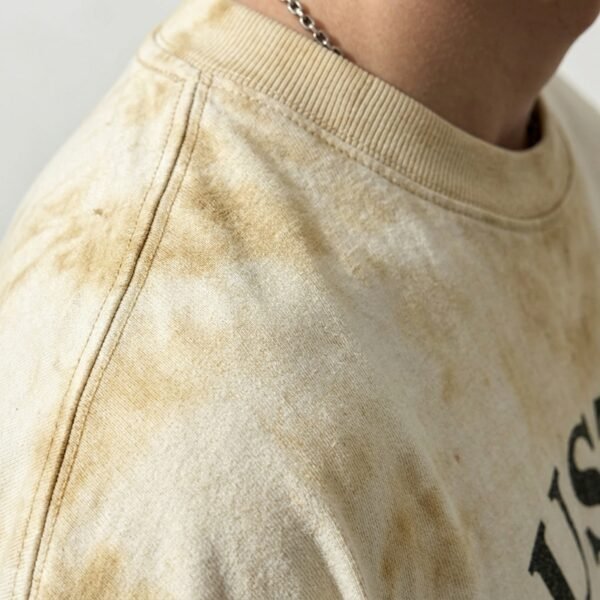
The cream base appears unevenly washed, with tonal variation across the body and sleeves. Such a finish can emphasize construction differences: a gusset, pleat, or reinforced underarm may absorb color differently or create a visible boundary after washing and garment handling.
The development review should therefore inspect mobility details before and after the agreed wash process. Confirm whether the chosen construction blends into the surface or becomes a deliberate feature, while keeping color variation, graphic contrast, and seam appearance within the approved visual direction.
Workflow Checkpoint: Lock Mobility Before Artwork
VeeWen's workflow should first translate the oversized reference into a base block with shoulder drop, sleeve width, body length, and underarm position. Next, the buyer selects the mobility mechanism and confirms whether it remains concealed or contributes visibly to the tee's design language.
Artwork should be placed only after the mobility geometry is stable. The sample review then checks movement, fold behavior, print scale, and wash appearance together. This sequence reduces the risk of approving a graphic layout that later conflicts with a revised gusset, pleat, or side panel.
Approval Criteria for the Production Sample
The buyer should approve this tee when the oversized body moves without binding, the graphic remains visually centered, and the mobility detail does not create distracting bulk. Standing and seated views should both retain the relaxed proportion shown in the supplied image.
Before purchase authorization, confirm final fabric composition, weight, wash recipe, graphic process, artwork dimensions, neckline construction, labeling, grading, and color standards. The commercial checkpoint is MOQ: 100 pieces per style, subject to the finalized development brief and approved sample.
Buyer Questions
Why is mobility the main issue for this tee?
The oversized silhouette, dropped shoulders, seated folds, and large centered graphic make underarm comfort and distortion important during standing, sitting, and arm movement.
Is a gusset already visible in the image?
No. The image supports a mobility-development axis, but it does not verify an existing vent, pleat, gusset, or specialized underarm construction.
Will a mobility detail change the graphic placement?
It can. Artwork should be mapped against the final body and side-seam geometry so added movement volume does not distort or visually displace the design.
What commercial minimum should buyers plan for?
The exact commercial minimum is MOQ: 100 pieces per style. Final ordering remains subject to approved materials, artwork, grading, specifications, and production documentation.
Approve the Mobility Direction
Share the target fit, artwork file, wash reference, size range, and preferred mobility approach with VeeWen for focused pattern review and sample approval.


Reviews
There are no reviews yet.