


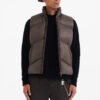


This padded vest is developed around lower-edge control: rib recovery must contain the insulated body without restricting layering. The supplied image shows a stand collar, center zipper, angled quilting, and slanted pockets, creating a clear platform for testing hem tension, appearance, and wear comfort.
Define the Hem Recovery Requirement
The rib must recover after stretching over layered knitwear while avoiding a tight band that lifts the padded shell. For this vest, the approval target is a lower edge that returns evenly after movement, with no visible rippling beside the zipper or pocket openings.
Because the image does not confirm rib knit, the first specification should define rib width, relaxed measurement, stretch direction, recovery expectation, and attachment method. These variables control whether the hem frames the torso neatly or creates excess compression at the waistline.
Read the Padded Body as a Load
The vest appears built from a lofted, paneled body, so the hem is not working against a flat fabric only. Filling volume, seam allowance, and quilting compression can pull the lower edge outward, making recovery consistency important across the complete circumference.
The front image shows the hem extending beneath the lowest diagonal panel and around two slanted pockets. Pocket bag bulk and zipper insertion should therefore be checked together with rib tension, because localized thickness can distort the edge during wear.
Balance Comfort with Containment
Stronger recovery can improve shape retention, yet excessive compression may make the vest feel restrictive when worn over a sweatshirt. The commercial decision is not maximum tightness; it is a repeatable balance between edge containment, arm mobility, and comfortable layering clearance.
A buyer should review the vest on the intended base layer, then inspect the hem after sitting, reaching, and opening the zipper. Approval should consider whether the rib returns without rolling, twisting, or exposing an uneven transition into the padded shell.
Coordinate Hem and Collar Geometry
The raised stand collar gives the vest a structured upper boundary, while the hem establishes the lower visual weight. Matching their proportions matters: an overly firm hem can make the garment look top-heavy, whereas weak recovery may undermine the collar's defined appearance.
The center zipper provides a useful alignment reference for evaluating symmetry. During fit review, compare left and right hem behavior from the zipper outward, then examine the side seams and pocket corners for drag lines caused by inconsistent tension.
Translate the Axis into VeeWen Development
VeeWen can place hem recovery inside the product-development brief as a measurable approval gate, alongside the vest's panel map, pocket positions, collar height, and zipper length. The purpose is to keep the edge behavior connected to the actual pattern and padding arrangement.
At sample stage, VeeWen's team should document relaxed and extended hem measurements, construction notes, and photographs after repeated manual stretching. The buyer can then approve a defined recovery behavior before grading, reducing ambiguity when the style moves toward production.
Set the Buyer Approval Checkpoint
The checkpoint is a physical review of the finished lower edge, not a judgment based on appearance alone. Confirm the rib identity, attachment quality, recovery after extension, and comfort over the planned layer before approving the vest's production specification.
If the hem passes but the silhouette feels compressed, adjust rib tension or relaxed circumference rather than simply increasing padding. If recovery is weak, revise the rib or seam method first, because extra filling could conceal the issue without solving edge stability.
Buyer Questions
Is the vest made from polyester?
The source wording references woven polyester, but shell composition, lining, filling, and final material specification should be confirmed during development.
Does the image confirm a rib-knit hem?
No. The image shows a padded lower edge, while rib presence, width, recovery, and attachment method remain open technical checkpoints.
What should the first sample prove?
The first sample should prove hem recovery over the intended layer, balanced circumference tension, symmetrical zipper alignment, and undistorted pocket and side-seam areas.
What is the commercial minimum?
The commercial minimum for this development record is MOQ: 100 pieces per style, subject to final approval of specifications and production details.
Approve the Hem Recovery Brief
Send the intended layer, measurement target, and rib direction to VeeWen for a focused vest development review and sample approval checkpoint.


Reviews
There are no reviews yet.