



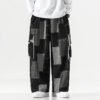


These custom patchwork cargo jeans are built around visual engineering: every contrasting panel, seam crossing, pocket, and stitch line must cooperate so the utility surface looks deliberate in motion.
Why Patchwork Alignment Controls the Design
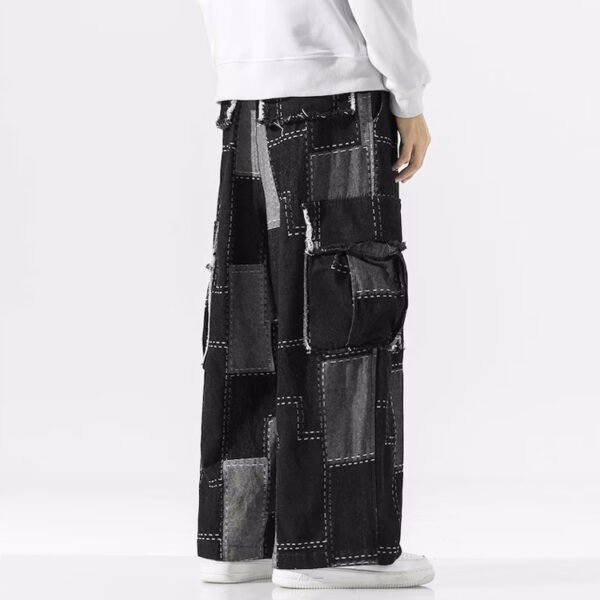
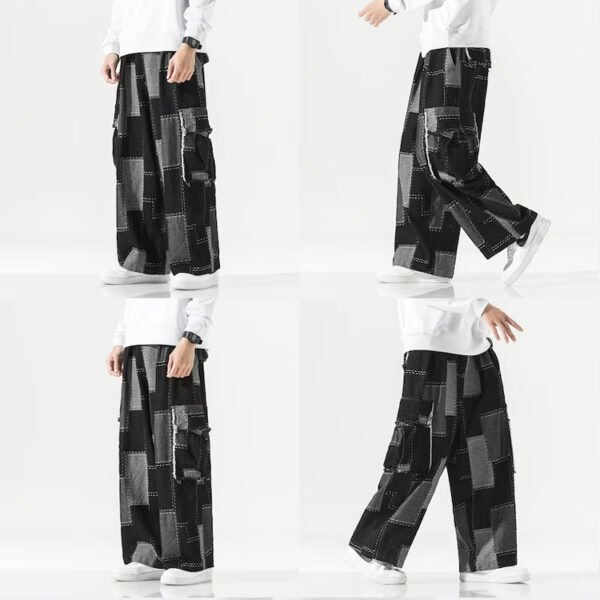
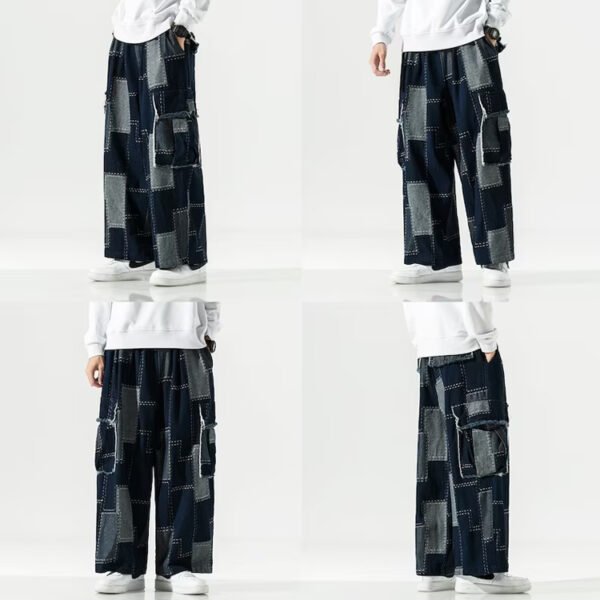
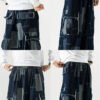
The supplied image shows rectangular gray panels distributed across black and navy trouser bodies, with several patches approaching or crossing visible seams. Because contrast makes every interruption noticeable, even small registration shifts can change the garment from composed geometry into accidental fragmentation.
Alignment is therefore a construction issue as much as a styling issue. VeeWen should establish a panel map that identifies each patch boundary, seam relationship, and grain direction before cutting, allowing the buyer to evaluate the complete front and side visual system.
Managing Seam Crossings and Topstitch Paths
White contrast stitching visibly traces many patch edges and pocket outlines, creating a second graphic layer over the denim surface. Where those lines meet inseams, outseams, or rise seams, inconsistent spacing can make the trousers appear twisted even when the base pattern is correct.
The development sample should check stitch distance, corner turns, thread tension, and continuity at every high-visibility crossing. VeeWen can use the approved panel map to distinguish intentional offsets from errors, giving buyers a specific construction reference before grading.
Pocket Placement Within the Panel Map
The cargo pockets shown on the outer legs are not visually independent; their flaps, bodies, and attachment edges overlap the patchwork field. Positioning them without reference to adjacent panels could hide key contrasts, interrupt a planned seam, or create uneven visual weight between left and right legs.
For VeeWen's workflow, pocket coordinates should be locked together with panel coordinates and the approved wide-leg pattern. Buyers should assess hand access, flap balance, and side-seam clearance while wearing the sample, because utility placement affects both appearance and movement.
Elastic Waist and Wide-Leg Proportion
The source wording identifies an elastic waist, and the image shows a relaxed trouser shape falling broadly from the waistband toward the shoes. That proportion gives the patchwork room to read, but it also means the waist must stabilize the garment without collapsing the upper panel arrangement.
VeeWen should evaluate waistband recovery, casing bulk, rise comfort, and leg opening against the intended size range. The buyer approval should confirm that gathering remains controlled and that the first horizontal panel relationships stay visually consistent when the elastic is relaxed or extended.
Colorway Rules for Black and Navy Bases
Two related color directions are visible: black with gray panels and navy with gray panels. The shared construction language suggests a repeatable panel system, but the darker bases may alter perceived contrast, thread visibility, and the apparent size of each patch.
The colorway development should preserve panel identity while allowing controlled material or shade substitutions where approved. VeeWen can present side-by-side samples using the same map, enabling the buyer to confirm whether stitching and patch contrast remain legible without relying on unverified wash or colorfastness claims.
VeeWen Approval Gate for Panel Engineering
The key production checkpoint is a fully assembled sample viewed from front, side, and seated positions. VeeWen should document panel numbering, seam allowances, topstitch routes, pocket coordinates, waistband construction, and approved colorway references in one technical record.
The buyer should release the style only when adjacent panels meet intentionally, pocket placement supports the leg geometry, and the elastic waist does not distort the upper map. This approval creates a practical foundation for MOQ: 100 pieces per style and subsequent size grading.
Buyer Questions
What makes this patchwork jean technically demanding?
The challenge is coordinating patch boundaries, seam crossings, pocket attachments, and contrast topstitching so visible geometry remains intentional across both legs.
Can the panel arrangement be changed?
Yes, the panel map can be developed around approved artwork, color blocking, pocket needs, and grading requirements before cutting begins.
Are the black and navy colorways confirmed for production?
They are visible development references only. Final shades, panel materials, wash treatment, and color approvals require buyer confirmation from samples.
What commercial minimum applies to these jeans?
The exact commercial minimum is MOQ: 100 pieces per style, after the panel map, construction details, materials, and grading are approved.
Approve the Panel Map and Utility Layout
Share the preferred colorway, size range, and pocket requirements so VeeWen can align the panel map, topstitching, elastic waist, and production sample review.

Reviews
There are no reviews yet.