


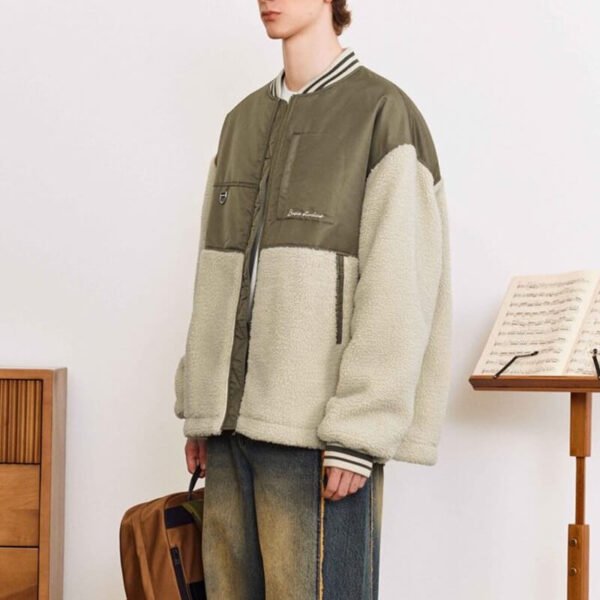





This custom patchwork fleece bomber jacket is developed around fabric relaxation before cutting, a practical control point for mixed-material panels. The image shows a cream fleece body, olive-gray woven sections, rib trims, and a central zipper whose alignment depends on stable component dimensions.
Why Relaxation Matters in Patchwork Cutting
Fleece can recover or settle differently from smoother woven fabric after spreading, handling, and storage. If cutting begins too soon, adjoining blocks may shift in length or width, creating visible mismatch around the zipper, chest seams, hem, and shoulder lines.
The supplied image makes this risk commercially relevant because the front is divided into broad horizontal and vertical zones. A small dimensional difference can interrupt the intended color blocking, change pocket placement, or make the relaxed bomber silhouette appear twisted rather than deliberately engineered.
Mixed-Fabric Spreading Strategy
VeeWen's development workflow should record each fabric's relaxation condition before marker planning, then separate fleece and woven components when their recovery behavior differs. The team can compare measured lengths after rest and establish cutting references for each panel group.
This workflow connects directly to the pictured garment's construction: the soft cream lower body and sleeves meet smoother olive-gray upper panels. Separate control records help preserve seam matching while allowing each material to retain its intended hand feel and visual weight.
Panel Alignment Around the Zipper
A center-front zipper becomes a useful approval reference because both sides must meet cleanly despite contrasting fabrics. Relaxed and measured panels should be checked against the zipper tape, collar opening, chest division, and hem before bulk cutting is released.
The image shows the zipper crossing the upper and lower patchwork zones without a dramatic decorative interruption. That restrained arrangement requires accurate panel lengths and consistent seam allowances, especially where fleece thickness can make matching and pressing appear less precise.
Managing Ribbed Edge Balance
Rib cuffs and hem behave as stretch components rather than stable woven blocks, so their relationship with relaxed body panels requires separate measurement control. Overlong or undersized body edges can create gathering, flaring, or unwanted compression at the finished openings.
For this style, the striped ribbing visually frames the cream fleece and reinforces the bomber identity. VeeWen should approve edge measurements after body relaxation, then verify that rib attachment distributes fullness evenly without distorting the olive-gray upper panel proportions.
Sample Review Checkpoints
The first development sample should be reviewed for panel length, zipper straightness, shoulder balance, sleeve symmetry, and hem level after the garment has rested. These checks reveal whether relaxation assumptions translate into the actual assembled jacket rather than only flat components.
Buyer approval should focus on measurable appearance decisions: acceptable alignment tolerance, preferred ease, and whether fleece loft changes the intended silhouette. Any revised fabric lot or finish should trigger a fresh relaxation observation before updated patterns are approved.
From Approved Pattern to Production Release
Once the buyer approves fabric references, relaxation notes, and sample measurements, VeeWen can carry those controls into the technical pack and cutting-room instructions. The production record should identify panel group, spreading condition, grain direction, and measurement checkpoints.
This product-specific workflow protects the design's central value: contrast that looks intentional because adjoining surfaces remain balanced. The commercial decision is to release the style at MOQ: 100 pieces per style after the approved construction and dimensional tolerances are documented.
Buyer Questions
What is the main development risk for this jacket?
The main risk is dimensional mismatch between fleece and woven panels, which can affect zipper alignment, seam matching, hem balance, and the relaxed silhouette.
How should fabric relaxation be approved?
Approve relaxation through measured before-and-after dimensions for each material, followed by a sample review covering panel alignment, garment balance, and edge behavior.
Can the color blocking be changed?
Yes, the patchwork layout can be developed through buyer-approved artwork, material references, and revised markers, while maintaining documented seam and proportion controls.
What is the minimum order quantity?
The commercial minimum is MOQ: 100 pieces per style, with final production proceeding after specifications, samples, and tolerances receive buyer approval.
Approve the Dimensional Control Plan
Send your panel artwork, target measurements, and material references to VeeWen for development review. We can confirm relaxation checkpoints, sample priorities, and the path toward MOQ: 100 pieces per style.


Reviews
There are no reviews yet.