
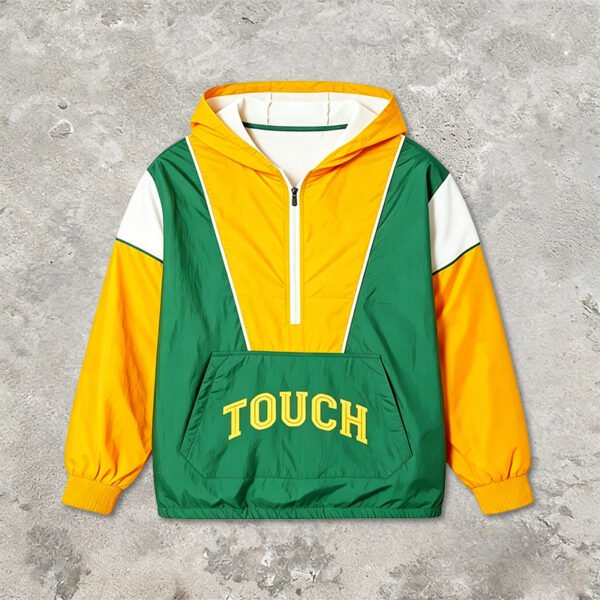

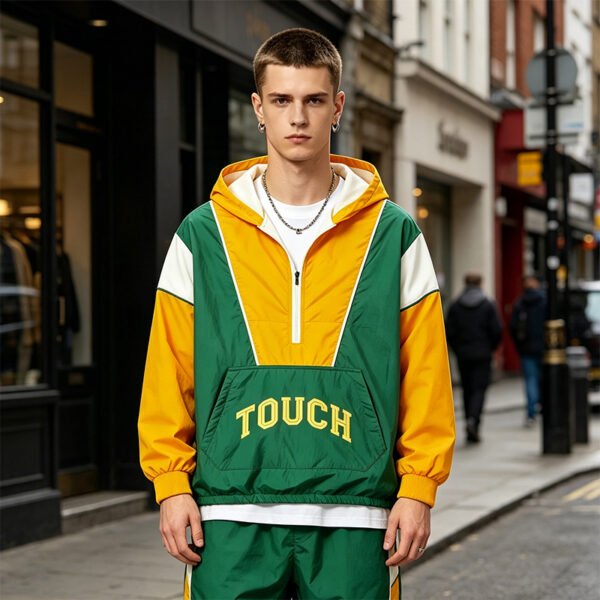

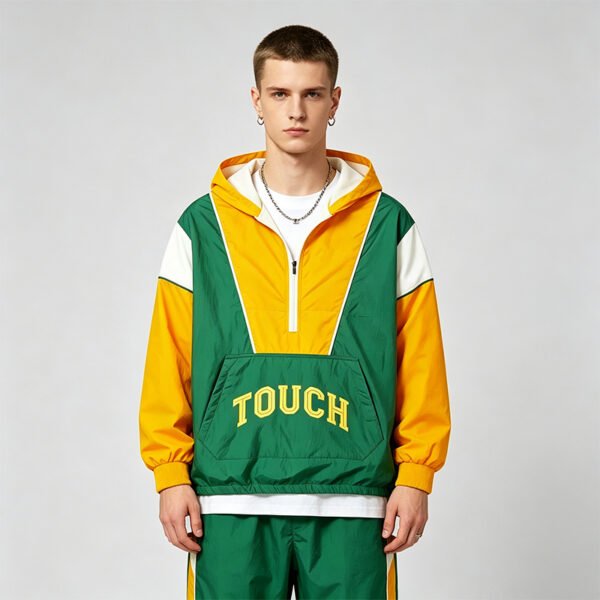
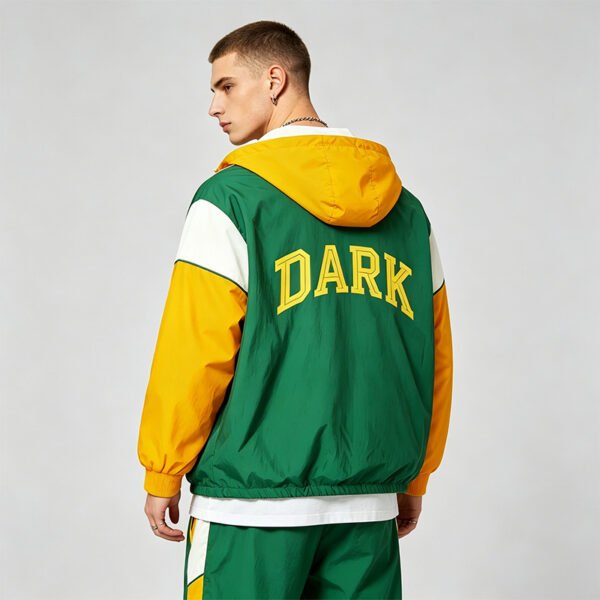
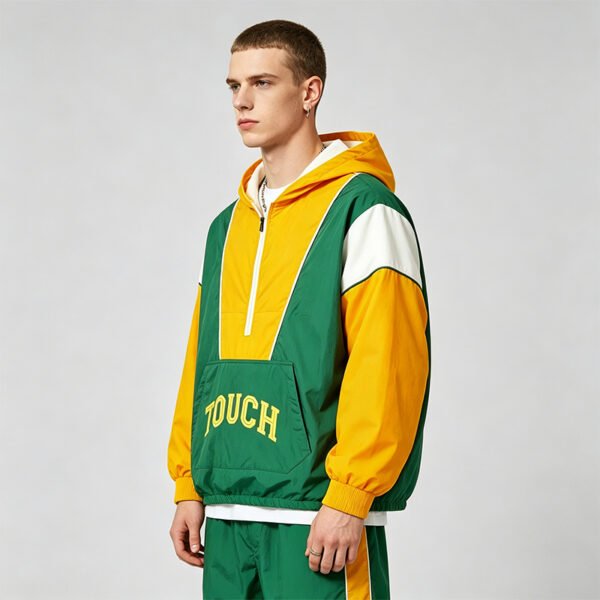







This windbreaker should be approved as a seam-visibility system. The supplied image shows green, yellow, and white nylon-looking panels, a centered quarter zip, hood, elastic cuffs, and a large pouch pocket. Because every join crosses contrasting colors, thread selection directly shapes perceived precision.
Why Thread Becomes Visible Design
Patchwork creates repeated transitions between colors, and those transitions naturally draw the eye toward stitching. On the supplied jacket, green, yellow, and white panels meet around the hood, shoulders, sleeves, zipper, and pocket, so thread cannot be treated as an invisible utility.
A matching thread can reduce distraction within individual panels, while a controlled contrast can emphasize the engineered blocking. The correct choice depends on whether the collection wants quiet technical polish or graphic seam definition across the entire jacket.
Mapping the Jacket's Seam Landscape
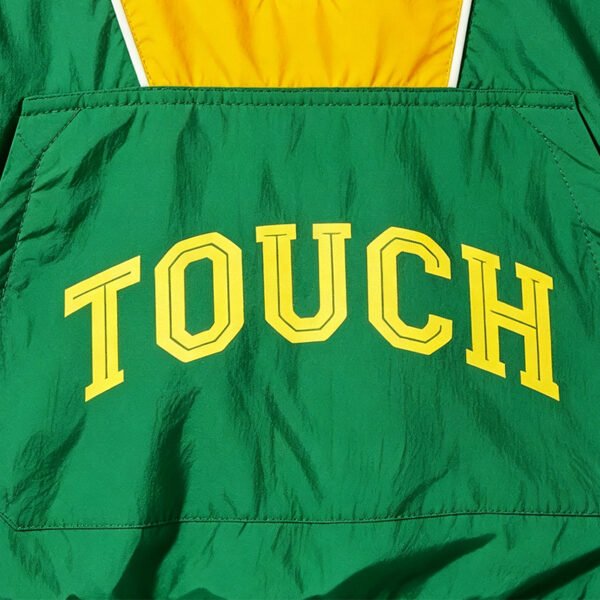
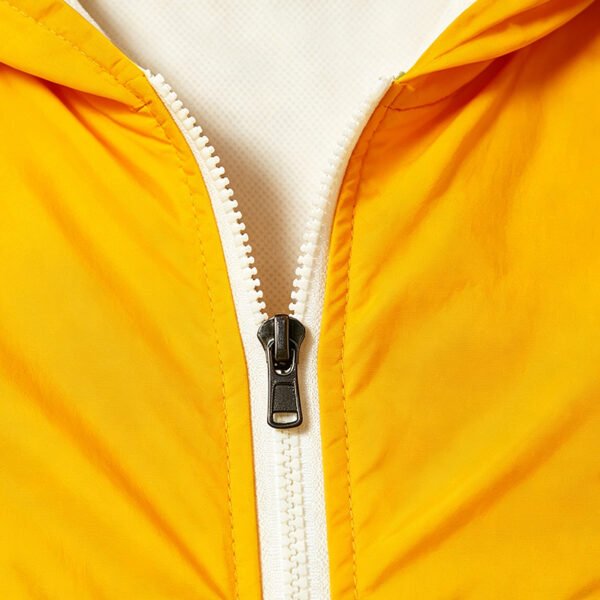
The image shows a strong center zipper, hood opening, shoulder transitions, sleeve blocks, cuff joins, pocket edges, and lower body divisions. Each location carries different visual weight, meaning one thread decision may not produce equal results across all construction zones.
The buyer should identify priority seams before sampling. Zipper lines and pocket edges may require the cleanest visual control, while less prominent interior joins can follow a practical matching standard if the exterior appearance remains consistent.
Matching Versus Controlled Contrast
Panel-matched thread helps each color field read as a clean uninterrupted surface and can make minor seam irregularities less prominent. Its limitation is that transitions may lose graphic emphasis, particularly where the design depends on crisp outlined geometry.
A single contrast thread can unify the garment and make the patchwork architecture more explicit. Its limitation is increased exposure of stitch density, tension variation, seam waviness, and alignment errors, especially on lightweight or coated nylon surfaces.
Quarter-Zip and Hood Considerations
The centered quarter zipper creates a vertical reference that visually divides the yellow front area and frames the hood opening. Thread around this region should be reviewed for straightness, consistent spacing, and clean intersections with the surrounding panel boundaries.
The hood and neckline combine curved and straight seam paths, making them sensitive to puckering and uneven tension. Sampling should inspect the garment on a body or hanger, because seam behavior can change when the hood and front placket are opened.
VeeWen Development Workflow for This Axis
VeeWen can develop a seam board alongside the first garment sample, showing proposed thread colors, stitch appearance, seam allowances, and priority construction zones. This makes the thread decision reviewable before the full patchwork layout is locked.
The workflow should then compare at least two exterior treatments on the same panel map: blended thread and intentional contrast. Recording the selected treatment by seam category helps production teams preserve the visual hierarchy through cutting, sewing, zipper insertion, and pocket assembly.
Buyer Approval Checkpoint
Approve the panel map first, including the exact boundaries around the hood, zipper, sleeves, and pouch pocket. Then judge thread visibility at normal viewing distance and close range, since both brand presentation and construction confidence depend on the result.
The final checkpoint is a construction approval that names thread colors, stitch appearance, seam allowance expectations, and tolerance for waviness or puckering. The buyer should also confirm the water-resistance target and any coating details before production documentation is complete.
Buyer Questions
Is the nylon composition fully verified?
Nylon is identified in the supplied source wording, but exact composition, fabric weight, coating, membrane, and performance specifications require confirmation during technical development.
Should thread match every color panel?
Not necessarily. Panel-matched thread can quiet seams, while controlled contrast can emphasize geometry; VeeWen should sample both against the buyer's intended visual hierarchy.
Which seams need priority review?
Review the center zipper, hood opening, shoulder transitions, sleeve joins, pocket edges, and hem because these visible areas strongly influence perceived patchwork precision.
What is the minimum order quantity?
The exact commercial minimum is MOQ: 100 pieces per style. Ordering remains subject to approved panel layouts, materials, construction details, colors, and production records.
Approve the Seam Visibility System
Send your panel artwork, color standards, zipper preferences, and seam priorities to VeeWen. We will prepare a focused construction comparison so thread appearance is approved before production release.


Reviews
There are no reviews yet.