










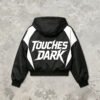

A graphic hooded jacket becomes commercially stronger when storage survives real movement. This development record focuses on pocket position, seam loading, and reinforcement planning, using the supplied black-and-white panel layout as evidence for a structured streetwear outerwear program.
Pocket Geometry Controls Daily Access
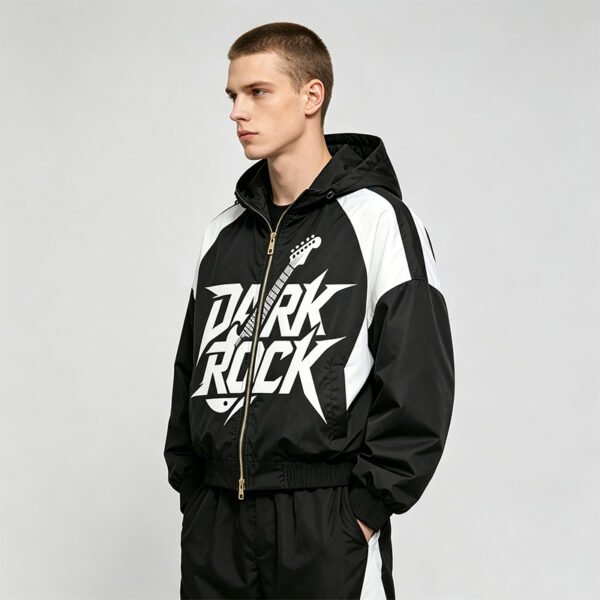
The visible pockets are positioned on the lower front, close enough to the center zipper for natural hand entry while remaining inside broad body panels. That location supports quick access, but the opening angle, depth, and hidden edge finish must be confirmed through pattern development.
A pocket placed too near the zipper can collide with the slider, graphic placement, or a user's hand during walking. Moving it outward improves clearance but increases side-seam leverage. VeeWen should test both options with realistic contents before locking the production pattern.
Reinforcement Must Follow Load Paths
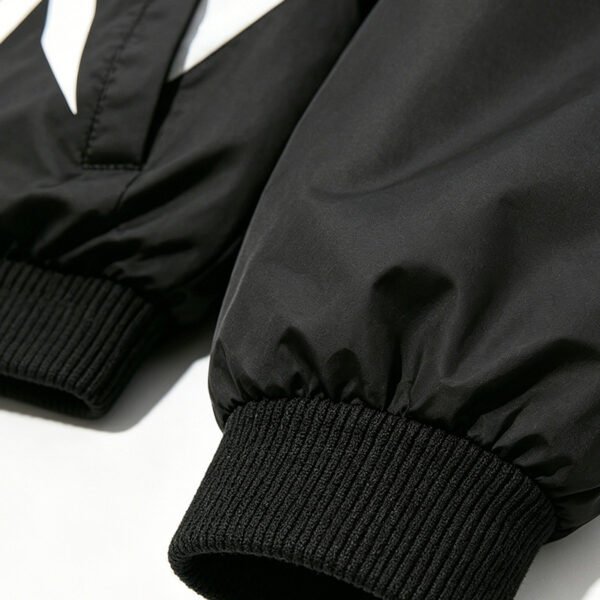
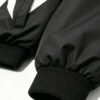
Pocket bags transfer weight into the garment through opening edges, corner turns, and attachment seams. On this design, those forces meet contrasting panel joins and the elasticated lower hem, so reinforcement should be distributed rather than concentrated at one visually prominent point.
The development sample should include controlled reinforcement at pocket corners, opening ends, and relevant panel intersections, with stitch density and seam allowance recorded. The objective is a clean exterior that resists distortion without making the front overly rigid or interrupting the printed artwork.
Panel Placement Changes Stress Behavior
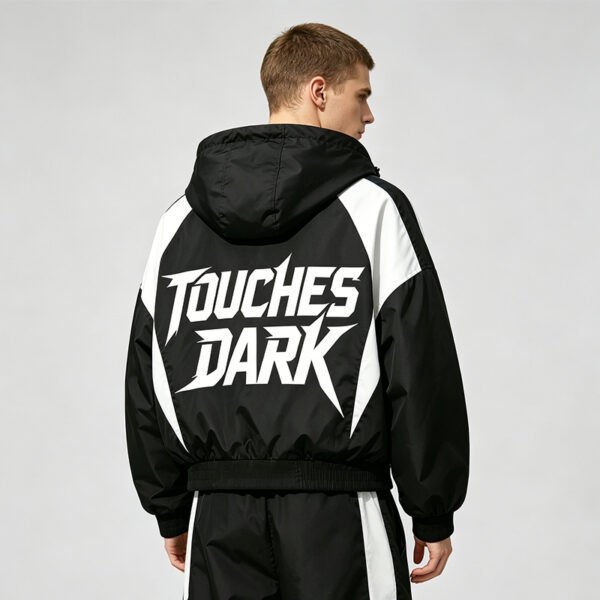
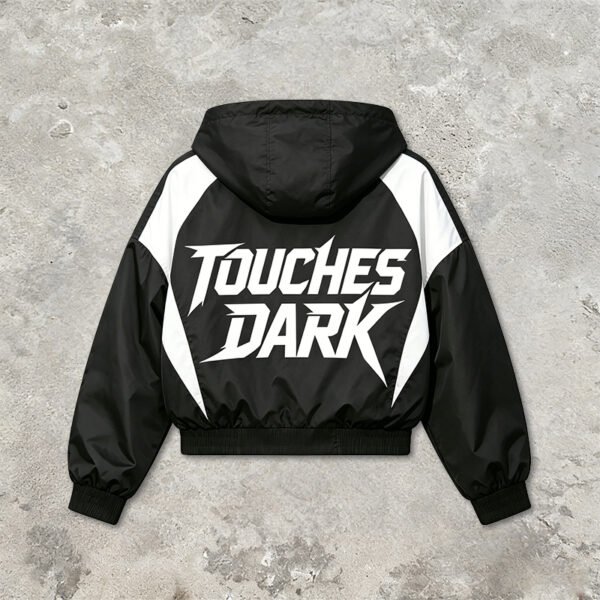
The white shoulder and sleeve panels are not merely decorative; their joining lines divide the shell around the armhole and upper sleeve. Any pocket or internal support added near these areas can alter drape, so the pattern team must preserve movement while maintaining the intended graphic contrast.
A practical review should examine reaching, sitting, and lifting motions while the pockets carry representative lightweight items. If the front pulls toward the pocket opening, VeeWen can adjust panel balance, pocket bag anchoring, or ease before the sample becomes a costly construction reference.
Graphics Require Clear Separation From Storage
The large white chest graphic occupies the central front and visually competes with the zipper and pocket openings. Its placement should remain readable when the jacket is worn open or closed, while pocket reinforcement must stay outside critical print edges whenever the artwork is applied after assembly.
Screen-print registration, curing, and abrasion resistance are source items requiring confirmation, not assumptions. The buyer should approve an artwork strike-off and a constructed sample together, because a technically secure pocket can still weaken the intended impact if it overlaps the graphic.
VeeWen Workflow Converts the Axis Into Checkpoints
VeeWen's product-development workflow should begin with a pocket map over the supplied silhouette, marking hand entry, bag shape, reinforcement points, and graphic exclusion zones. The first sample then tests access and load behavior before the team freezes panel balance, closure details, and measurement tolerances.
At the approval stage, the buyer should receive a construction record identifying pocket dimensions, stitch operations, reinforcement method, and accepted artwork position. This creates a traceable bridge from visual reference to cut-and-sew execution without treating unverified material or performance claims as finalized facts.
Approval Depends On Wear Simulation
The commercial decision is whether the jacket remains comfortable and visually controlled when pockets are used repeatedly. Review the sample on the intended body block, load each pocket lightly, operate the zipper, and inspect whether the hem or panel joins twist during movement.
Approve the style when access, balance, and reinforcement work together without visible puckering or graphic interference. If any point fails, revise the pocket map before grading. The MOQ remains 100 pieces per style, while final specifications must follow the approved development record.
Buyer Questions
Can the pocket layout be modified for a private-label collection?
Yes. Pocket height, opening angle, bag depth, and reinforcement points can be developed around your approved pattern, artwork boundaries, and intended wear test.
Is the shell fabric composition confirmed by the images?
No. The images show a woven-looking shell, but exact fiber content, weight, lining, coating, and performance require source confirmation before costing or approval.
What should the first sample prove?
The first sample should verify hand access, zipper clearance, pocket stability, panel balance, graphic placement, and comfort while carrying representative lightweight contents during movement.
What is the minimum order quantity?
The commercial minimum is MOQ: 100 pieces per style, with final production subject to approved specifications, validated artwork, sizing, and documented construction requirements.
Approve the Pocket Engineering Brief
Send your target measurements, artwork, color references, and pocket-use priorities to VeeWen for a focused development review and sample decision based on the approved construction brief.



Reviews
There are no reviews yet.