
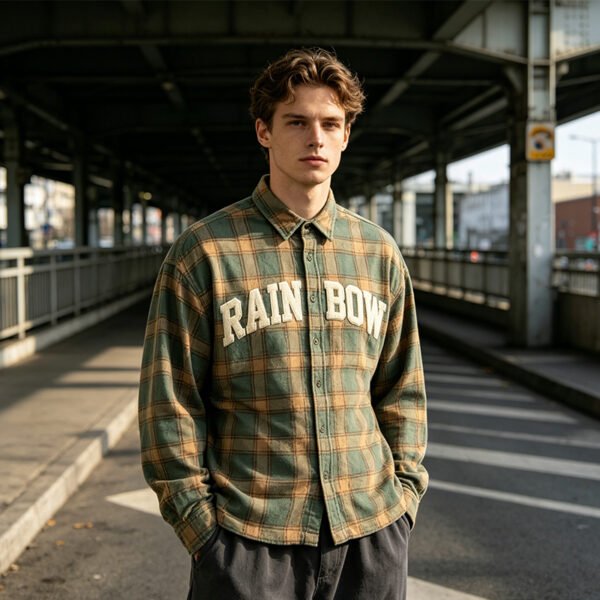
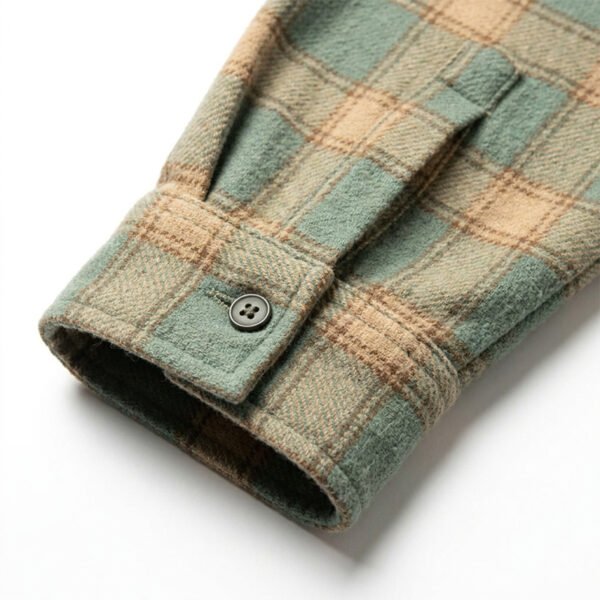
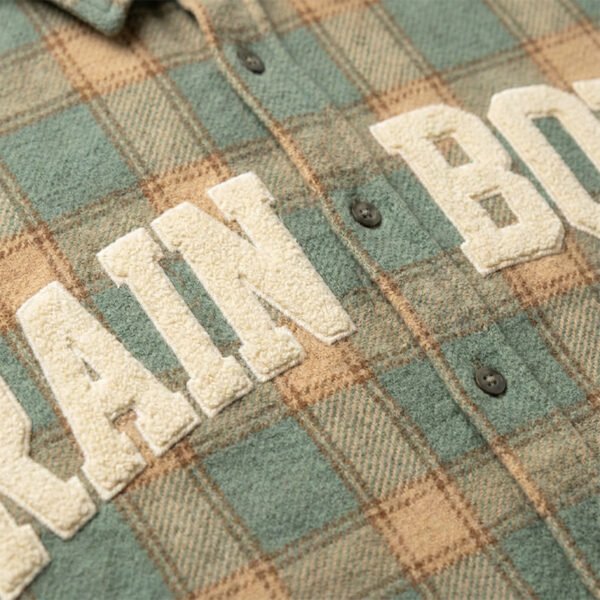
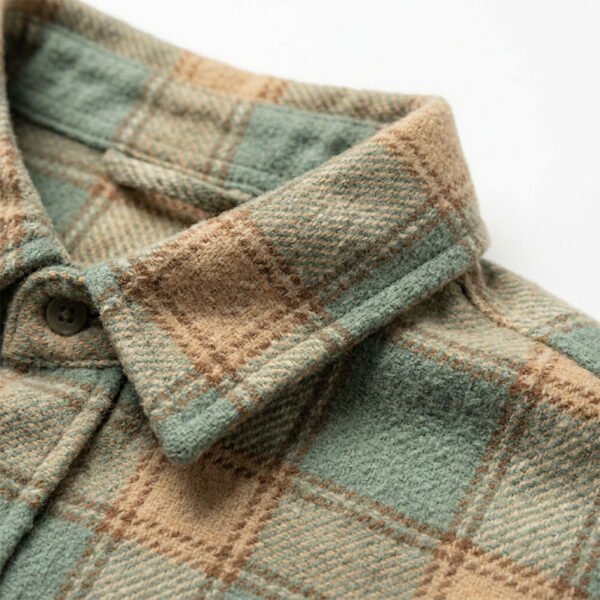
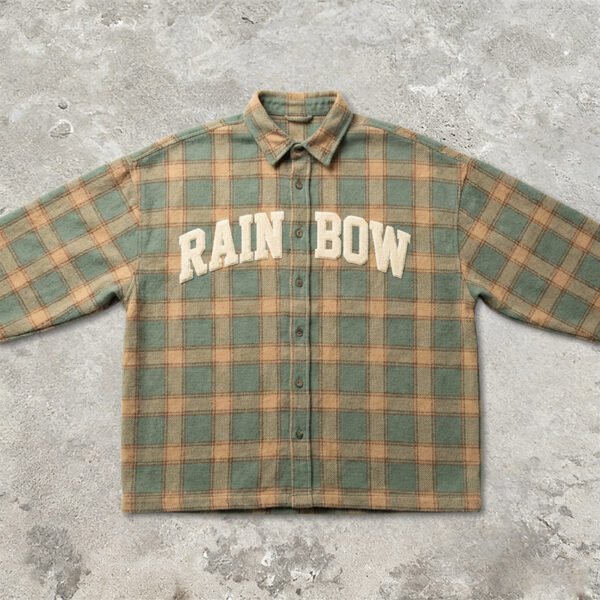



This custom plaid overshirt is a development study in surface discipline. The visible plaid creates a strong grid across broad relaxed panels, while the source wording introduces applique and towel embroidery. VeeWen should therefore validate graphic boundaries and ink-film hand before approving the style.
Why the Plaid Ground Changes Graphic Approval
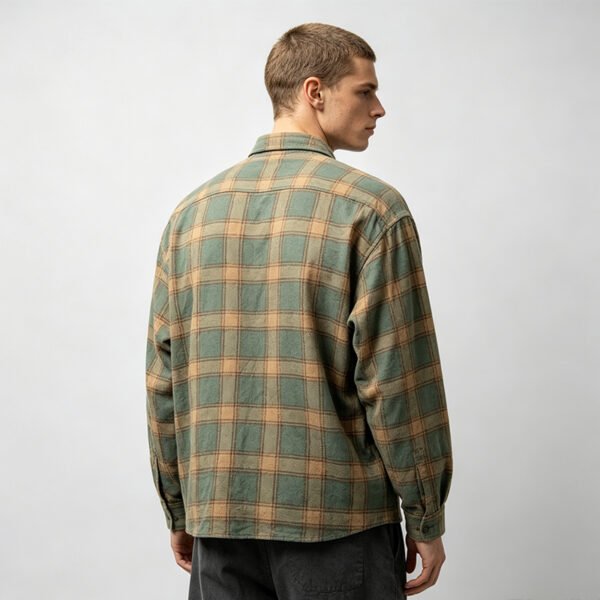
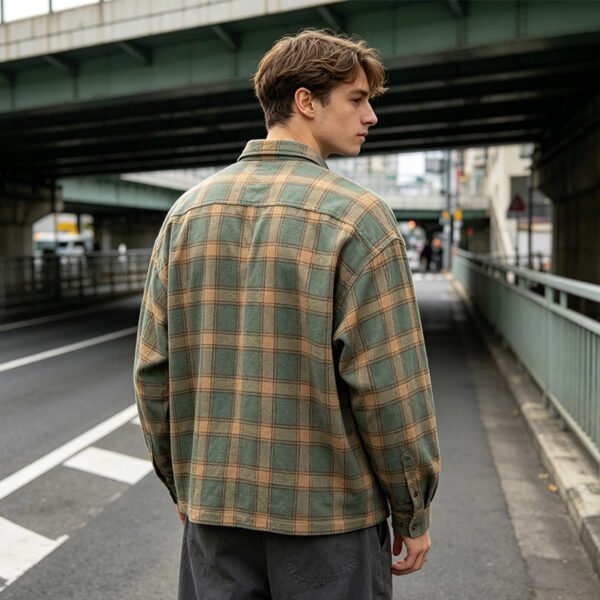
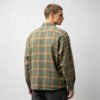
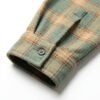
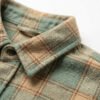
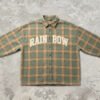
The image shows a regular plaid crossing the full back, sleeves, and collar area. That repeat acts like a visual ruler: uneven applique edges, shifting artwork, or excessive ink buildup will be easier to notice than on a plain woven ground.
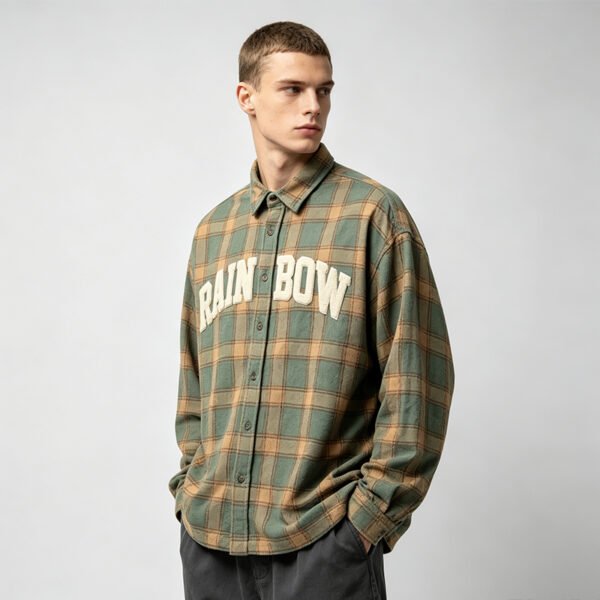
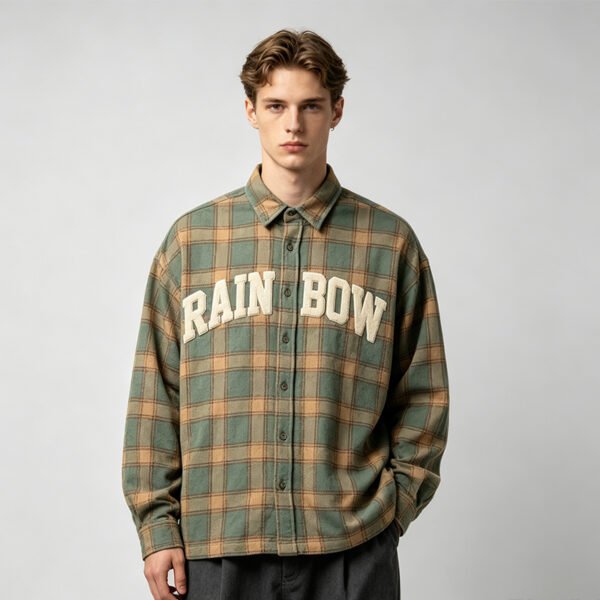
The practical implication is to approve artwork against the actual plaid placement, not a blank technical sketch. VeeWen should map motif boundaries to dominant lines, then inspect whether the decoration reinforces the grid or creates distracting visual interference.
Edge Clarity as a Production Variable
Applique edge clarity depends on accurate cutting, stable positioning, and secure perimeter treatment. On this shirt, the relaxed back panel offers room for a considered motif, but the plaid makes small registration errors visible around every straight line and intersection.
During development, request a physical decorated panel or complete sample using the intended plaid. Check corners, curves, seam approaches, and wash response. The approval standard should describe allowable edge variation before the style moves into graded production.
Ink-Film Hand Feel and Wear Comfort
The source wording does not identify an ink system, film thickness, or printed coverage. Those variables directly affect tactility: a heavy film can feel rigid across the back, while an overly light deposit may lose opacity against the muted plaid and weaken the intended graphic definition.
VeeWen's development workflow should compare hand-feel strike-offs at the planned coverage and artwork size. Buyers should assess flex, surface drag, opacity, and recovery after laundering trials, recording the preferred balance before confirming the decoration route.
Embroidery and Applique Need Separate Controls
Towel embroidery and applique are different surface mechanisms, even when used within one visual story. Embroidery changes texture through raised thread, while applique creates a cut-edge boundary; combining them can produce depth but also increases bulk, snag exposure, and placement sensitivity.
Approve each technique independently before reviewing the combined composition. VeeWen can sequence artwork confirmation, applique construction, and embroidery sampling so the buyer sees whether thread density, edge treatment, and film placement remain visually balanced on the plaid base.
Fit, Panel Area, and Graphic Stability
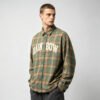
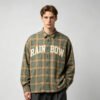
The visible garment has a relaxed silhouette, long sleeves, and a straight hem that leaves generous back coverage. Those proportions support a readable decoration, but movement across the shoulder blades and lower back can alter how a rigid film or thick applique sits during wear.
VeeWen should evaluate decoration on the intended fit sample, including arm movement and seated posture. Confirm that motifs stay clear without pulling, bubbling, or drifting toward seams, then lock placement references for grading and cutting instructions.
Buyer Approval Checkpoint
The approval decision is not simply whether the plaid looks attractive. Buyers should confirm the plaid repeat, motif scale, applique edge tolerance, embroidery texture, and ink-film hand as one coordinated surface package, with unresolved composition details clearly marked for revision.
At VeeWen, the final checkpoint should be a signed decorated sample plus artwork and placement sheet. Proceed when the buyer accepts visual registration, tactile comfort, and production-ready construction notes under MOQ: 100 pieces per style.
Buyer Questions
Is the fabric definitely 100% cotton?
The source wording references 100% cotton, but the supplied visual cannot verify composition. Treat the fiber content as To Confirm through the approved material specification.
Can the applique follow the plaid lines?
Yes, placement can be developed around the plaid repeat, but the buyer should approve a decorated sample to judge alignment, edge tolerance, and visual balance.
What should the hand-feel review cover?
Review film softness, thickness, opacity, flexibility, and surface drag across the back panel, then compare those results after the agreed laundering evaluation.
What is the minimum order?
The commercial minimum is MOQ: 100 pieces per style. Final decoration, color, grading, and material approvals should be completed before production confirmation.
Approve the Surface Direction
Send your artwork, plaid reference, and target hand-feel notes to VeeWen. We will align the decorated sample review with placement control, material confirmation, and MOQ: 100 pieces per style.


Reviews
There are no reviews yet.