



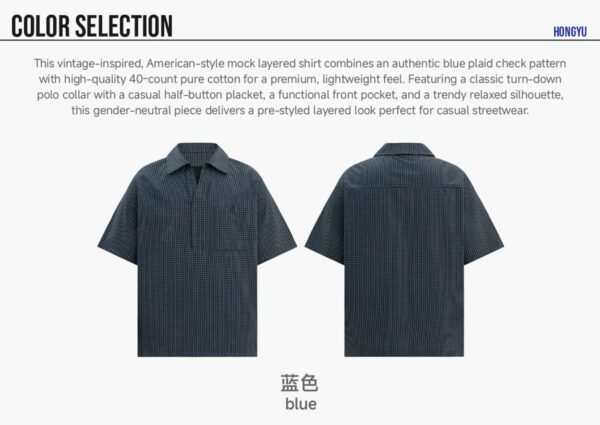









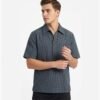
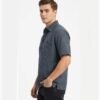
This custom plaid polo is developed around graded size-set proportion, because a faux-layered collar must retain its visual hierarchy as the body, shoulder, placket, and chest decoration expand. The supplied references support a decoration-ready private-label development route, while final measurements remain an approval checkpoint.
Why the Collar Requires Grading Discipline
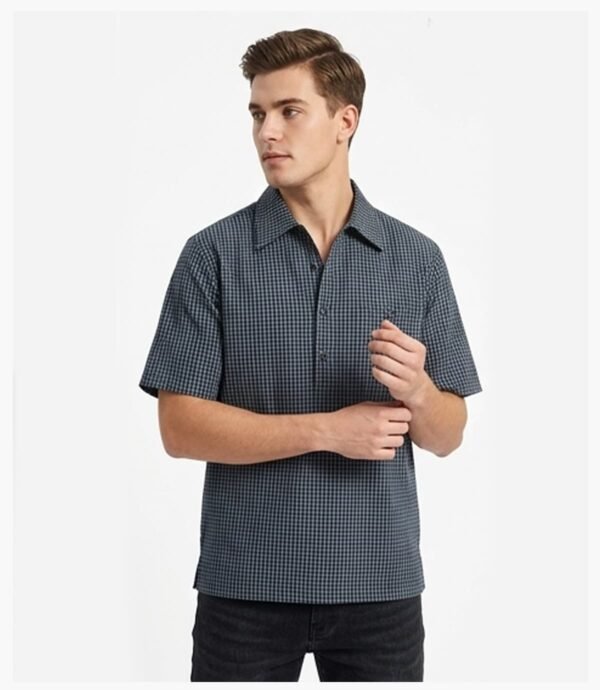
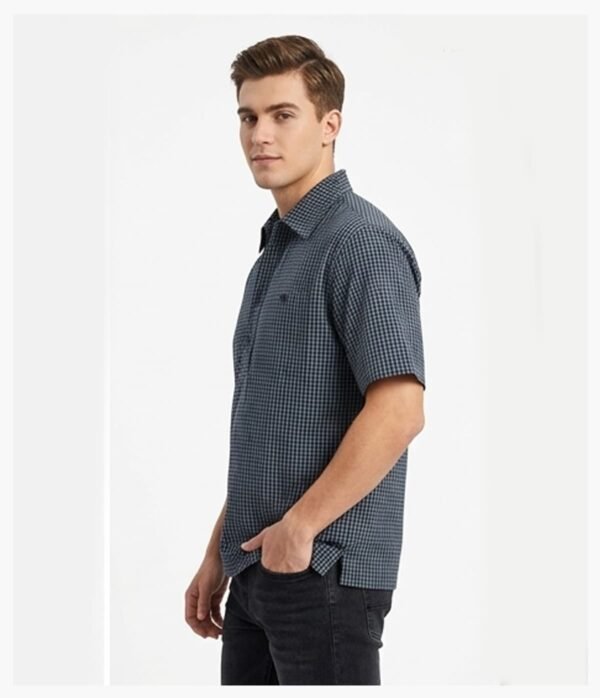
The faux-layered collar is a proportion system, not an isolated trim. As neck width and shoulder span change, collar points, overlap, and visible underlayer must scale together, or the layered effect can become crowded in smaller sizes and weak in larger sizes.
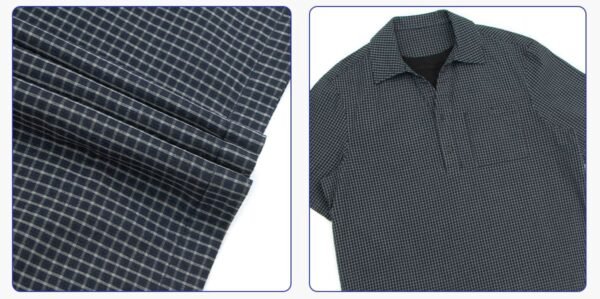
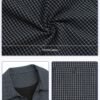
The plaid surface adds another alignment demand. Any increase in collar width, placket length, or chest area changes the apparent relationship between checks and garment edges, so the size set should review pattern balance alongside neckline measurements rather than treating grading as a final adjustment.
Reading the Supplied Visual Evidence
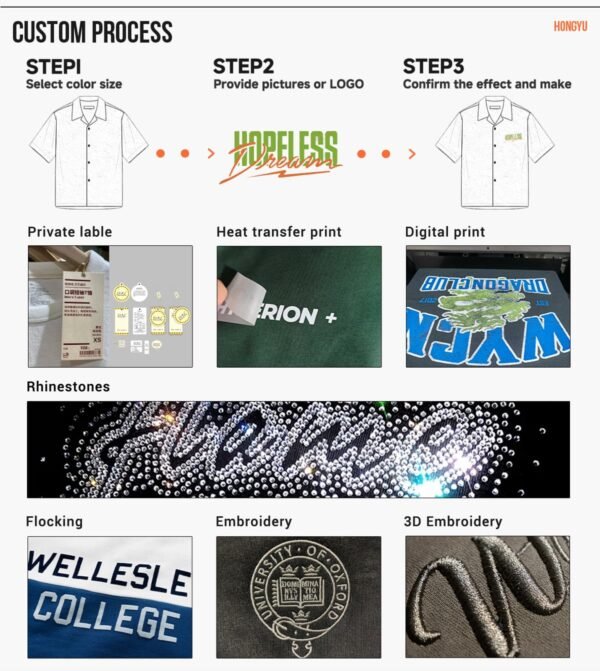
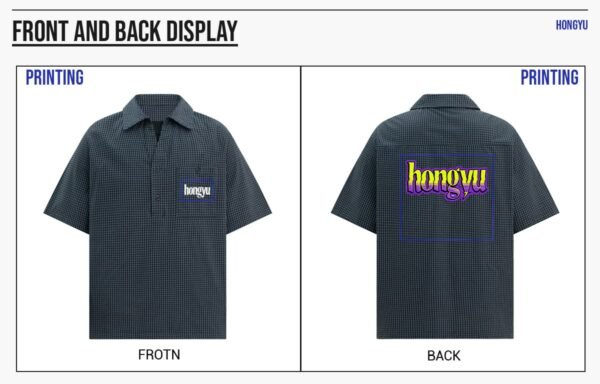
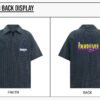
The source wording establishes a plaid polo with a faux-layered collar, while the supplied image shows a shirt form moving from an undecorated base to a decorated chest area. That sequence supports development planning, but it does not verify final fabric composition, measurements, or decoration specifications.
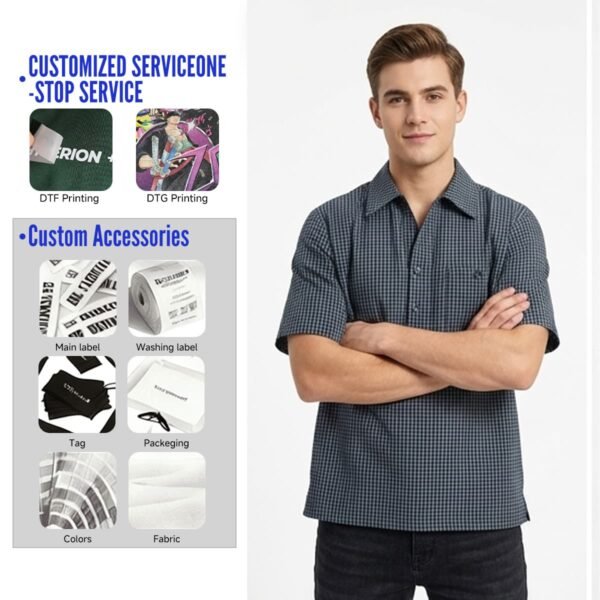
The process image also displays several application examples, including private labeling, transfer, digital print, rhinestones, flocking, embroidery, and raised embroidery. These references demonstrate available development directions; they should be treated as visual evidence for sampling, not as confirmed inclusions in this style.
Managing Placket and Chest Relationships
A polo placket gives the collar a vertical anchor, so its length and button spacing should be evaluated with collar spread at each graded size. If the placket scales unevenly, the layered neckline may appear visually displaced even when the body measurements meet the specification.
Chest decoration introduces a second focal point. The supplied image places a small mark on the upper chest, making location sensitive to shoulder width, armhole position, and collar scale. VeeWen can map the approved artwork area against the graded pattern before decoration sampling begins.
Trade-Offs in a Layered Collar Design
A more pronounced faux layer creates stronger visual separation, but it can increase bulk, contrast, or neckline complexity. A quieter layer may improve versatility while reducing immediate definition. The buyer should choose the intended balance before finalizing collar construction and surface treatment.
Plaid can make proportion changes easy to notice because repeated lines expose shifts in width and alignment. That visibility is useful for approval, yet it may narrow tolerance for pattern movement. The size-set review should therefore inspect both silhouette and plaid continuity around the collar and placket.
VeeWen Development Workflow for This Argument
VeeWen should begin by converting the approved collar concept into a measurement map covering neck opening, collar width, overlap, point length, placket, shoulder, and chest artwork coordinates. Each measurement needs graded targets so the layered effect remains intentional throughout the range.
The next checkpoint is a physical size set using the selected plaid reference and the intended decoration route. Reviewers should photograph or annotate collar overlap and artwork placement on every size, then approve corrections before cutting the production quantity under the stated style MOQ.
Buyer Approval Checkpoint
Approval should focus on whether the collar still reads as deliberately layered when the polo is worn or laid flat in each offered size. Check neck comfort, collar point relationship, placket centering, shoulder balance, and the distance between collar and chest decoration.
Record accepted measurements and visual tolerances in the technical package, including the smallest and largest sizes. If either extreme loses the intended hierarchy, revise the grade or collar proportions before confirming the complete size run and decoration artwork for production.
Buyer Questions
Is the cotton 40s reference fully verified?
The source title identifies cotton 40s, but blend composition, fabric weight, yarn details, and testing remain To Confirm through the approved material submission.
Which decoration method should buyers select?
Choose after reviewing artwork size, hand feel, color coverage, and placement on the plaid surface; the supplied image shows options, not a mandated finish.
Why approve a complete size set?
Because collar overlap, placket balance, plaid alignment, and chest placement can change perceptually across sizes, even when basic body measurements grade correctly.
What is the commercial minimum?
VeeWen's exact commercial minimum is MOQ: 100 pieces per style, with final size, color, material, and decoration allocation confirmed during development.
Approve the Collar Proportion Plan
Send the target size range, plaid direction, collar reference, artwork placement, and preferred decoration route. VeeWen can organize the measurement map and size-set review before production approval.



Reviews
There are no reviews yet.