
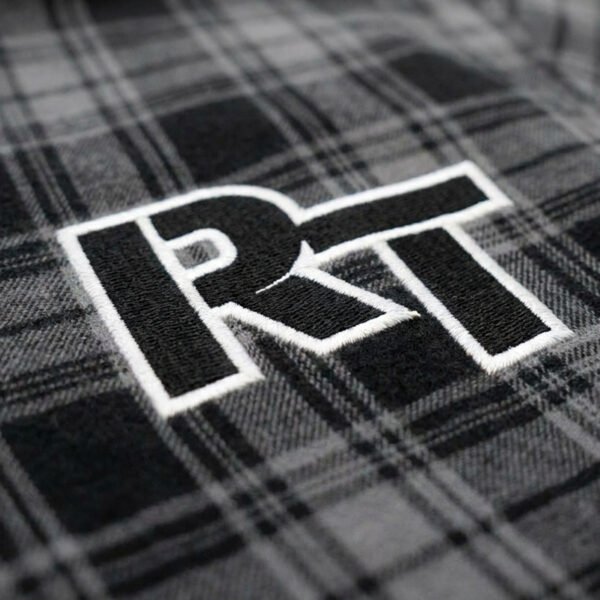


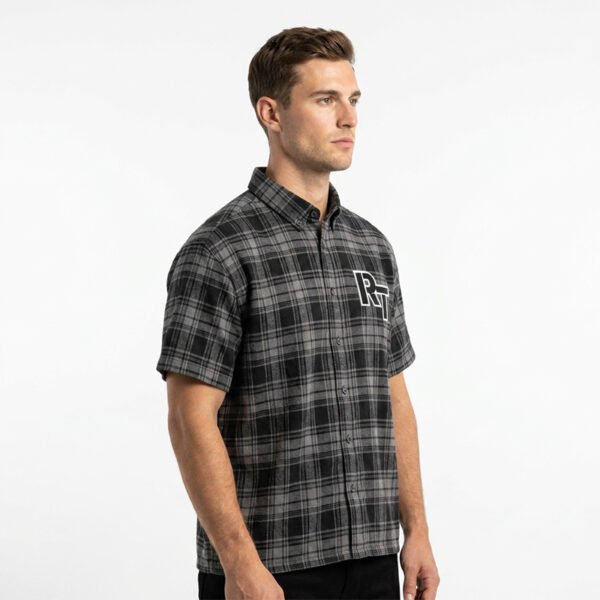
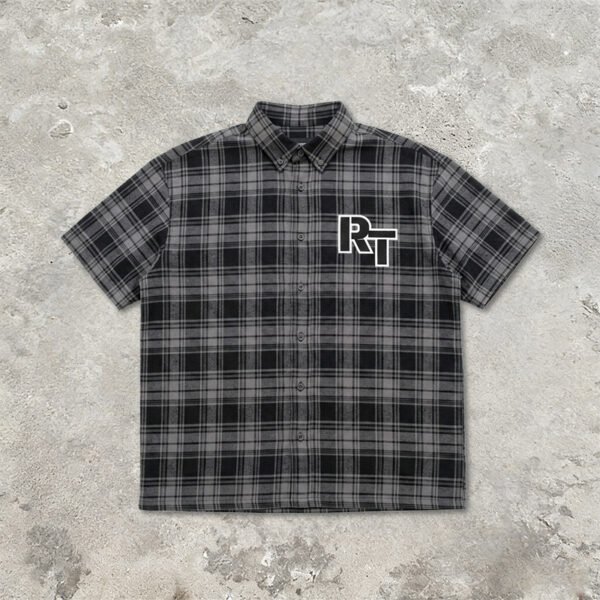

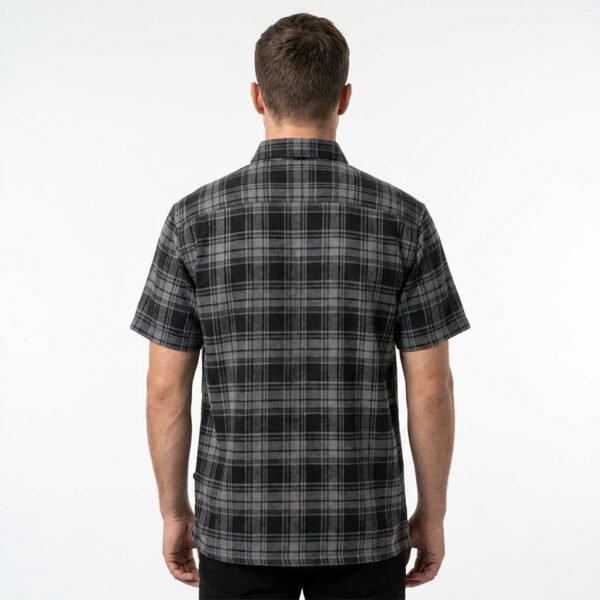




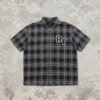


This custom plaid shirt is developed around shoulder balance and sleeve pitch, because a structured chest applique and directional plaid make small fitting errors immediately visible. The supplied image shows the exact visual tension: a dark checked ground, contrasting edging, and a prominent upper-chest feature requiring coordinated pattern control.
Shoulder Balance Sets the Garment Foundation
The shoulder line establishes how the collar, chest, sleeve opening, and applique relate to one another. In this design, the high-contrast chest feature draws attention outward, so uneven shoulder extension would make the shirt appear twisted before movement begins.
A balanced shoulder is not simply a wider shoulder. It must reflect the intended body ease, armhole depth, and plaid scale. The development sample should confirm collar centering, shoulder seam position, and chest motif alignment on front and back views.
Sleeve Pitch Controls Movement and Line
Sleeve pitch describes the sleeve's angle relative to the torso and the wearer's natural arm position. If the pitch is too forward or backward, the short sleeve can pull across the chest, rotate the plaid, or disturb the applique's apparent centering.
VeeWen should review the sleeve in standing, relaxed, and forward-reaching positions during development. The approval target is a sleeve that follows the arm without excessive drag, while the shoulder seam and plaid direction remain visually coherent.
Plaid Direction Makes Fit Errors Visible
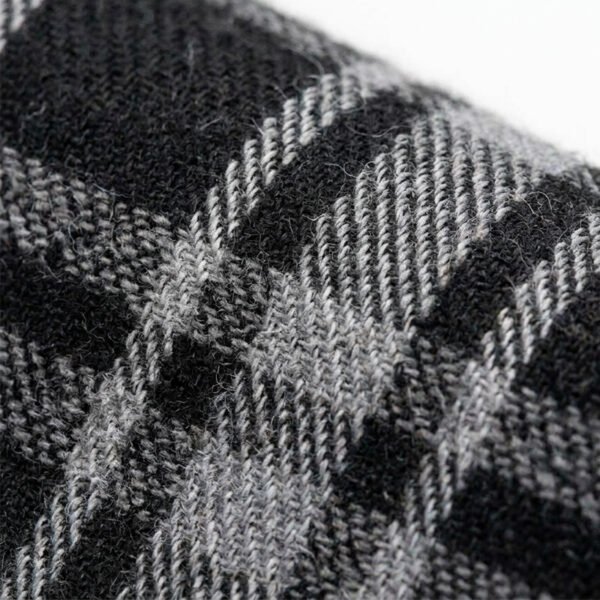
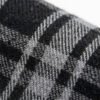
The supplied image shows repeated dark checks crossing a lighter gray ground, creating strong horizontal and vertical references. Those lines provide useful diagnostic evidence because shoulder imbalance or sleeve rotation can interrupt their rhythm at seams and openings.
Pattern planning should identify the dominant plaid direction before cutting, then preserve the chosen relationship across the front, sleeve, and yoke or back area if included. Exact matching requirements, repeat tolerance, and placement remain To Confirm.
Applique Weight Requires Coordinated Placement
The chest decoration appears raised, with a bright perimeter surrounding a dark geometric center. Even without confirmed construction details, that visible relief indicates a localized surface feature whose weight and stiffness may influence drape around the shoulder and upper chest.
The applique should therefore be approved alongside shoulder and sleeve measurements, rather than added after fit decisions are complete. Confirm edge security, placement tolerance, and local distortion after handling, pressing, and laundering tests are defined.
Trade-Offs Require a Deliberate Approval
A sharper shoulder can strengthen the geometric appearance, but too much structure may restrict reaching or exaggerate the applique's prominence. A softer shoulder can improve ease, yet may reduce the crisp relationship between plaid lines and the chest feature.
The buyer should choose the commercial balance between visual precision and relaxed wear before grading begins. Record the target shoulder extension, sleeve pitch, body ease, and decoration tolerance as measurable sample comments for production control.
VeeWen Workflow Converts the Argument into Control
VeeWen's product-development review should begin with a measurement sheet that isolates shoulder slope, armhole position, sleeve pitch, and chest-placement coordinates. The plaid repeat and applique dimensions should be marked on the same front pattern for coordinated evaluation.
At sample approval, review the shirt on-body and flat, checking movement positions and plaid continuity before confirming the size range. The resulting comments should distinguish pattern corrections from decoration corrections, so later revisions remain traceable to the original fit argument.
Buyer Questions
What is the main development risk for this shirt?
The main risk is misalignment between shoulder balance, sleeve rotation, plaid direction, and applique placement, making fit defects unusually visible in finished garments.
Should the applique be approved before grading?
Approve its location and dimensions with the base sample first, because shoulder and sleeve corrections can change the chest area available for decoration.
Is the fabric composition verified?
No. The supplied evidence identifies a plaid shirt visually but does not verify fiber percentage, fabric weight, or performance; those details require confirmation.
What is the minimum order quantity?
The commercial minimum for this development record is MOQ: 100 pieces per style, subject to finalized specifications and approved production documentation.
Approve the Fit Logic Before Production
Send the intended measurement sheet, plaid direction, applique artwork, and target size range so VeeWen can coordinate the first approval sample around shoulder and sleeve control.


Reviews
There are no reviews yet.