
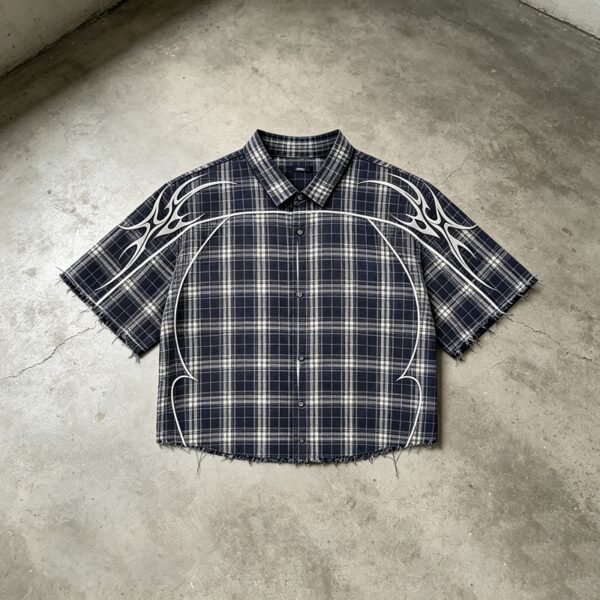
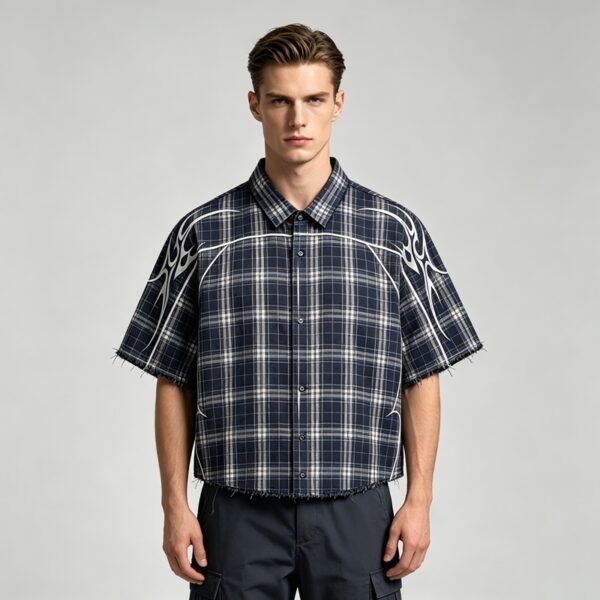
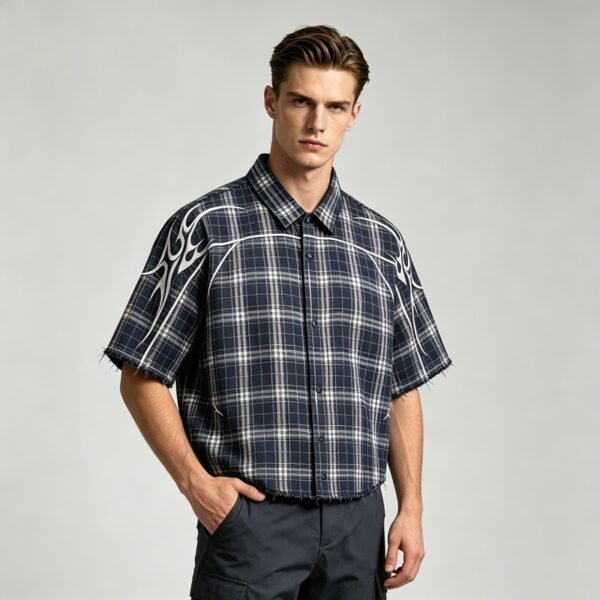
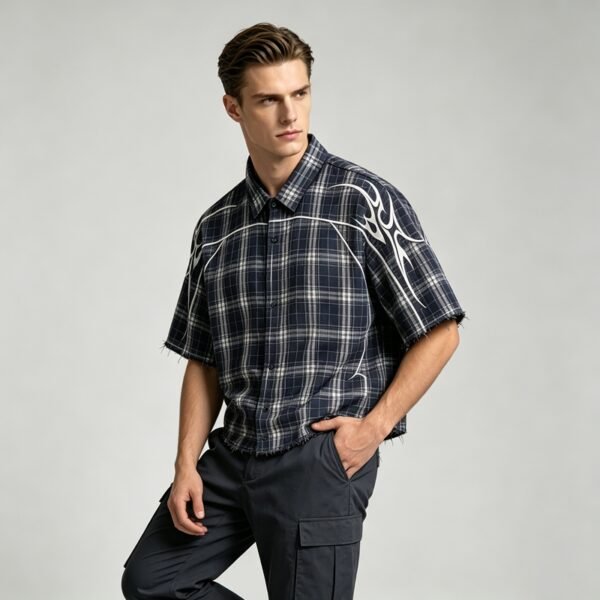







This custom plaid shirt is developed around a practical tension: directional checks, raw fringe, and curved surface details all compete for efficient cutting. The development target is a marker strategy that protects visual alignment while measuring the material cost of the deliberately unfinished silhouette.
Read the Plaid as a Cutting Constraint
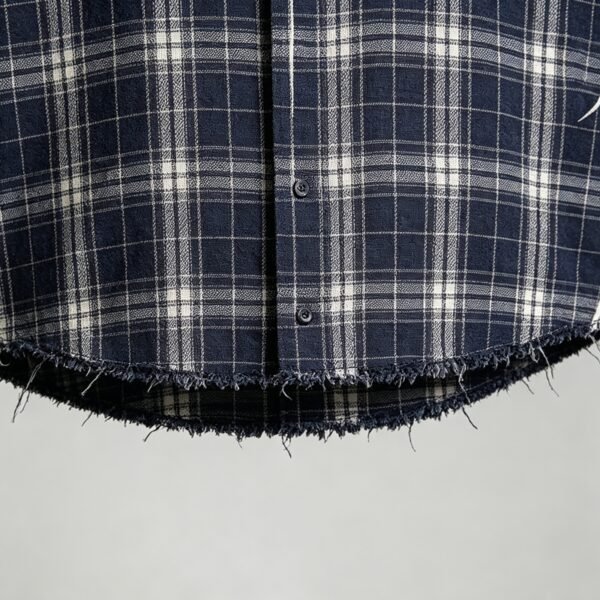
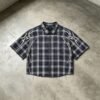
The front body shows a regular dark plaid with intersecting light lines, while the sleeves continue the same visual language. Because the grid is directional in perception, rotating or careless nesting can create mismatched checks at shoulder, side seam, collar, and placket areas.
A useful development marker should separate grain-critical pieces from lower-risk components before yield is reviewed. The buyer should decide whether full plaid matching is required at every seam or whether selected alignment zones can protect appearance while reducing avoidable fabric consumption.
Raw Edges Change the Yield Conversation
The sleeve and bottom edges display loose fringe and irregular threads, indicating that the unfinished effect is part of the design rather than a defect. That choice removes conventional turn-back allowance in some areas, but it also requires controlled cutting and inspection for excessive unraveling.
Marker planning therefore needs two measurements: fabric used for the pattern pieces and the usable width after edge stability is considered. The approval sample should establish a visual tolerance for fringe length, while the cutting review records whether the raw treatment improves or offsets overall yield.
Place Curved Details Without Distorting Checks
White curved applications sweep from the shoulders toward the chest and rise again near the lower front. Their paths visually interrupt the plaid, so placement must be referenced from stable landmarks such as the collar point, armhole, center front, and hem edge.
These overlays also make panel symmetry more noticeable. During development, the team should lock a placement map before grading, then review how the motif shifts across sizes. The objective is not identical line length, but a balanced relationship between the applied detail and the underlying check scale.
Balance Collar and Placket Consumption
The pointed collar, front placket, and button positions occupy small but grain-sensitive areas. They can consume disproportionate fabric when plaid orientation and matching rules are rigid, especially if the collar is expected to mirror the body pattern or align cleanly with the center front.
VeeWen's workflow should translate the approved styling intent into a piece-level cutting brief: identify matching priorities, mark permitted rotations, and isolate components requiring face-up cutting. The buyer then reviews a marker summary alongside the first cut sample before confirming the production pattern.
Connect the Argument to Development Control
For this shirt, VeeWen's product-development workflow should begin with a visual evidence sheet showing check direction, raw-edge zones, and overlay landmarks. That document gives patternmaking and cutting teams a shared reference before fabric consumption is estimated or grading begins.
The next checkpoint is a physical or digital marker review against the approved sample. VeeWen can use the review to surface trade-offs between matching, fringe allowance, and yield, then record the buyer's priorities in the technical package instead of leaving them implicit.
Approve Appearance and Consumption Together
A low-consumption marker is not successful if the front checks drift, sleeve direction changes, or the curved applications appear unbalanced. Conversely, maximum matching may create unnecessary waste without improving the areas a wearer notices most. This style needs a visible hierarchy of approval criteria.
Before placing the order, the buyer should approve the graded sample, marker direction, matching map, raw-edge tolerance, and expected material usage basis. The final decision is whether the agreed appearance justifies the measured consumption at MOQ: 100 pieces per style.
Buyer Questions
Should every plaid seam be matched?
Not necessarily. Prioritize center front, collar, shoulder, and visible side seams, then document any accepted variation before grading and marker approval to protect yield.
Do raw hems reduce fabric consumption?
They may reduce turn-back allowance, but usable width, fraying tolerance, and inspection requirements can offset savings. Confirm the effect through an approved marker and cut sample.
How should the white details be controlled?
Use fixed landmarks and a placement map for each size. Confirm application width, symmetry, and registration against the plaid before approving grading or bulk cutting.
What is the commercial minimum?
The exact commercial minimum is MOQ: 100 pieces per style. Final consumption, specifications, and approval checkpoints should be documented before production booking.
Approve the Plaid Marker Direction
Send the target measurements, matching priorities, and reference artwork to VeeWen. We can organize the development review around marker yield, raw-edge tolerance, and a clear approval sample for MOQ: 100 pieces per style.


Reviews
There are no reviews yet.