
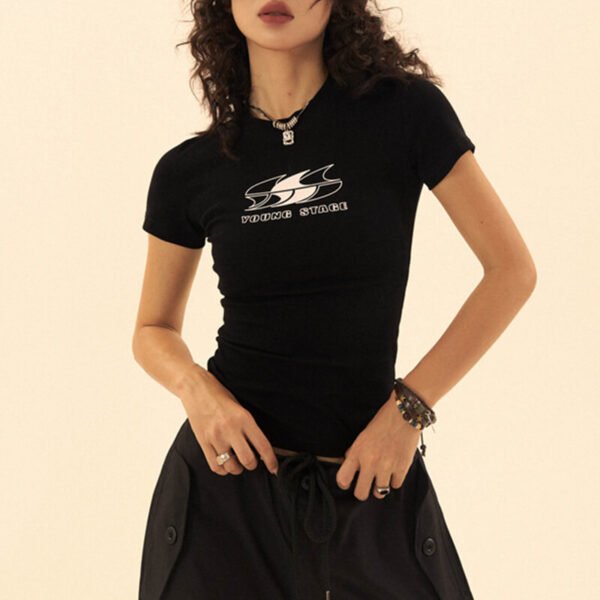
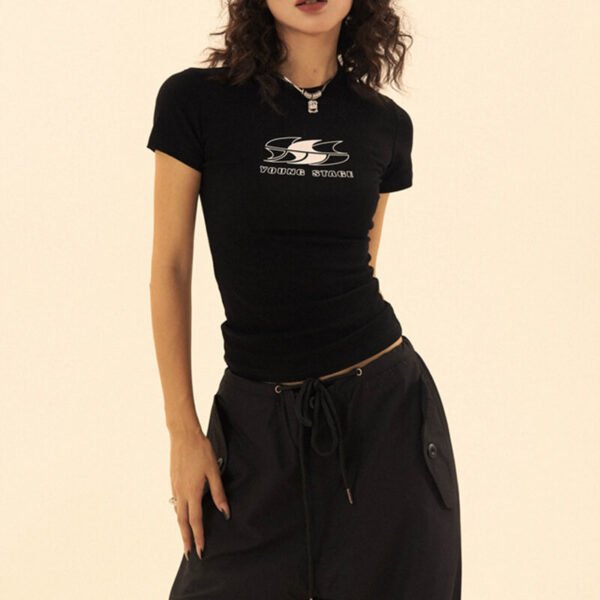
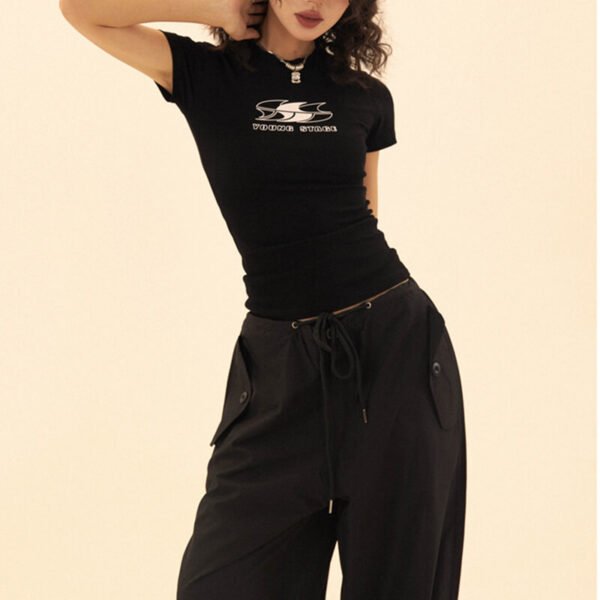
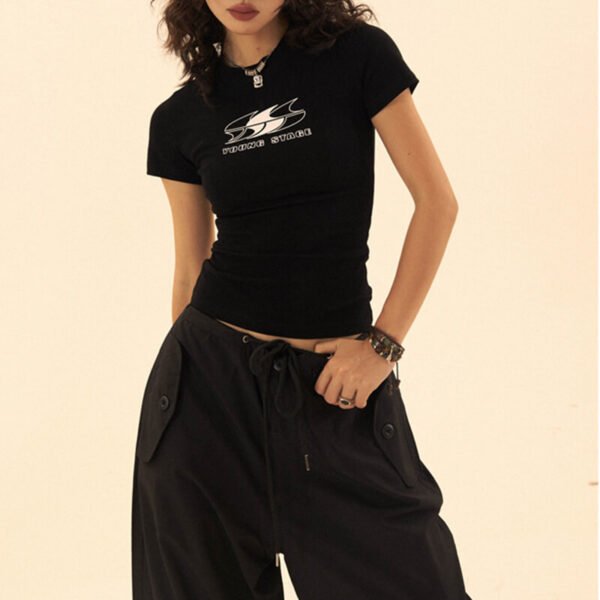
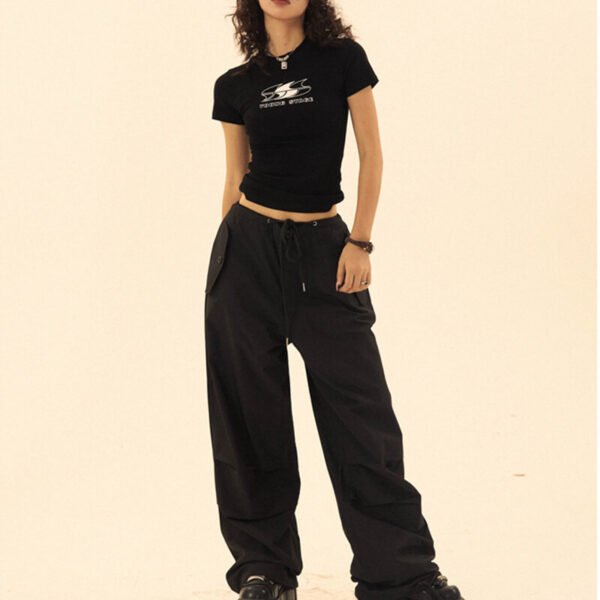







Custom printed skinny-fit T-shirt development depends on verifying whether the fabric has a directional nap or pile before cutting. The supplied title confirms 190GSM cotton and a skinny fit, while the main image shows a black fitted short-sleeve body with centered chest artwork requiring consistent panel orientation.
Why Directional Cutting Matters on a Printed Tee
Nap or pile creates a preferred direction in the fabric surface, even when the finish looks subtle in a photograph. Turning one panel against another can change light reflection, touch, or apparent shade, producing mismatched sleeves, body panels, and neck components.
A one-way marker keeps every piece facing the same direction during cutting. This consumes more fabric than an unrestricted marker and may reduce cutting efficiency, but it protects visual continuity when the surface has a meaningful directional effect across a close-fitting printed garment.
Evidence and the Required Surface Verification
The supplied source title explicitly identifies 190GSM cotton and a skinny fit, while the main image shows a black short-sleeve T-shirt with a centered chest graphic and close body fit. Those details support precise panel matching around a visually prominent front print.
The photographed surface appears visually smooth, so nap or pile cannot be declared verified from the image alone. VeeWen should inspect the physical fabric under changing light and against the hand, then document whether the one-way rule is mandatory, preferred, or unnecessary.
Fit Amplifies Small Orientation Errors
A skinny fit leaves less visual slack around the chest, waist, sleeve, and armhole. When adjacent panels reflect light differently, the eye notices the discrepancy quickly because the garment presents a continuous, body-following surface rather than a loose silhouette that can disguise minor shifts.
Before cutting, the marker should identify front, back, sleeve, neckband, and any facing pieces with directional arrows. The print placement should then be checked against those arrows, ensuring the centered graphic and fitted proportions remain consistent when panels are assembled into the finished size range.
Balancing Fabric Yield Against Appearance
One-way cutting can increase consumption because pieces cannot be rotated freely. It may also require stricter roll inspection, clearer spreading instructions, and segregation of lots with different surface direction or shade. These controls add handling considerations that should be acknowledged during costing and production planning.
The benefit is reduced risk of reverse shading, inconsistent hand, and panel-to-panel texture changes. If testing proves the surface has no meaningful direction, the buyer may release a two-way marker; that decision should be based on physical verification rather than the photograph's apparently uniform appearance.
How VeeWen Applies the Argument in Development
VeeWen's workflow should connect fabric inspection, print placement, marker planning, and fit approval in one sequence. The team can first record the surface direction on a fabric swatch, then apply directional arrows to the pattern set before reviewing the printed front and assembled silhouette.
For this style, the development record should retain the approved 190GSM source reference, fabric lot notes, nap-orientation decision, marker rule, print position, and graded pattern annotations. This makes the cutting instruction auditable and prevents a later efficiency adjustment from silently reversing panel direction.
Buyer Approval Checkpoint Before Bulk Cutting
The buyer should approve a complete sample and a marked cutting plan after viewing the fabric face under direct, angled, and diffuse light. Inspect the body, sleeves, neckband, and printed zone for shade reversals, hand differences, distortion, or visible mismatch between connected panels.
Confirm whether the final fabric remains 190GSM cotton, whether any nap or pile treatment is present, and whether one-way cutting is compulsory. Bulk release should follow only after marker orientation, print placement, fit measurements, and shade tolerances are recorded for MOQ: 100 pieces per style.
Buyer Questions
Why verify nap or pile on a smooth-looking T-shirt?
Subtle direction can alter reflected shade or hand without appearing obvious in photographs. Physical inspection under varied light determines whether rotating panels would create unacceptable differences.
Does one-way cutting affect material efficiency?
Yes. Restricting every piece to one direction can increase fabric consumption and handling requirements, but it reduces the risk of reversed shading or texture across connected garment panels.
What does the supplied 190GSM reference establish?
It establishes that 190GSM cotton is stated in the source title. It does not independently verify final lot composition, knit structure, finish, or production performance.
What is the minimum commercial quantity?
The commercial minimum is MOQ: 100 pieces per style. Directional cutting, print placement, fabric reference, grading, and approval tolerances should be locked before bulk cutting.
Approve the Directional Cutting Plan
Share the intended fabric reference and artwork placement so VeeWen can verify surface direction, annotate the marker, and align print, fit, and panel orientation before your approved sample enters production.


Reviews
There are no reviews yet.