

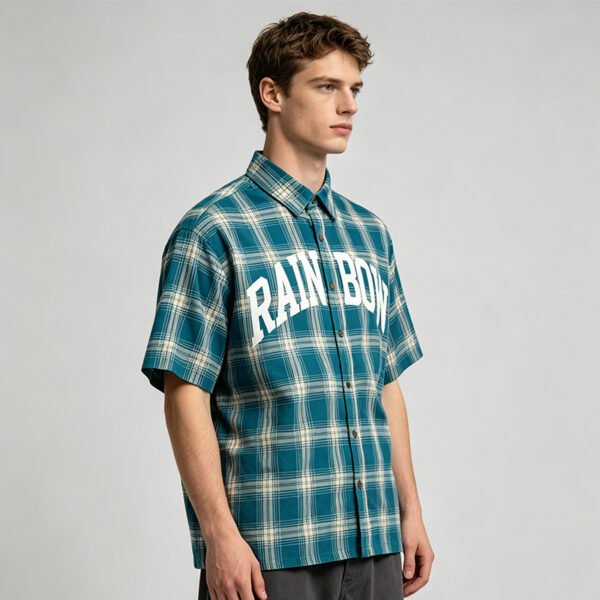

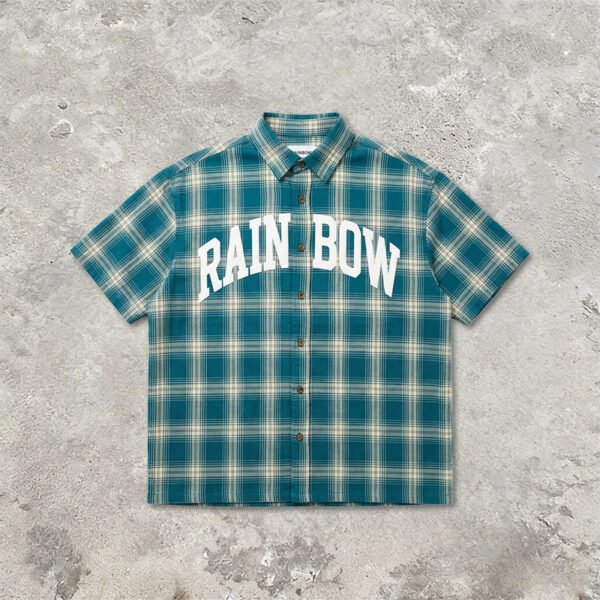



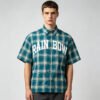

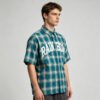



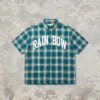
This custom plaid shirt is built around a repeatability problem: washing can shift the ground shade, soften contrast, and change how a raised print reads. The oversized silhouette is straightforward; the difficult work is defining a stable visual standard that survives sampling and reorders.
Why Plaid Shade Is The Core Risk
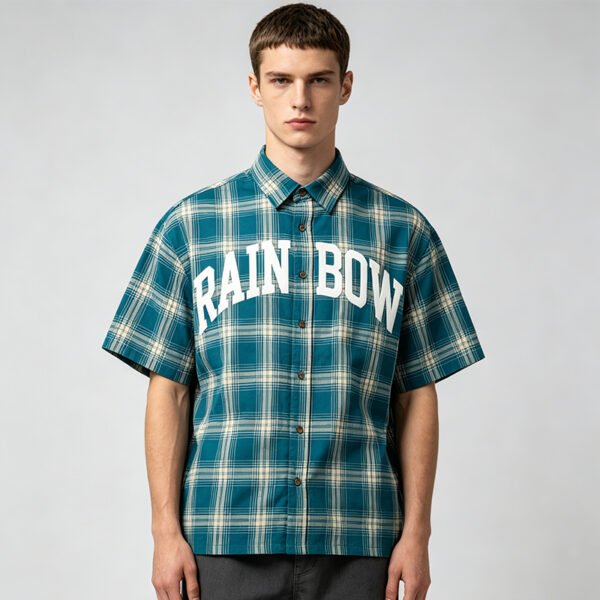
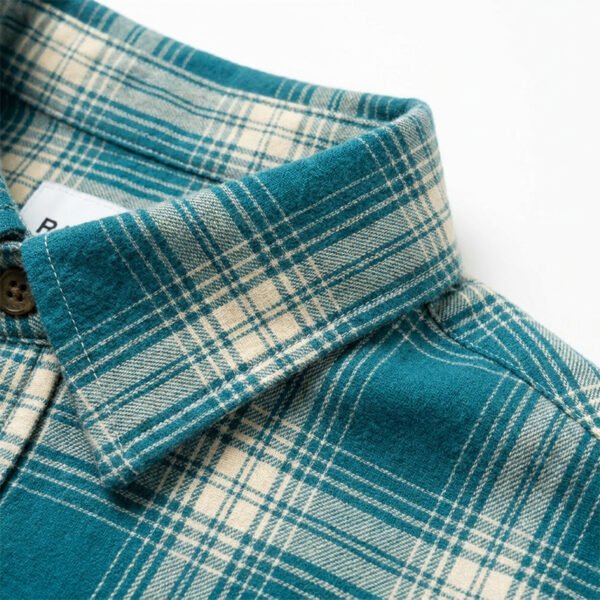
The visible plaid relies on teal, dark blue, and pale lines remaining legible as a coordinated field. Washing can alter depth, brightness, and perceived spacing, so a shirt that matches before laundering may no longer match the intended shade family afterward.
The buyer should define the acceptable range using laundered fabric panels rather than a single unwashed swatch. This creates a practical reference for body panels, collar pieces, sleeves, and replacement fabric used during later reorder production.
Plaid Scale And Panel Continuity
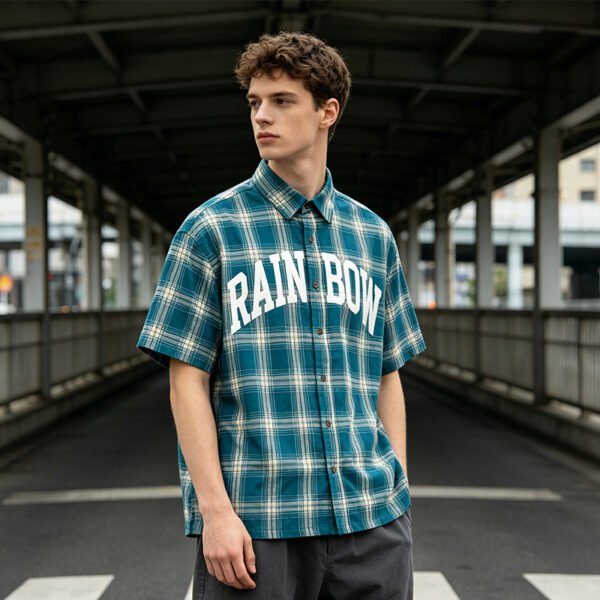
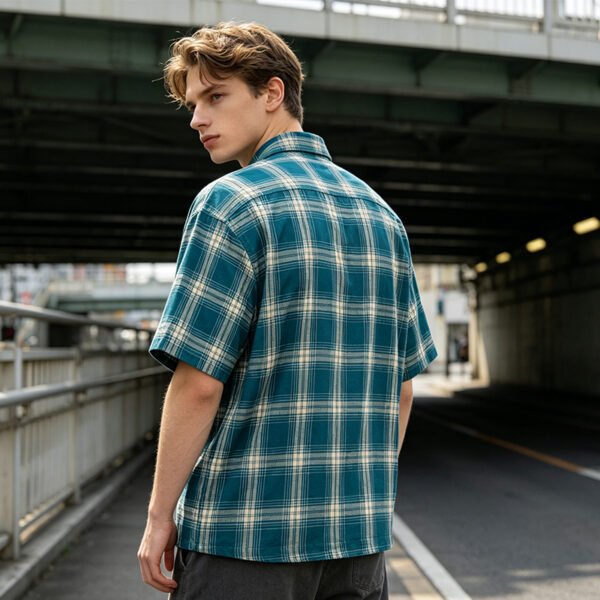
A boxy shirt exposes large uninterrupted fabric areas, making plaid scale and line continuity highly visible. Collar points, button stands, sleeve joins, and side seams can either reinforce the graphic rhythm or reveal careless placement when the pattern shifts across components.
The development sample should specify whether key seams require matching, approximate alignment, or unrestricted placement. That decision affects cutting efficiency, perceived value, and shade evaluation because misaligned lines can appear like color inconsistency even when the fabric batch is stable.
Puff Print Contrast After Washing
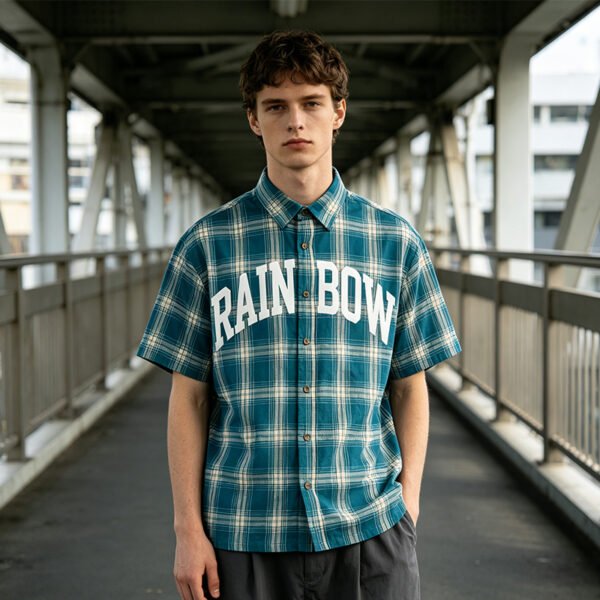
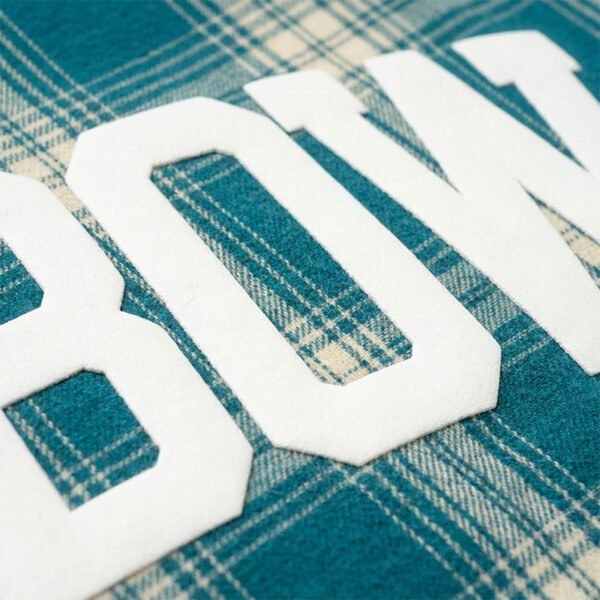
The large white chest graphic dominates the supplied image through height, opacity, and contrast against the plaid. A wash process can influence surface texture and perceived brightness, so print approval should consider how the raised effect reads beside softened or darkened woven yarns.
VeeWen should test print placement and appearance on washed fabric rather than approving the graphic independently. Review points include edge definition, height consistency, registration, hand feel, and whether the print remains visually centered on the relaxed front body.
Collar And Button Stand Interaction
The pointed collar and button-front construction frame the upper chest, placing the raised graphic near several visual control lines. If the wash changes fabric torque or shrinkage unevenly, the collar can sit differently and alter the apparent balance of the printed artwork.
Pattern approval should therefore connect collar dimensions, button spacing, front-stand width, and print boundaries. The buyer needs a post-wash sample showing whether the collar remains clean, the buttons stay aligned, and the graphic retains adequate breathing room.
Oversized Fit And Wash Movement
The oversized boxy fit depends on controlled body width and length, especially because a wash may change drape or shrinkage. Excess ease can hide some dimensional movement, but it cannot correct a hem that becomes visibly unbalanced or sleeves that lose their intended proportion.
Fit review should compare pre-wash and post-wash measurements at chest, body length, shoulder, sleeve, and hem. The buyer should approve a dimensional tolerance table that protects the relaxed silhouette without pretending that every wash outcome will be identical.
VeeWen Reorder Workflow
VeeWen can structure development around a shade ladder, washed fabric panels, and a print-on-washed-ground approval sample. This workflow makes the reorder question concrete by linking fabric selection, wash recipe references, plaid continuity, and graphic contrast in one review sequence.
Once approved, the production file should retain the accepted shade range, plaid placement rules, print artwork reference, measurement tolerances, and wash comparison panels. Future orders can then be checked against the same decision framework instead of relying on memory or unwashed color impressions.
Buyer Questions
Why should the shade standard use washed fabric?
The assigned axis concerns wash shade range and reorder repeatability. Laundered panels show the appearance buyers will actually evaluate, including contrast changes that unwashed swatches cannot reliably predict.
Does the image confirm the fabric composition?
No. The image confirms a woven tartan appearance, while fiber percentages, GSM, and finishing chemistry require confirmation from the selected fabric and development documentation.
Can the plaid be changed for another colorway?
Yes, the structure can support alternate plaid colorways, but each option needs independent shade, scale, wash, and print-contrast approval before commercial commitment.
What is the minimum order quantity?
The commercial minimum is MOQ: 100 pieces per style. Final feasibility depends on approved fabric, wash direction, print method, artwork, measurements, and colorway requirements.
Approve The Washed Shade Standard
Share the target plaid, wash direction, and print reference for a coordinated development review. VeeWen can organize approval around shade tolerance, dimensional control, artwork contrast, and reorder documentation.



Reviews
There are no reviews yet.