


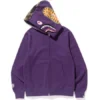
This full-zip hooded sweatshirt is a collar-engineering project disguised as a familiar streetwear layer. The reference image shows a substantial hood meeting a centered zipper and compact neckline, so comfort, visual authority, and repeatable shape depend on controlling roll and stand height together.
Neckline Geometry Sets the First Impression
The reference image shows a zipper reaching directly into the neckline, while the hood rises behind it. A low stand may let the opening collapse inward; excessive height may feel restrictive. The target is a controlled roll that supports the face without turning the garment rigid.
Because the hood edge appears visually substantial, collar height cannot be approved independently. The pattern must distribute seam allowance, zipper tape, and hood attachment smoothly around the neck. Small changes can alter how the camouflage panel sits and whether the purple body remains visually dominant.
Zipper Alignment Must Support the Collar
A full-length center zipper makes any neckline distortion immediately visible. If the collar rolls unevenly, the slider and tape can pull the opening off center. Development should therefore review zipper insertion, top-stop position, seam balance, and collar turn together on the same prototype.
The kangaroo pocket and centered front establish a strong vertical axis below the neck. That visual order increases the importance of a straight zipper line above it. A stable collar stand should reinforce the axis, while preserving enough flexibility for normal hood movement and layering.
The Hood Changes Stand-Height Perception
The hood is not a neutral extension here; its broad opening and contrasting panel add weight around the upper chest and head. A collar stand that works on a lightweight hood may appear too short once this volume is attached, causing the neckline to look crowded.
Pattern review should examine the hood seam, opening curve, and collar attachment as one three-dimensional junction. The objective is not maximum height. It is a clean transition that keeps the hood functional, prevents rear collapse, and avoids excess fabric pressing against the wearer's neck.
Build a Collar-Specific Approval Sample
VeeWen's development workflow should begin with a measurement map for stand height, collar finished width, hood opening, zipper length, and seam turn. These dimensions create a shared approval language before grading or decoration begins, keeping the assigned axis measurable throughout development.
The first sample should be assessed zipped, partially open, and fully open, because each position changes collar tension. Record roll direction, stand stability, hood recovery, and zipper centering after movement. Approval should follow the most demanding wear position, not only the neatly presented closed view.
Control Structure Without Sacrificing Wearability
A higher stand can sharpen the silhouette and protect the hood opening from collapsing, but it may reduce chin clearance or make the layer difficult to wear open. A softer collar can improve comfort, yet may lose definition when the hood is lifted or folded.
The buyer should decide the intended styling priority before freezing dimensions. If the garment is expected to function as an everyday layer, comfort and movement deserve a larger tolerance. If the visual requirement is architectural framing, the stand may need stronger support and closer fitting review.
Translate the Argument into Production Control
At VeeWen, the approved collar geometry should become a production checkpoint covering neckline measurements, zipper top position, hood attachment balance, and seam appearance. The factory record should distinguish tolerance-sensitive dimensions from flexible ones, so later adjustments do not quietly change the central design argument.
Before releasing the style, compare the approved sample with a size-set view and confirm that the collar remains proportionate across sizes. Review the purple body, hood contrast, rib edges, and center line together. The final decision is a documented neckline approval, not merely a sample sign-off.
Buyer Questions
Why is collar roll important on a full-zip hoodie?
Collar roll controls how the neckline turns around the face. Uneven roll can expose zipper distortion, collapse under hood weight, or create discomfort during open and closed wear.
Should the hood and collar be sampled together?
Yes. Hood opening volume changes perceived stand height and neckline tension. Sampling them together reveals whether the transition remains balanced when the hood is raised, folded, or worn open.
What should the buyer measure first?
Confirm collar stand height, finished collar width, hood opening, center zipper position, and attachment seam balance. These measurements establish the controlling geometry before grading, trim, and decoration are finalized.
What is the commercial minimum for this style?
The commercial minimum is MOQ: 100 pieces per style. Final material selection, color approval, construction tolerances, and production quantities should be confirmed in the development record.
Approve the Neckline Geometry
Send the target measurements, intended wear positions, and preferred structure level to VeeWen for collar-hood sampling. We can then review the size set and document the neckline checkpoint before production approval.



Reviews
There are no reviews yet.