
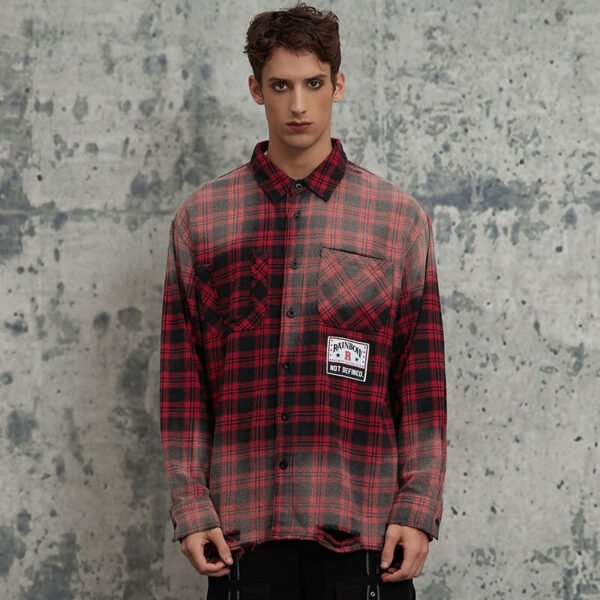
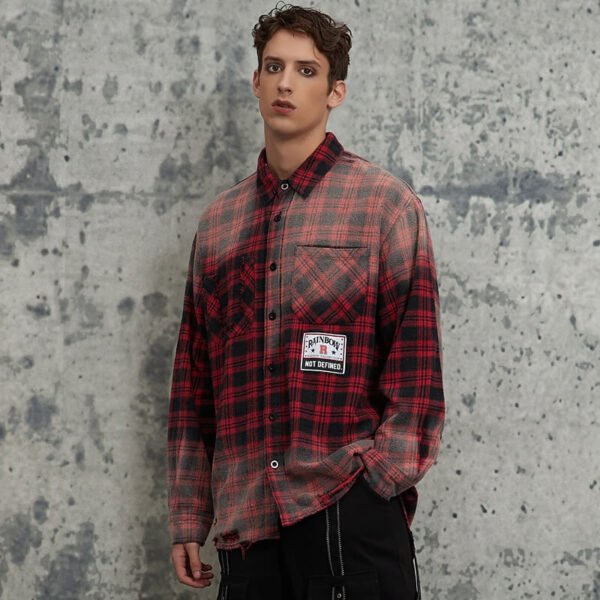
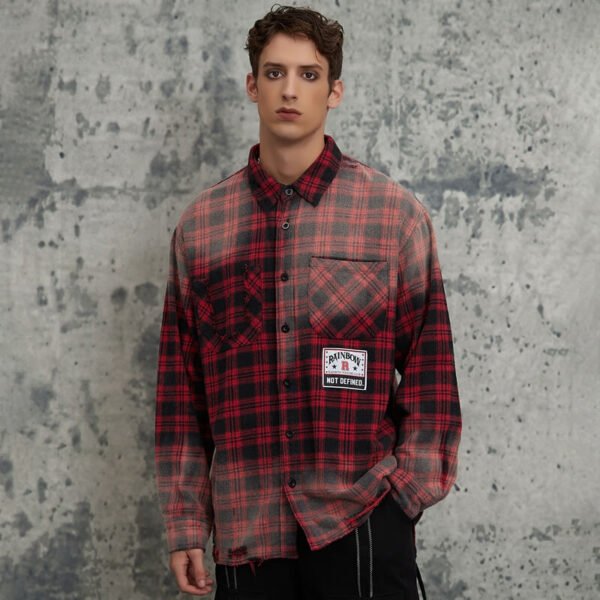
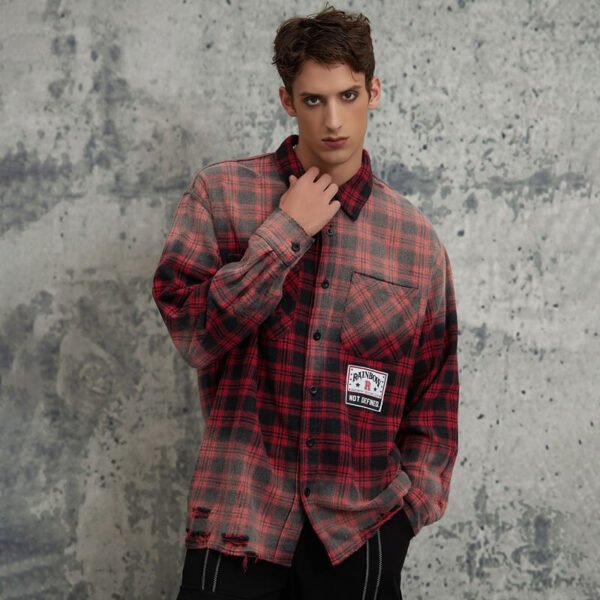







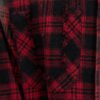
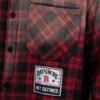


This distressed plaid long-sleeve shirt is developed through proportion at the outfit boundary. Its extended body, relaxed sleeves, raw hem, and faded check require coordination with trouser rise and inseam. VeeWen can use the approval sample to establish a repeatable hem-opening relationship for MOQ: 100 pieces per style.
Hem Position Defines the Layering Break
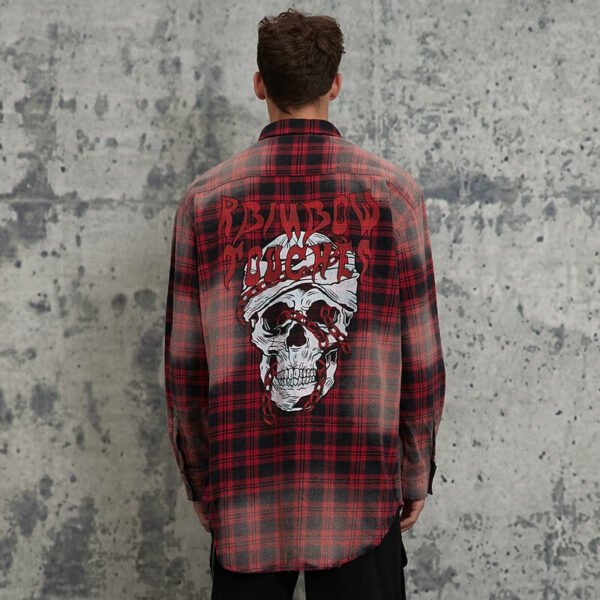
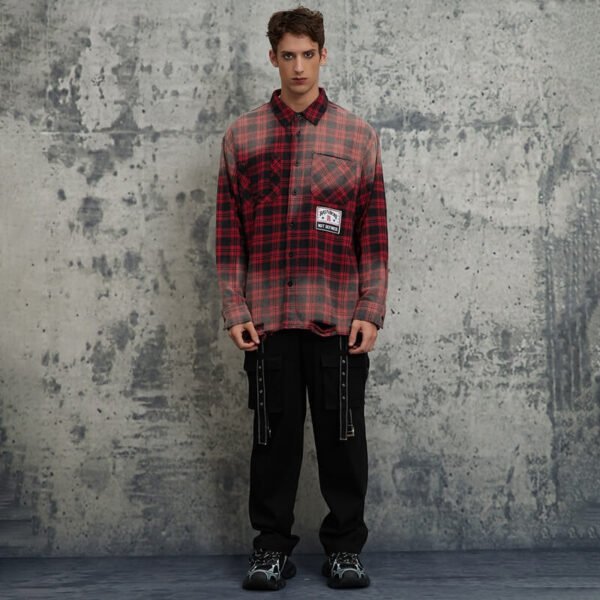
The shirt's lower edge sits below the hip and appears intentionally uneven, making body length central to its styling identity. A shorter body would expose more waistband, while excessive length could hide the trouser rise and weaken the layered break.
Because the plaid remains visible across the entire front, the hem line reads clearly against darker bottoms. Buyers should set the target length from the intended outfit, then confirm how the raw edge changes perceived extension after laundering or finishing review.
Rise and Inseam Set the Reference Frame
Although this is an upper-body garment, trouser rise and inseam establish the visual frame beneath it. A higher rise reduces visible lower layering, while a lower rise creates more space under the shirt, changing whether the relaxed body feels balanced or oversized.
The development brief should therefore identify the planned trouser relationship before finalizing shirt length. Fit review should record waistband visibility, front overlap, side drop, and the distance from the shirt hem to the shoe line across selected size samples.
Hem Opening Controls Body Volume
The photographed shirt falls with a relatively straight lower body, while the distressed edge introduces irregularity without appearing sharply flared. A narrow opening keeps the silhouette columnar; a wider opening lets the shirt spread over trousers and increases visual volume.
This decision also affects movement and pocket access. VeeWen should compare the hem opening with the chest width and sleeve volume, ensuring the lower body neither grips the base layer nor balloons beyond the intended streetwear proportion.
Plaid Placement Exposes Proportion Errors
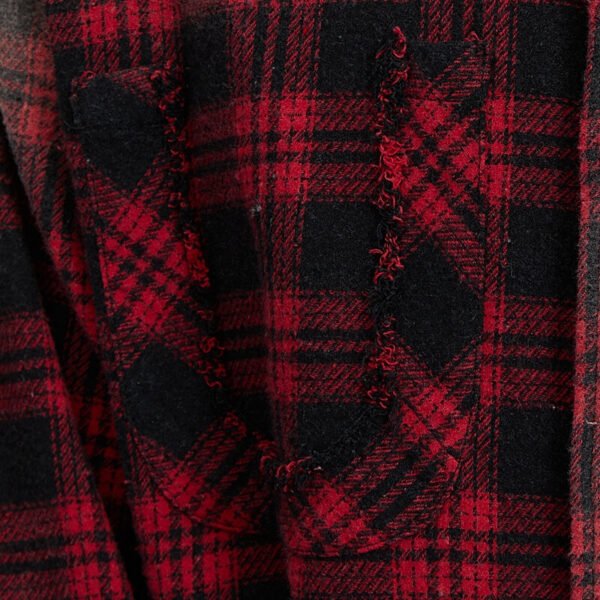
The check pattern creates strong horizontal and vertical references across the front, pocket, collar, and sleeves. When body length shifts, those lines move relative to the waistband and can make the shirt look unintentionally cropped, elongated, or uneven between sizes.
Pocket placement should be evaluated at the same time as hem length and opening. The visible pocket adds front weight above the waist, so a lower hem must provide enough counterbalance without pushing the entire check layout too far downward.
VeeWen Workflow for Outfit-Based Fitting
VeeWen's workflow should translate the visual reference into a proportion sheet covering body length, chest width, sleeve length, hem opening, and the intended trouser rise. This keeps the assigned axis measurable while preserving the shirt's distressed plaid character during development.
The buyer approval sample should be fitted with the planned trouser block or equivalent measurements. Reviewers can then approve hem position, waistband exposure, front overlap, and inseam relationship together before grading the shirt across the size range.
Buyer Checkpoint Before Production
The principal trade-off is between a longer body that delivers stronger coverage and a shorter body that reveals more rise and layering. Hem opening adds another variable, since extra width increases movement but can dilute the structured plaid frame.
Approve the proportion only when the shirt maintains intentional balance in motion and at rest. Check front, side, and back views with the intended trousers, then document the approved rise, inseam, and hem-opening relationship for production control.
Buyer Questions
Why include trouser rise in a shirt development brief?
Rise determines waistband exposure beneath the shirt, so it directly changes the perceived body length, layering break, and balance of the relaxed plaid silhouette.
What does hem opening control?
Hem opening controls how the lower body falls over trousers, influencing columnar structure, movement, layering volume, and the visibility of the distressed edge.
Should the raw hem be approved before grading?
Approve the visual proportion first, then confirm raw-edge behavior across sizes, since grading and finishing can alter apparent length, opening, and irregularity.
What is the commercial minimum?
The exact commercial minimum is MOQ: 100 pieces per style, subject to final approval of specifications, samples, and production requirements.
Approve the Proportion Block
Share your trouser reference measurements, target waistband exposure, and finishing direction so VeeWen can prepare a proportion-focused sample for review before production approval.


Reviews
There are no reviews yet.