


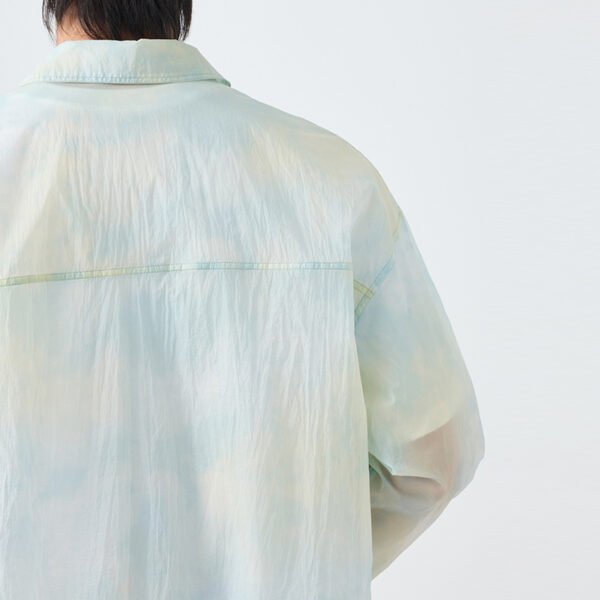
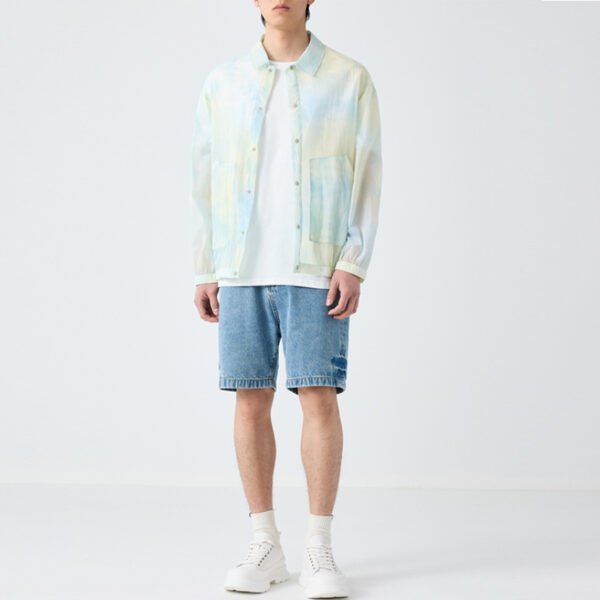
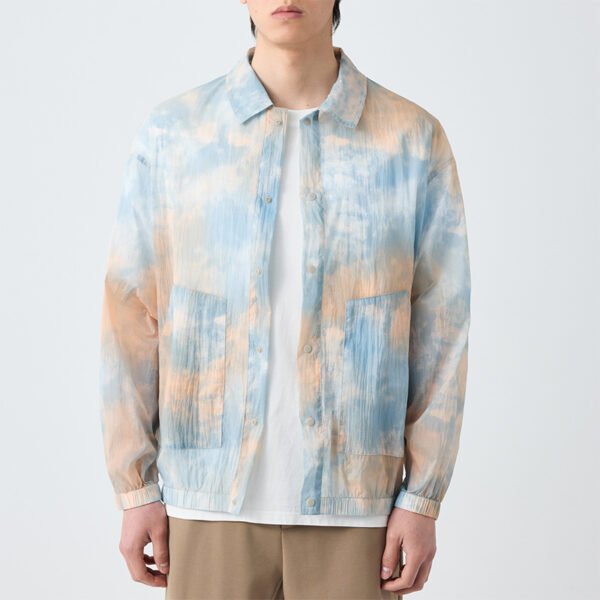




This jacket should be developed around controlled openings, not simply a relaxed silhouette. The supplied image shows elastic cuffs, an elastic hem, and roomy translucent-looking panels; together, they create a fit problem requiring measured recovery, sleeve volume, and dependable clearance over spring layers.
The Sleeve Opening Sets the Wearable Proportion
The cuff is visibly gathered, which concentrates fabric at the wrist and prevents the sleeve from hanging as a straight tube. Its tension must remain comfortable while preserving the intended ballooned sleeve shape through movement and repeated dressing.
If the opening is too tight, the jacket will resist layering and push the sleeve upward. If it is too loose, the silhouette loses containment and the cuff may twist. Measure relaxed and extended openings during fitting, then review recovery after wear simulation.
Layering Clearance Must Be Graded, Not Assumed
The image presents a broad upper body and generous sleeves, suggesting the jacket is intended to sit over a shirt or light midlayer. That clearance should be translated into chest, biceps, armhole, and sleeve-length allowances rather than left as an informal oversized impression.
VeeWen's development checkpoint should compare the base size with graded sizes while each is worn over the planned underlayer. Record cuff position, sleeve mobility, hem lift, and button strain, because opening tension can change the perceived fit across the size range.
Elastic Hem and Cuffs Need Coordinated Containment
The elastic hem visibly gathers the lower edge, while the cuffs gather the sleeves. Using similar containment logic gives the jacket a coherent shape, but the two openings should not apply identical tension because body circumference and wrist comfort have different functional demands.
A firm hem can stabilize the jacket above trousers, yet excessive compression may create ballooning or ride-up when seated. The cuff should retain the sleeve without marking the wrist. Confirm elastic width, insertion method, exposed fullness, and recovery targets during sample review.
Lightweight Construction Changes the Risk Profile
The supplied image shows a pale, airy-looking surface with visible tonal variation and fine creasing. Such a visual direction can make seam bulk, uneven gathers, and needle damage more noticeable, especially around elastic channels and pocket openings.
Development should therefore balance containment with low visual weight. Review seam allowance behavior, pocket reinforcement, button placement, and edge stability on the actual nominated fabric. Composition, GSM, opacity, and lining decisions remain open until the fabric and sample are physically approved.
Pocket Placement Must Respect the Relaxed Block
Two lower front pockets are visible and appear integrated into the jacket's broad lower body. Their placement affects how the gathered hem reads: pockets set too low can crowd the elastic, while pockets set too high can interrupt the clean transitional-layer proportion.
During prototype fitting, align pocket openings with natural hand entry while checking interference from the hem gather. Confirm pocket bag depth, reinforcement, and opening angle after the final body ease is established, because changing the block later can shift practical access.
VeeWen Workflow: Approve Openings With the First Pattern
For this style, VeeWen's workflow should begin with a measurement brief that records cuff and hem states both relaxed and extended. The first pattern review should connect those measurements to sleeve fullness, armhole mobility, and the buyer's intended layering garment.
The buyer checkpoint is a coordinated fit approval: review the jacket over the target underlayer, inspect elastic recovery, and authorize grading only after the openings remain comfortable and visually controlled. MOQ: 100 pieces per style applies when the development proceeds to manufacturing.
Buyer Questions
What is the central development risk for this jacket?
The main risk is mismatching elastic recovery with sleeve volume, causing restricted layering, cuff discomfort, or loss of the intended contained silhouette.
Should the jacket be fitted over another garment?
Yes. Approve it over the intended shirt or light knit, because sleeve clearance and cuff tension cannot be judged accurately on a bare arm.
Is the pale surface finish confirmed?
No. The image shows a lightly crinkled, airy-looking appearance, but the fabric composition, finishing route, opacity, and durability require confirmation.
What is the manufacturing minimum?
The commercial minimum is MOQ: 100 pieces per style. Final specifications, grading, and production approval should follow successful sample and material confirmation.
Approve the Opening-and-Layering Sample
Send the target underlayer, size range, and preferred fabric direction to VeeWen for a focused pattern review covering cuff recovery, hem containment, mobility, and graded fit.


Reviews
There are no reviews yet.