
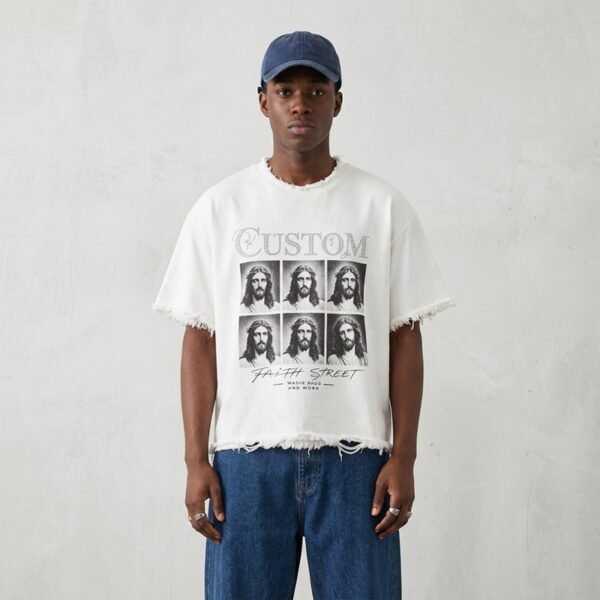










This cropped T-shirt combines rhinestone lettering, monochrome DTG-style artwork, and intentionally unfinished edges, making approval control central to repeatability. A sealed sample should define decoration placement, crop proportions, distress locations, and fray behavior before production or future reorder quantities are released.
Why Approval Must Cover Multiple Surfaces
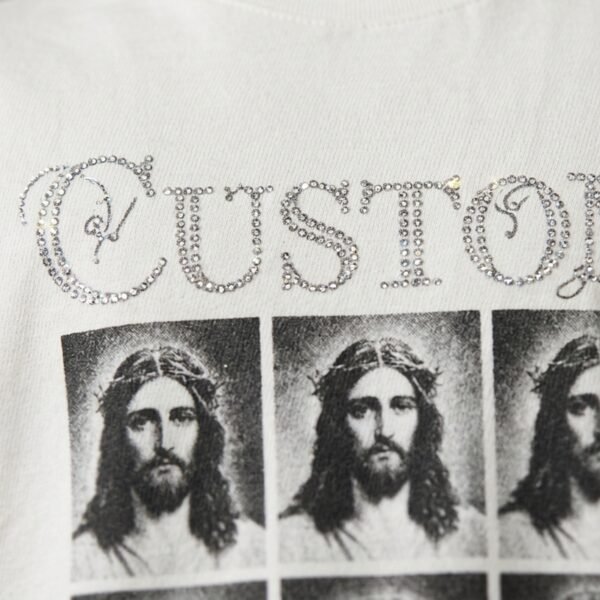
Rhinestones and printed artwork respond differently to handling, washing, and fabric movement. The supplied close-up shows lettering built from individual reflective stones above repeated monochrome portrait panels, so approval must assess spacing, adhesion appearance, ink registration, and visual balance together.
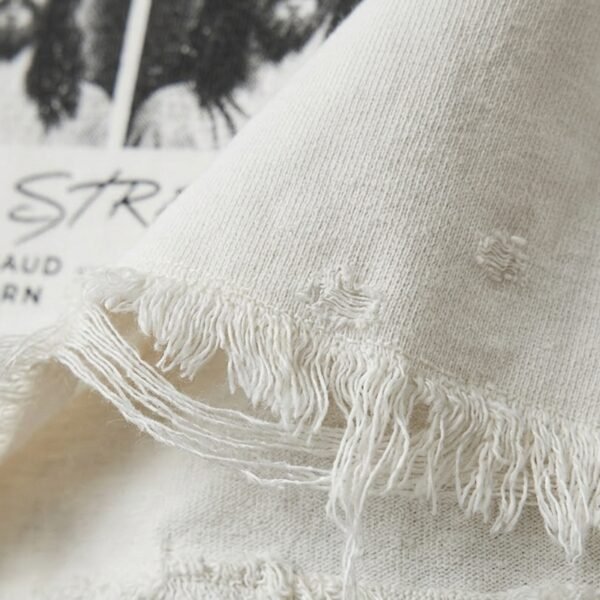
A crop change can alter the relationship between the lower edge and the artwork. Because the source identifies a cropped, distressed T-shirt with a frayed hem, the approval sample should establish finished body length, hem exposure, and acceptable variation in unfinished fibers before grading begins.
Sealing the Decoration Reference
The sealed sample functions as a physical boundary for production decisions. It should preserve the approved rhinestone character, letter scale, print darkness, panel spacing, and artwork position, allowing a buyer to identify drift without relying on changing screen colors or informal verbal descriptions.
For reorders, the reference should travel with the technical package and approval record. Any requested alteration, such as moving the print or changing stone density, becomes a new approval event rather than an undocumented adjustment to the existing style.
Managing Distressed Construction
Distressing is part of the product identity, yet it introduces controlled irregularity rather than unlimited variation. The source wording calls out a frayed hem and distressed finish, while the supplied detail image confirms a deliberately worn graphic presentation that requires defined boundaries.
The buyer should approve where abrasion, opening, or fraying may appear and where the surface must remain intact. This distinction protects the graphic and decoration from accidental damage while retaining the intended rough edge at the garment perimeter.
Production Workflow at VeeWen
VeeWen can translate this argument into a development gate: first align the artwork, rhinestone map, crop measurements, and distress callouts; then produce one physical sample for buyer review before the style enters the approved production queue.
At the approval checkpoint, VeeWen records the accepted sample as the reorder benchmark and separates confirmed details from items still To Confirm. The buyer then signs off on decoration placement, finished length, hem character, and tolerance expectations for the MOQ of 100 pieces per style.
Trade-Offs Buyers Should Resolve
A denser rhinestone layout can increase visual emphasis but may change hand feel, flexibility, and application complexity. Similarly, stronger distress can create more character while reducing the clean area available for stable print presentation, especially near the lower body.
The correct decision depends on the intended balance between spectacle and repeatability. Buyers should prioritize the details that define recognition, then set practical tolerances for secondary irregularities so production can preserve the look without treating every fiber as identical.
The Final Approval Checkpoint
Before reorder authorization, inspect the sealed sample under consistent lighting and compare it with the approved artwork file. Confirm stone alignment, print scale, image cropping, body length, hem fray, and every specified distress location against the physical reference.
Release the style only when the buyer accepts both the visual result and the permitted variation. That decision creates a shared production language for future orders, reducing ambiguity when the same cropped T-shirt is developed again in the VeeWen workflow.
Buyer Questions
What should the sealed approval sample include?
It should show final artwork scale, rhinestone placement, crop length, distress locations, frayed hem behavior, color appearance, and all buyer-approved visual tolerances.
Does the image verify the fabric composition?
No. The image shows a knitted surface and white base, but fiber percentages, GSM, stretch, and finishing specifications require confirmation during technical development.
Can the distressed details vary between garments?
Yes, controlled variation may be appropriate, but the buyer should define placement boundaries, severity limits, and protected areas before production approval and reorders.
What is the minimum order quantity?
The exact commercial minimum is MOQ: 100 pieces per style. Final order planning should follow approval of the complete physical and technical reference.
Approve the Reference Before Reordering
Send the artwork, target measurements, decoration map, and distress expectations to VeeWen for sample development, then authorize production after the sealed reference is approved.


Reviews
There are no reviews yet.