


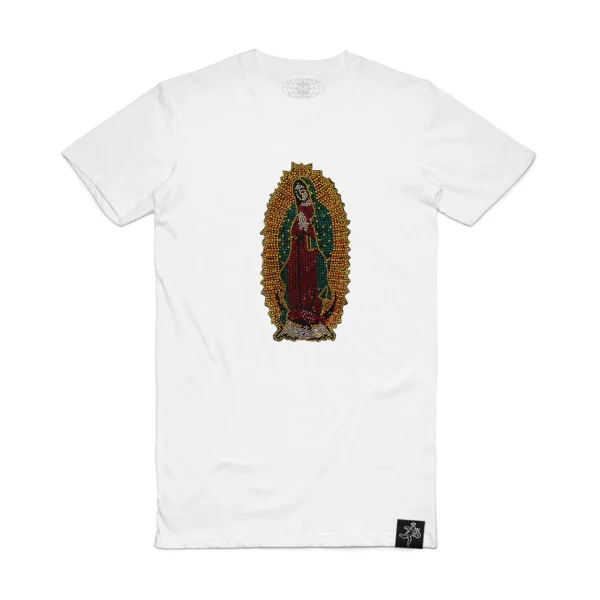


This custom rhinestone graphic T-shirt is developed around a practical approval question: how will concentrated decoration and any added trim withstand handling, dressing, and repeated wear? The supplied black sample shows a dense chest motif, contrasting stones, and a small hem emblem requiring controlled construction decisions.
Decoration Creates Localized Pull Points
The chest motif is built from many closely spaced reflective elements, so force may collect around edges, gaps, or snagged stones rather than distribute across plain jersey. This makes attachment density, perimeter stability, and handling direction important during sample review and production approval.
The black body visually amplifies the gold, red, green, and silver arrangement, making missing stones or lifted edges easy to notice. Buyers should therefore inspect the graphic from normal viewing distance and close range, checking symmetry, spacing, adhesion, and clean transitions around the central figure.
Closure Hardware Needs a Separate Decision
The supplied main image shows a conventional crew-neck T-shirt without visible snaps or buttons. Because the assigned axis concerns pull resistance, any closure hardware added for a future variant must be treated as a new risk zone, not assumed acceptable from the decorative sample alone.
If the final design remains pull-on, approval should focus on neck opening recovery, seam security, and avoiding hardware that can catch the rhinestone field. If snaps or buttons are introduced, define placement, backing, attachment method, and pull-test requirements before confirming the production pattern.
Reinforcement Should Follow Force Direction
A centered embellishment can experience upward, downward, and lateral forces while the garment is pulled over the head or layered under outerwear. Reinforcement should follow those likely force paths, especially near decoration edges, neckline handling areas, and the lower emblem where fingers may grip.
The development sample should identify whether decoration is applied before or after major assembly, then preserve access for inspection and repair. Buyers should review reverse-side cleanliness, stitch or adhesive intrusion, puckering, and any hard points that could reduce comfort or damage adjacent fabric.
Colorways Change Inspection Priorities
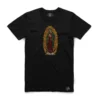
The evidence references black, red, and white versions, while the main image presents black as the clearest reference. Each base color changes contrast, perceived stone brightness, and visibility of adhesive residue, so one approved artwork cannot automatically represent every colorway accurately.
Approve colorways with side-by-side artwork and garment checks rather than relying solely on digital files. Confirm that stone colors remain distinct on each ground, the motif stays legible after application, and the lower-hem emblem retains its intended scale without competing with the chest decoration.
Pull Resistance Belongs in the Approval Gate
For this style, pull resistance should be documented as a targeted inspection gate covering any snaps, buttons, labels, hem trims, and decoration-adjacent components. The image proves visual placement, but it does not prove attachment strength, laundering durability, or production consistency.
A buyer approval pack should record the final trim list, attachment locations, accepted appearance limits, and any required testing method. This converts a visually attractive sample into a controlled manufacturing reference and prevents optional hardware from entering bulk production without a defined standard.
VeeWen Workflow Checkpoint
VeeWen can translate the approved artwork into a cut-and-sew development package by separating graphic placement, trim placement, reinforcement notes, and inspection points. The useful checkpoint is a construction review where the buyer signs off decoration boundaries before pattern and production instructions are locked.
At that review, VeeWen should reconcile the selected base color, chest graphic scale, hem emblem position, neckline construction, and any closure request into one revision-controlled sample brief. The buyer then decides whether the style proceeds to production quoting and MOQ: 100 pieces per style.
Buyer Questions
Are snaps or buttons included in this T-shirt design?
No visible snaps or buttons appear in the supplied main image. Any closure hardware is a separate development decision requiring placement, backing, attachment, and pull-resistance confirmation.
What makes the rhinestone graphic technically sensitive?
Its dense, raised decoration creates concentrated edges and potential snag points. Review should cover stone security, perimeter stability, missing elements, residue, puckering, and handling damage.
Can the graphic be developed in other colors?
The evidence references black, red, and white versions. Each colorway should receive separate visual approval because contrast, brightness, residue visibility, and motif legibility can change.
What is the commercial minimum for this style?
The commercial minimum is MOQ: 100 pieces per style. Final technical approval should precede production planning so artwork, trims, colorways, and inspection standards remain aligned.
Approve the Decoration and Trim Brief
Send VeeWen the preferred colorway, artwork scale, rhinestone map, and any closure request. We will organize the approval checkpoint around attachment zones, pull-risk controls, and MOQ: 100 pieces per style.


Reviews
There are no reviews yet.