
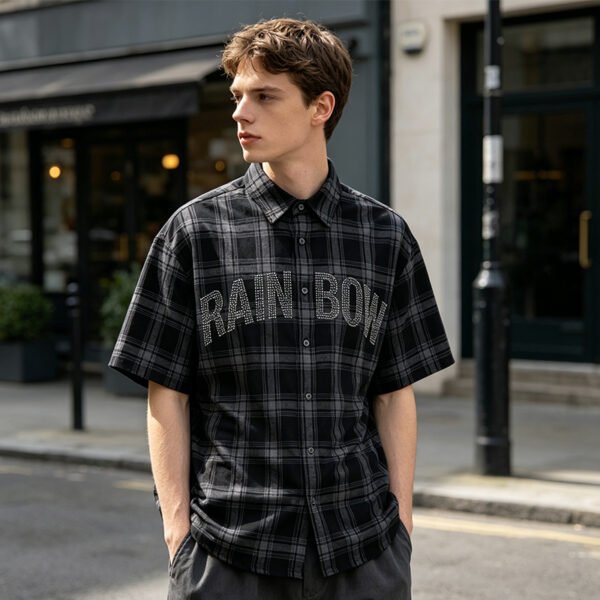
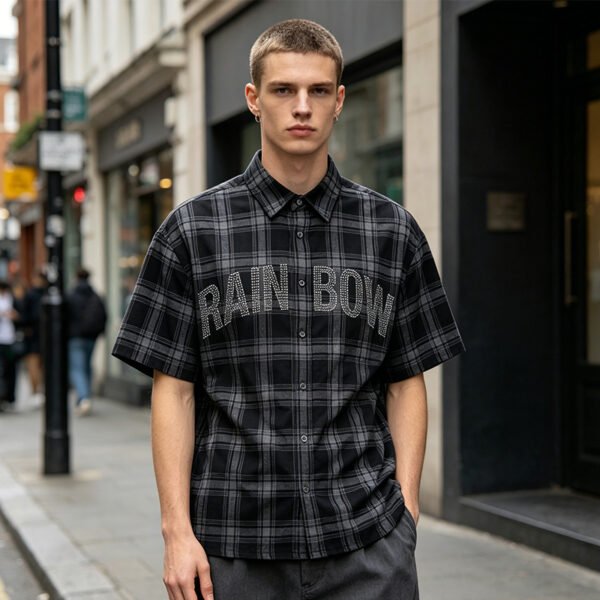
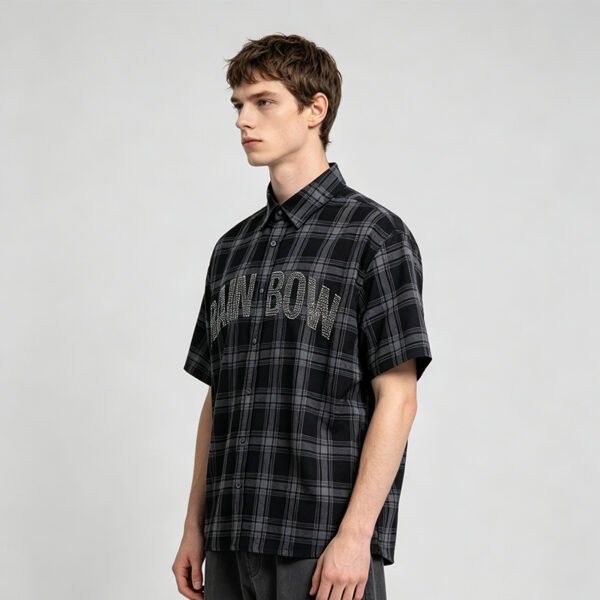
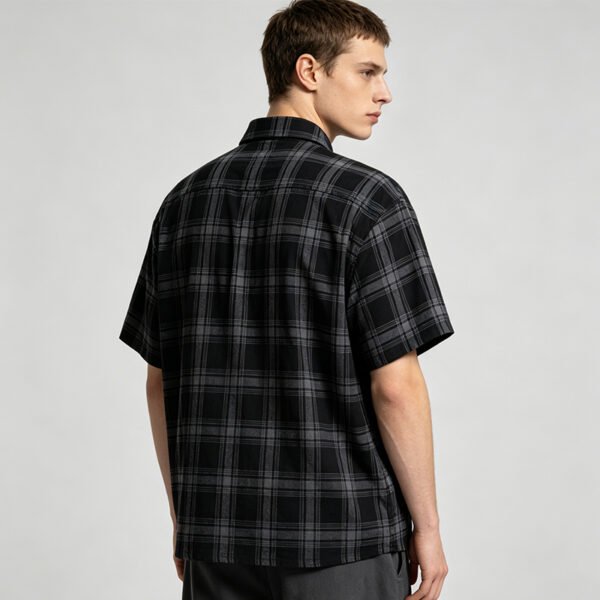
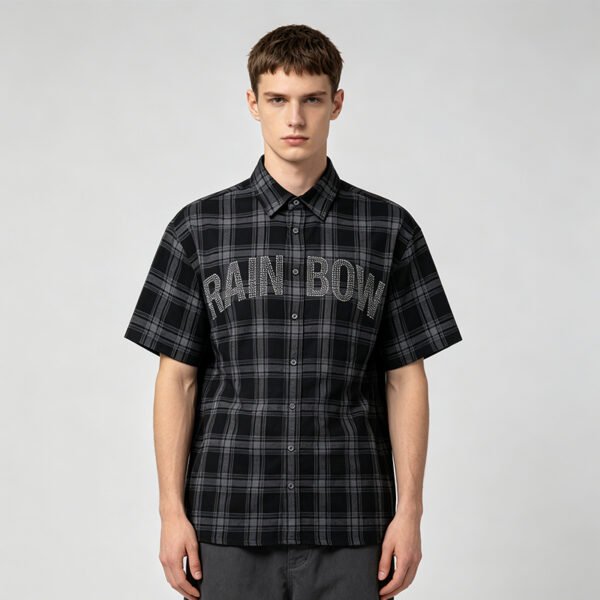
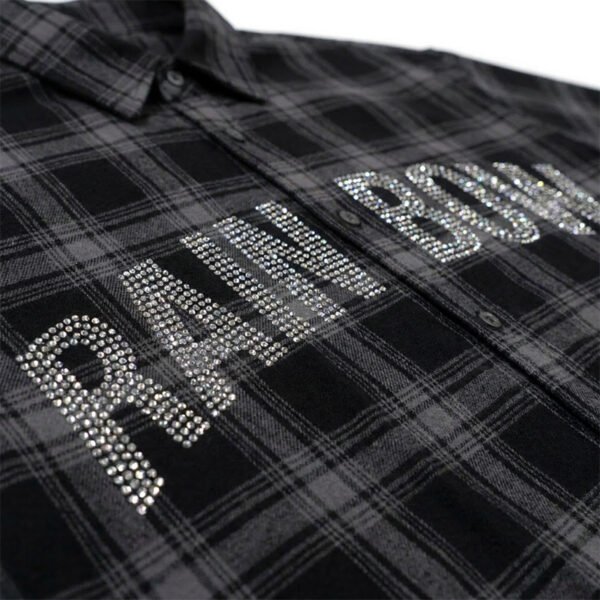
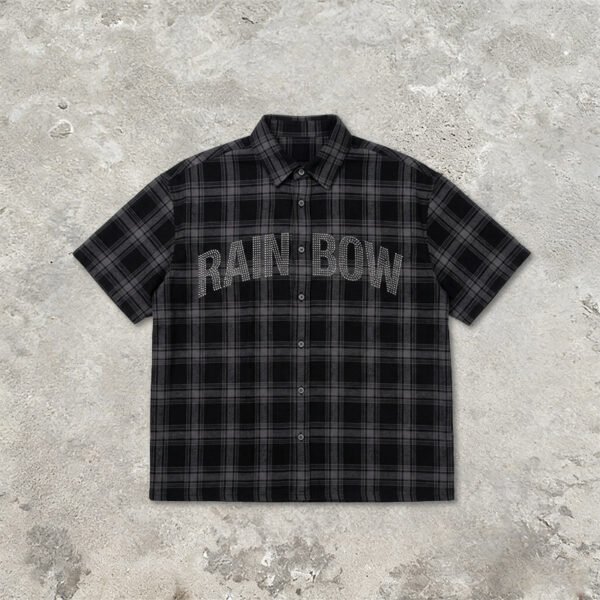




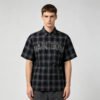
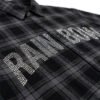
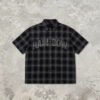
This short sleeve plaid shirt is built around visual proportion rather than decoration alone. The broad body, pointed collar, dark button placket, charcoal checks, and planned rhinestone placement require hem and hang decisions that keep the oversized silhouette deliberate.
Why Hem Level Controls the Oversized Look
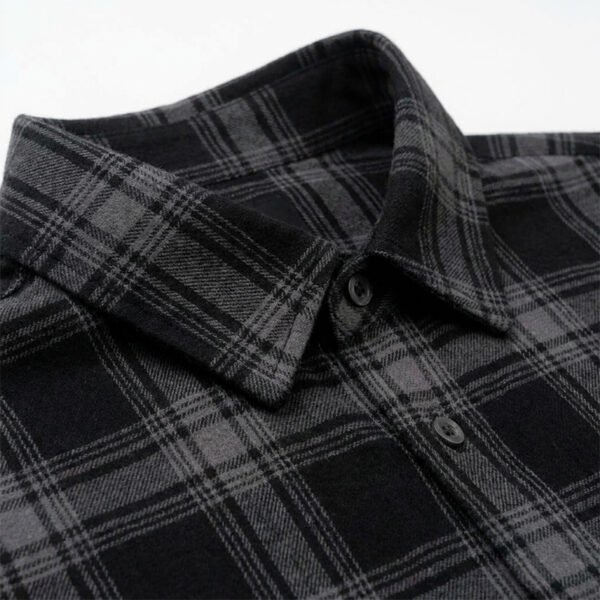
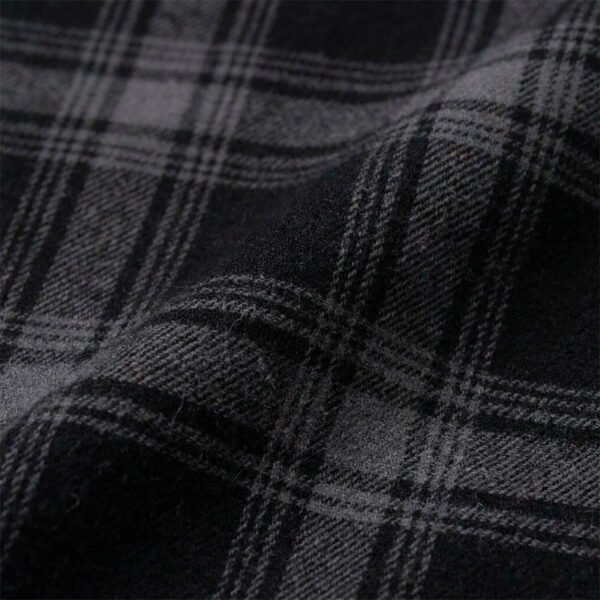
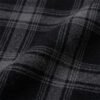
The supplied image presents a broad plaid panel with generous visual width and a soft fold through the body. On an oversized shirt, hem level determines whether that volume reads as intentional layering space or as excess fabric that interrupts proportion.
A small hem change can alter the relationship between collar, sleeve opening, and lower body. VeeWen should establish finished length alongside chest, shoulder, and sleeve measurements, because approving the hem independently can produce a shirt that looks balanced flat but heavy when worn.
Reading Hang Through the Plaid
Plaid provides a practical diagnostic surface because vertical and horizontal lines reveal rotation, twisting, and uneven side drop. In the image, the pattern follows the folded fabric, showing how drape can shift the apparent direction of the checks.
The development sample should be photographed front-facing and relaxed, then checked for side-to-side balance and front-placket straightness. This review helps distinguish a true pattern or sewing issue from normal fabric movement, creating a clearer approval standard for production.
Collar, Placket, and Body Relationship
The pointed collar and dark buttons introduce a firm visual center against a relaxed body. If the collar stand, placket, or front edge becomes too rigid, the shirt may hang away from the chest instead of falling with the intended oversized ease.
VeeWen should coordinate collar construction, front facing, button spacing, and hem length within one fit review. The buyer decision is whether the structured center anchors the volume cleanly, particularly when the shirt is worn open over a base layer.
Decoration Weight and Localized Hang
The source wording identifies rhinestone hotfix decoration, while the supplied image shows the plaid ground and shirt structure. Added stones can create localized weight or stiffness, so their placement may influence how the front or hem falls after application.
Decoration mapping should therefore be reviewed against the final garment dimensions, not a separate artwork sheet alone. VeeWen can confirm whether density needs spacing, border control, or placement adjustment to preserve even hang across the oversized body.
Sleeve and Side-Seam Proportion
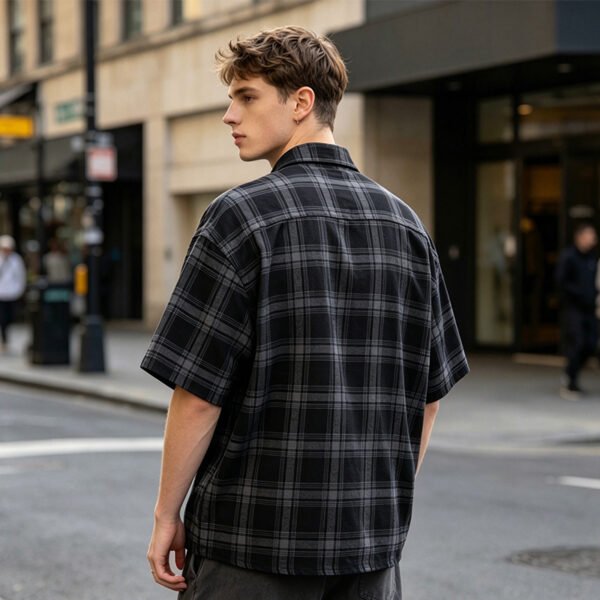
Short sleeves make the body-to-sleeve relationship especially visible. A generous chest with an overly narrow sleeve can make the shirt feel top-heavy, while excessive sleeve width may erase the clean line created by the point collar and front placket.
The sample review should assess sleeve drop, opening circumference, armhole depth, and side-seam fall on a body or dress form. These measurements explain the hang more reliably than judging the garment folded, where volume and balance remain partially hidden.
VeeWen Development Approval Gate
For this style, VeeWen's workflow should convert the visual reference into a fit worksheet covering finished hem, chest ease, shoulder drop, sleeve opening, collar behavior, and decorated-garment weight. Each point should be reviewed after the intended surface treatment is represented.
Before the MOQ: 100 pieces per style production decision, the buyer should approve the worn sample and a flat measurement record. The final checkpoint is consistent hang across sizes, with decoration and plaid alignment accepted as part of the same specification.
Buyer Questions
Can the oversized fit be adjusted for a specific market?
Yes, chest ease, shoulder drop, sleeve opening, body length, and hem shape can be revised through graded pattern development and sample review.
Does the image prove rhinestone placement or adhesion?
No. The image shows the plaid construction, while rhinestone location, density, bonding method, durability, and care performance require development confirmation.
How should buyers assess the hem and hang?
Review the decorated shirt worn and flat, checking side balance, placket straightness, hem level, sleeve proportion, and body drape across approved sizes.
What is the commercial minimum for this style?
The commercial minimum is MOQ: 100 pieces per style, with final specifications and production details confirmed through the approved quotation.
Approve the Worn Proportion
Share your target body length, chest ease, decoration map, and size range with VeeWen for a sample review centered on hem balance and finished garment hang.


Reviews
There are no reviews yet.