
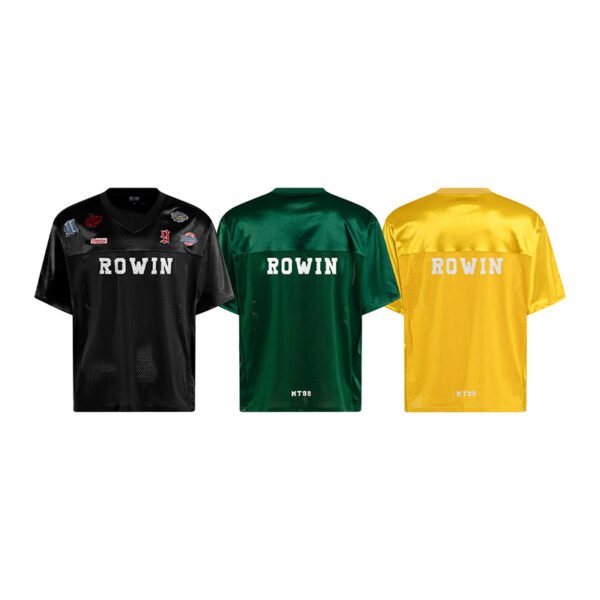
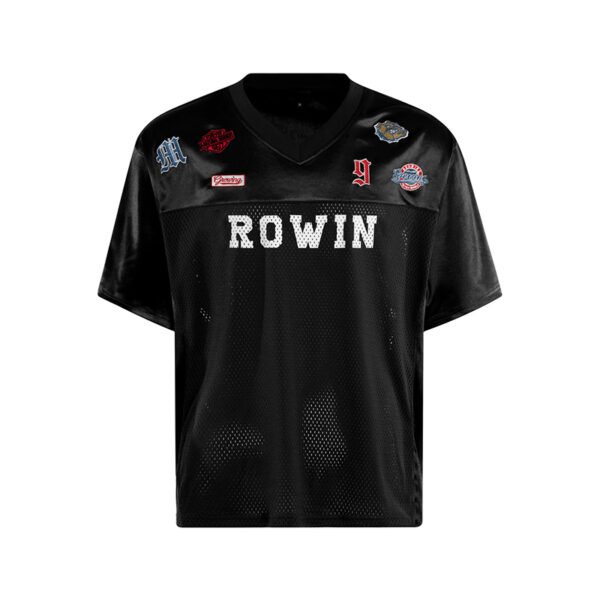
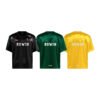

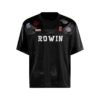
A custom jersey development should begin by separating two different sources of visual impact: garment treatment and plated hardware. Here, the image shows reflective smooth panels, open mesh, and coordinated lettering across three colorways, making surface control the primary approval decision before trims are introduced.
Garment Treatment Sets the Visual Hierarchy
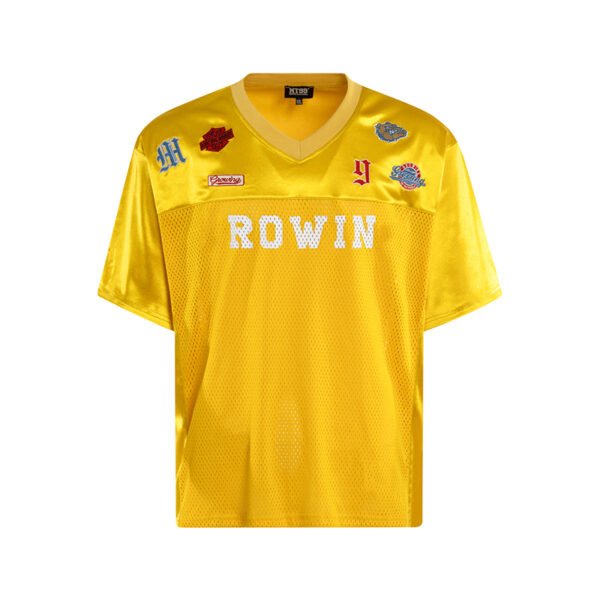
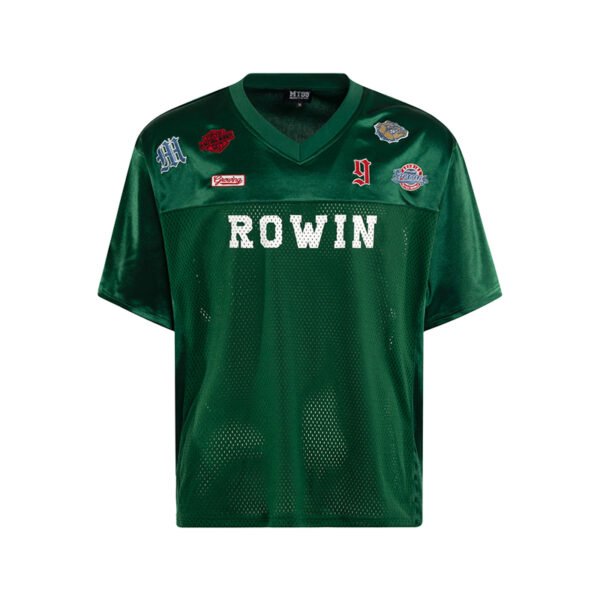
The supplied image gives the jersey its identity through surface contrast rather than visible metal. Smooth areas catch light across the shoulders and sleeves, while the perforated body reads more openly. That difference should be preserved as the central visual mechanism during development.
A treatment-led direction allows the same pattern to support black, deep green, and yellow versions without forcing reflective hardware into every option. The buyer should specify whether the desired sheen is created through fabric selection, finishing, coating, or another approved process before sampling begins.
Mesh Requires Controlled Treatment Placement
The body appears perforated, so any surface treatment must respect airflow openings, handle, opacity, and visual uniformity. Applying an unsuitable finish could stiffen the mesh, bridge perforations, or create uneven reflectivity. These risks make test panels more useful than approving treatment from a flat color reference alone.
Smooth contrast areas provide a safer location for visual depth because the image already separates them from the open body. VeeWen should map treatment boundaries against pattern pieces, then review drape, edge transition, and decoration registration before approving the complete jersey sample.
Hardware Plating Needs a Justified Role
No plated hardware is visible in the supplied image, which is important evidence for scope control. If a buyer later requests metal eyelets, zipper details, snaps, or badges, plating should be treated as a separate trim decision rather than assumed part of the jersey construction.
Plated components can add a sharper industrial accent, but they also introduce weight, contact points, corrosion questions, and laundering considerations. On a lightweight mesh jersey, the approval checkpoint is whether the hardware contributes necessary function or merely duplicates the garment treatment visually.
Decoration Must Follow the Surface Argument
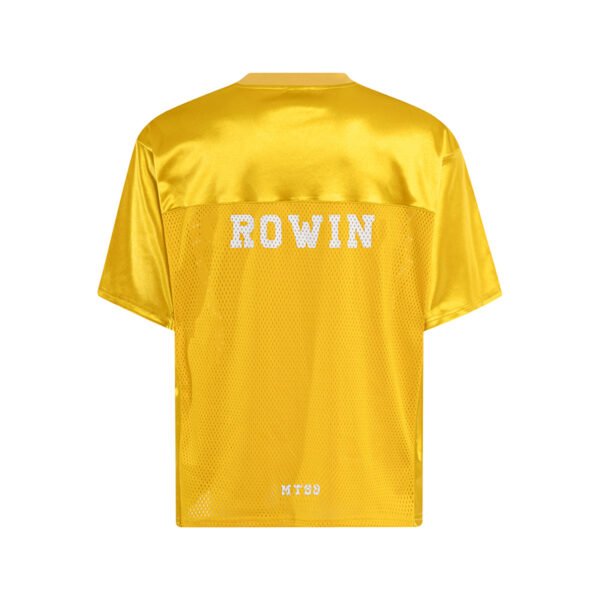
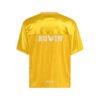
The front shows large white lettering, while the back repeats the name and includes a lower mark. Chest emblems create additional focal points. Together, these placements indicate a coordinated decoration system that must remain legible across smooth and perforated zones.
The source wording references custom embroidery, but the supplied image alone does not verify the attachment method. VeeWen should confirm embroidery, patch, transfer, print, or combination construction through artwork files and sample testing, especially where decoration crosses mesh or treatment boundaries.
Colorways Should Share One Treatment Standard
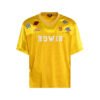
Black, deep green, and yellow are shown as distinct options with consistent white lettering. That consistency suggests the color program should be approved as a family, while recognizing that the same finish may reflect differently on darker and brighter grounds.
The buyer should compare treated fabric panels under intended lighting and review the decoration against each base color. VeeWen can then lock one approved surface direction, identify color-specific adjustments, and prevent plating or trim changes from creating unplanned differences between versions.
VeeWen Development Checkpoint
VeeWen should translate this argument into a focused development sequence: confirm the mesh reference, define the garment treatment, map decorated zones, and reserve plated hardware only for an approved functional requirement. This keeps the visual decision tied to pattern, trim, and artwork reviews.
Before production approval, the buyer should sign off the colorway set, treatment boundaries, decoration method, fit measurements, and any hardware specification. The commercial minimum is MOQ: 100 pieces per style, so each style should carry a settled technical brief.
Buyer Questions
Is the jersey satin or mesh?
The image shows both smooth satin-like panels and visibly perforated mesh areas. Exact fiber content, fabric construction, GSM, and finishing process require source confirmation before development.
Does the product include plated hardware?
No plated hardware is visibly demonstrated in the supplied image. Any eyelets, snaps, badges, or metal trims should be separately specified, sampled, and approved.
Can the three colorways share one pattern?
The displayed black, green, and yellow versions suggest a shared silhouette and placement plan. Final grading, treatment response, decoration contrast, and color approvals should remain style-specific.
What is the minimum order?
The commercial minimum is MOQ: 100 pieces per style. Buyers should finalize artwork, measurements, treatment direction, colorways, and any hardware requirements before committing each style.
Approve the Surface Direction
Send the target artwork, measurement chart, color references, and any proposed hardware details. VeeWen can organize the development review around treatment boundaries, decoration method, fit approval, and MOQ: 100 pieces per style.


Reviews
There are no reviews yet.