



This custom hooded jacket is built around a high-contrast graphic front, but its commercial reliability depends on where patches, prints, seams, and zipper lines meet. The supplied image supports a development brief focused on containing every visual and structural transition before bulk approval.
Why Patch Containment Defines the Jacket
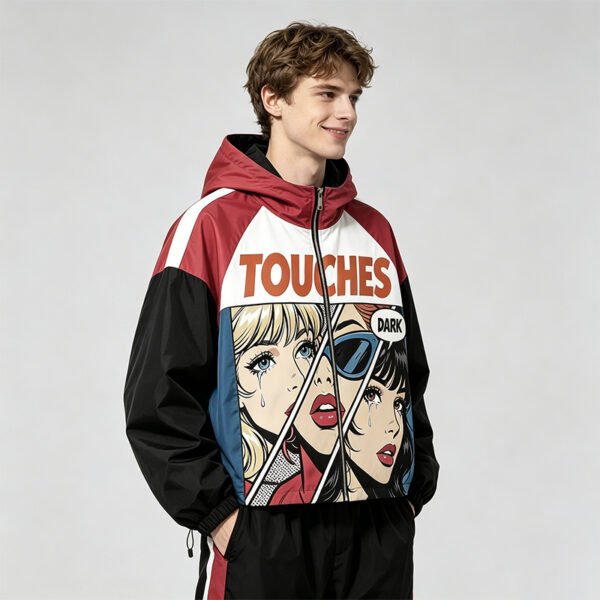
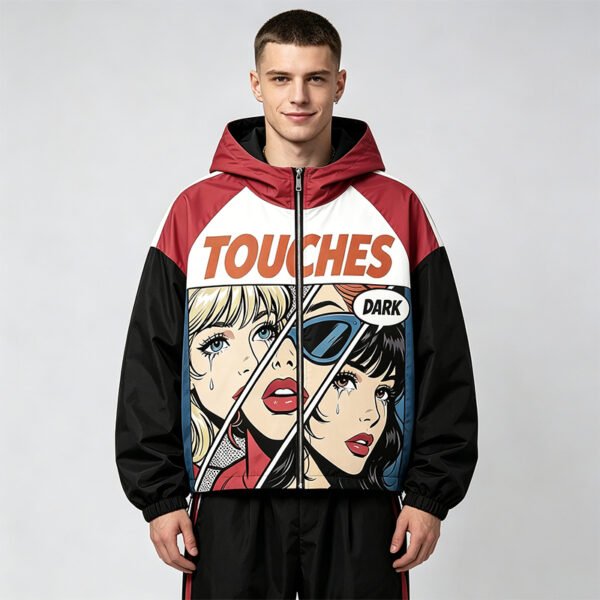
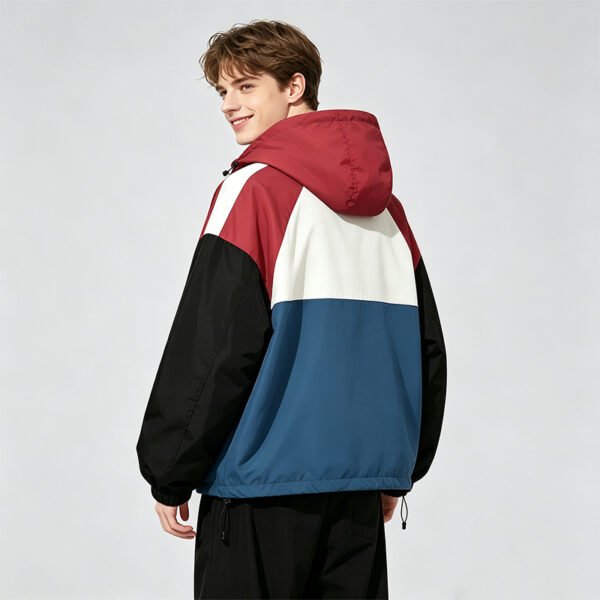
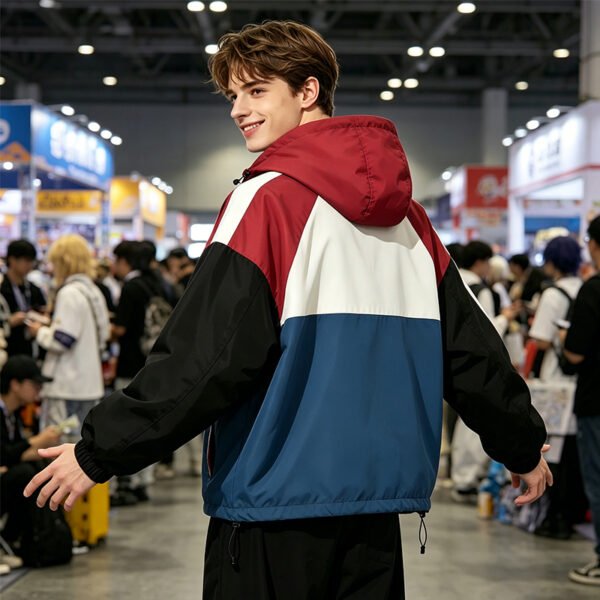
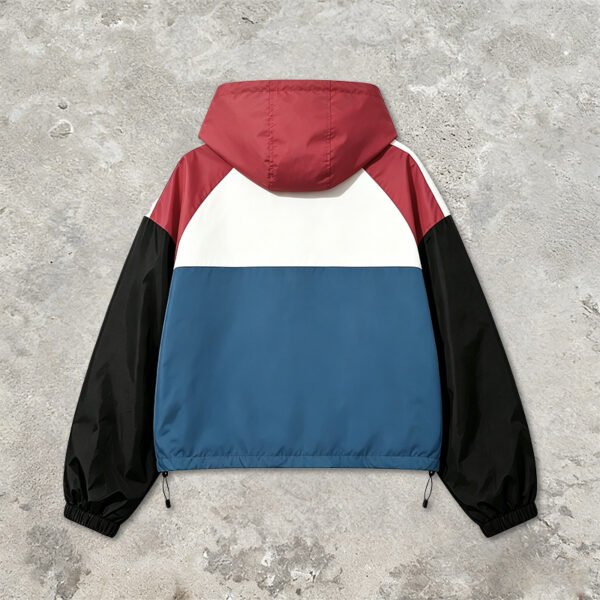
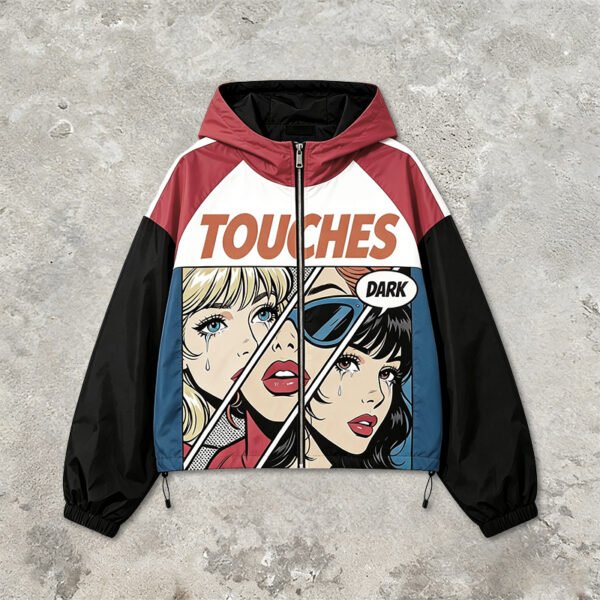
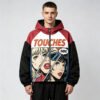
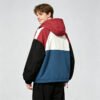
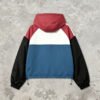
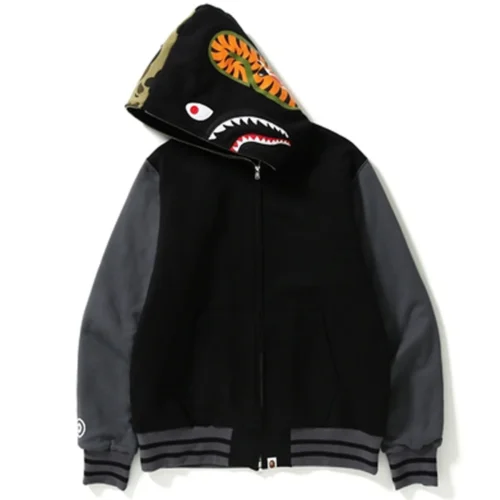
The jacket's visual impact comes from several adjoining zones rather than one uninterrupted shell. Red hood and shoulder sections frame a white chest, while black sleeves and blue side panels create separate sewing and registration conditions around the central graphic.
That arrangement makes containment a production decision, not merely an artwork preference. Each patch or printed area needs a defined edge, seam allowance, and stitch route so the zipper, cuff tension, and hem gathering do not distort neighboring visual fields.
Reading the Supplied Image as a Build Map
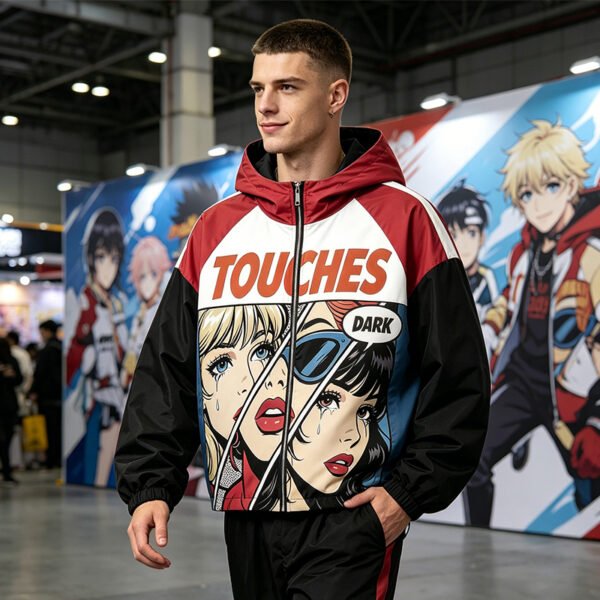
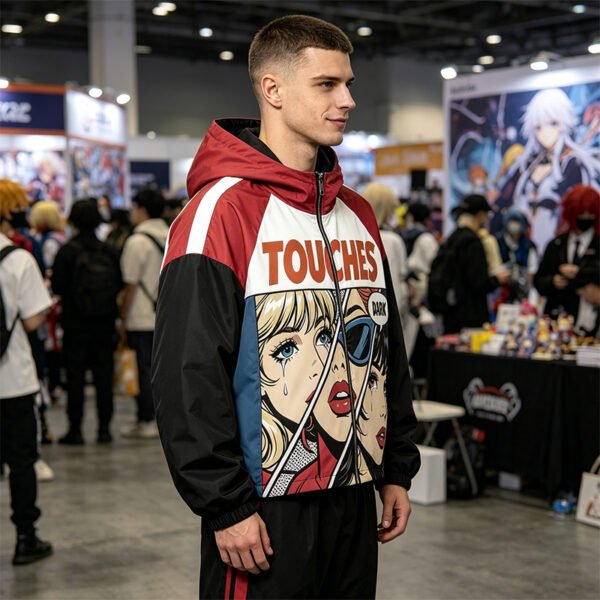
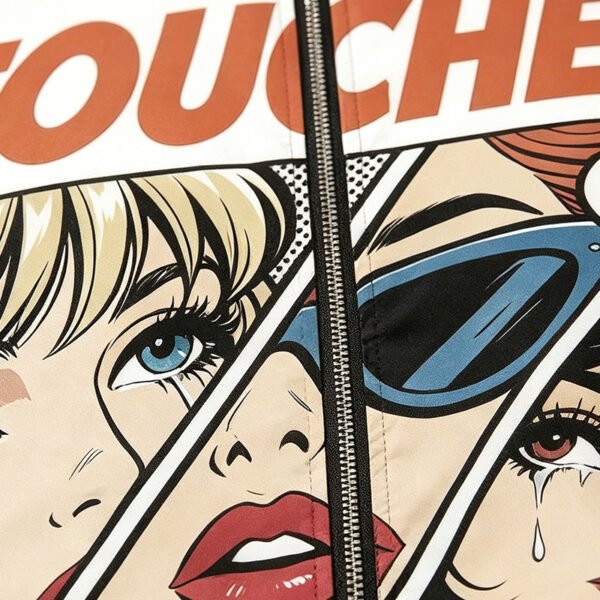
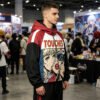
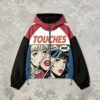
The main image shows the zipper traveling vertically through the front illustration, with the artwork positioned across the white torso and lower blue panel. This visible intersection establishes a critical approval point for split artwork files, left-right alignment, and opening operation.
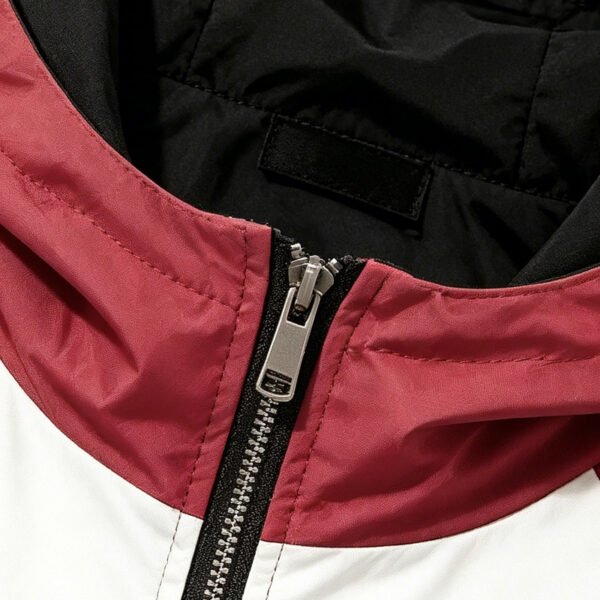
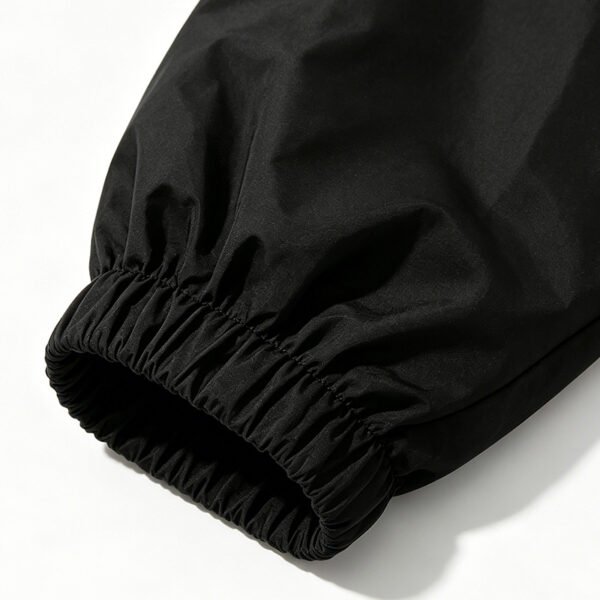
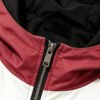
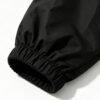
The hood opening, black sleeve panels, and elasticated lower edge also show where movement and compression occur. VeeWen should translate those observations into a panel drawing that marks print limits, patch edges, seam joins, and protected stitching zones.
Artwork Registration and Seam Clearance
A large front graphic has less tolerance than a small chest mark because even minor displacement becomes visible across the zipper line. The development file should separate artwork by panel, identify the true garment center, and reserve clearance around teeth, tape, and topstitching.
Patch edges should remain outside high-curvature areas unless the approved sample proves containment under movement. Where the graphic approaches side seams or the gathered hem, the buyer should inspect puckering, edge lift, and visual drift after closure and wear simulation.
Balancing Graphic Density with Wearability
The image presents a bold front treatment against relatively plain black sleeves, creating a natural balance between visual density and everyday wearability. That contrast can guide assortment planning, especially when the jacket is paired with quieter bottoms or repeated in alternate colorways.
However, concentrated decoration adds handling steps and can change the garment's hand feel across the torso. Buyers should confirm whether the intended result uses printed artwork, sewn patches, or a combined method, then review comfort and flexibility at the chest and zipper.
VeeWen Development Workflow for This Axis
VeeWen's workflow should begin with a panel-level artwork pack rather than a generic jacket tech pack. The pack should identify each color zone, graphic split, seam allowance, stitch containment route, zipper interruption, and inspection view required for approval.
During sampling, the decision gate is a closed-front and open-front review together. That comparison reveals whether the artwork remains coherent during operation, whether patches stay contained at seams, and whether elastic gathering pulls the lower graphic beyond its approved position.
Approval Risks Before Bulk Production
The main commercial risk is approving a visually accurate flat sample that fails once the zipper is operated or the hem is gathered. Buyers should therefore examine edge security, print registration, seam bulk, cuff recovery, and the relationship between graphic scale and body size.
The final approval should also lock the placement grade across sizes, because a fixed graphic can move relative to seams as dimensions change. Record tolerance limits for panel alignment and containment, with exceptions resolved before the MOQ: 100 pieces per style order.
Buyer Questions
Can the front artwork be supplied as one continuous file?
It should be supplied as panel-separated artwork, because the zipper and seams visibly interrupt the front graphic and require controlled registration.
What should the first sample prove?
The first sample should prove zipper clearance, patch-edge containment, panel alignment, hem gathering behavior, and artwork continuity in open and closed views.
Is the jacket's fiber composition confirmed?
No. The supplied evidence does not state fiber composition, fabric weight, or performance, so those specifications remain To Confirm during development.
What is the minimum order quantity?
The exact commercial minimum for this record is MOQ: 100 pieces per style, subject to the approved specification and colorway scope.
Submit the Patch Map for Development Review
Send VeeWen the artwork, panel map, target measurements, and preferred decoration method. We will use the sample gate to confirm containment, zipper clearance, and approval tolerances before ordering.


Reviews
There are no reviews yet.