


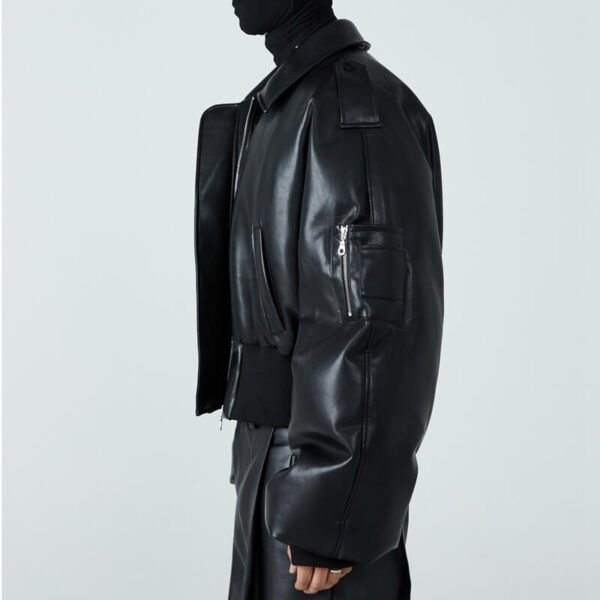

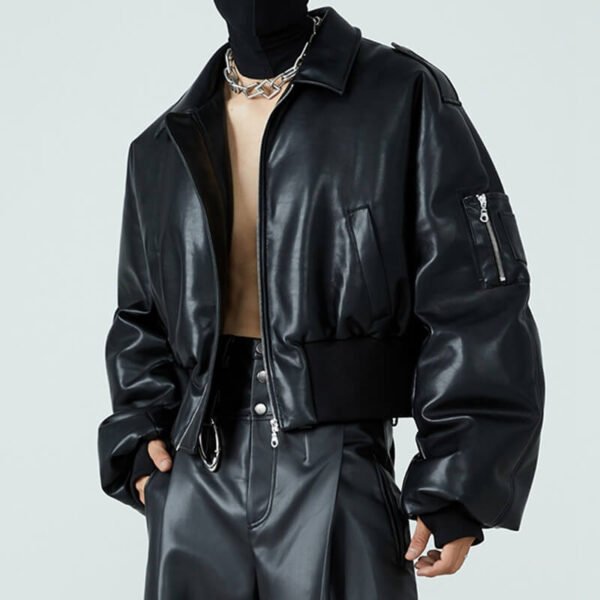
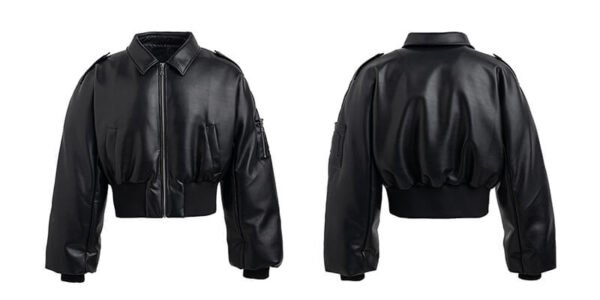

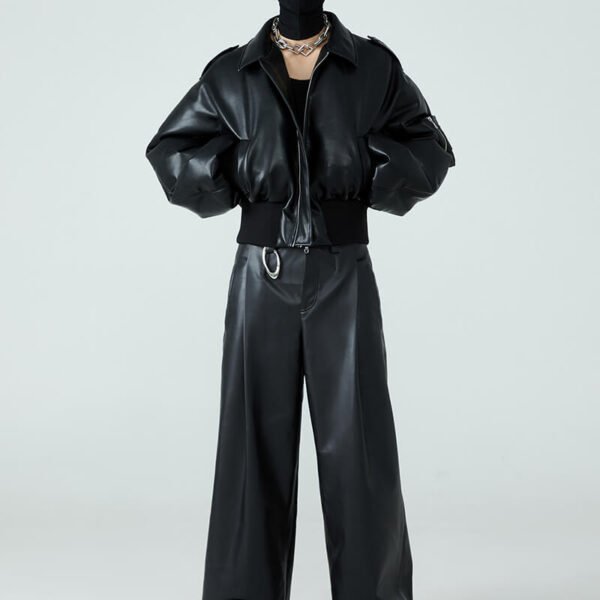
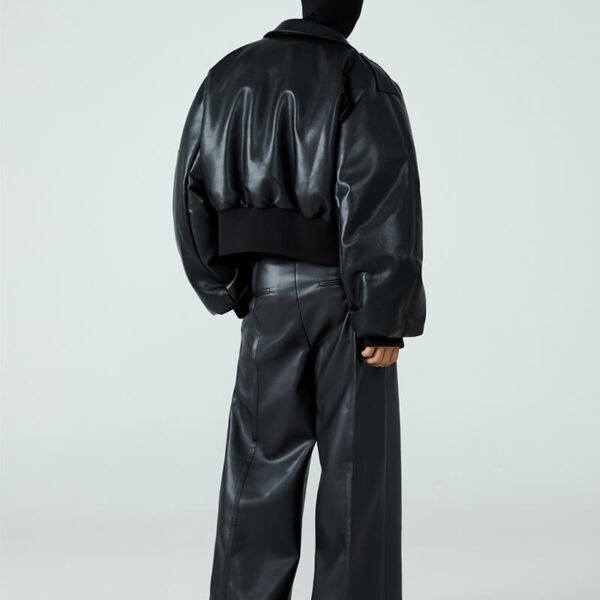
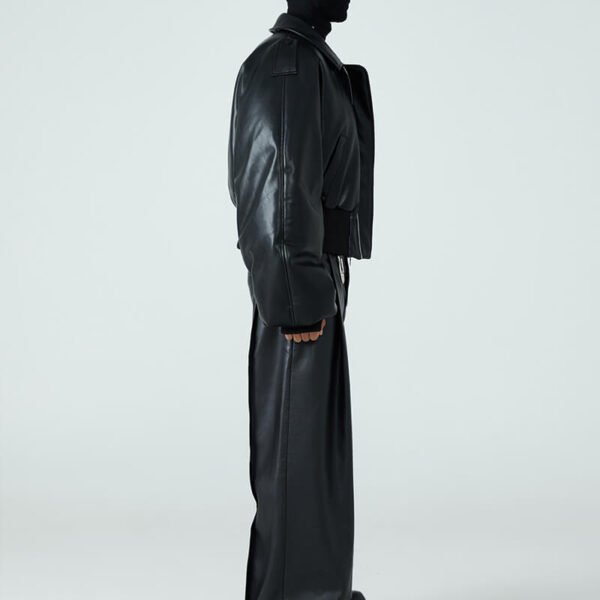

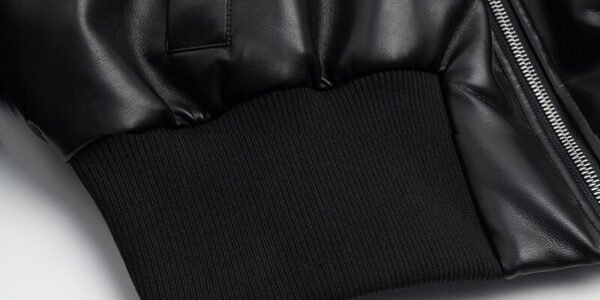
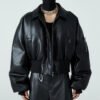
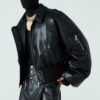
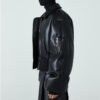


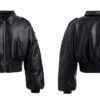


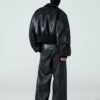
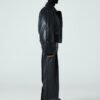




This cropped black jacket presents a compact body beneath generous sleeves, making mobility a pattern-engineering decision rather than a styling assumption. The visible underarm fullness, rib-knit boundaries, and concentrated hardware provide a clear development brief: protect reach while keeping the shortened silhouette visually controlled.
Read The Underarm As A Movement Junction
The supplied front view shows a cropped body, broad sleeves, and a visible rib-knit waistband. That combination makes armhole placement consequential: excess restriction can pull the hem upward, while excess volume can collapse the sleeve under the arm during reaching.
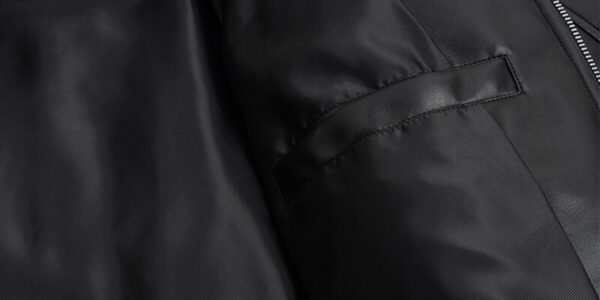
Development should therefore treat the underarm as a controlled transition between sleeve circumference, side seam, and lining ease. A shaped gusset or adjusted curve may improve reach, but each option changes seam length, leather-like surface tension, and the jacket's compact visual balance.
Control Fullness Without Losing Reach
The sleeve appears intentionally generous, with a rounded upper volume and gathered finish near the cuff. This creates room for layering and movement, yet the pattern must prevent excess material from folding sharply into the underarm when the wearer raises an arm.
A mobility sample should compare the approved base curve against a modestly opened underarm and, where appropriate, a gusseted alternative. Reviewers should record hem lift, sleeve drag, side-seam twisting, and comfort across forward reach, overhead reach, and seated movement.
Manage Rib-Knit Tension At The Body Edge
The rib-knit waistband visibly narrows the jacket below its broad upper body, creating a strong cropped stop. If its relaxed measurement is too tight, movement can transfer strain into the underarm seams; if too loose, the jacket loses its intended containment.
VeeWen's development review should connect waistband recovery decisions with armhole mobility, because these areas share movement load. Confirm rib width, relaxed circumference, attachment tension, and seam allowance together rather than approving the hem as an isolated styling component.
Apply The Argument Through VeeWen Development
For this jacket, VeeWen's workflow should begin with a measurement map linking armhole depth, underarm curve, sleeve bicep, cuff opening, and finished hem circumference. The map turns the visual reference into checkpoints that can be inspected on the sample.
The next approval should use a movement-focused fitting review, then transfer accepted corrections into the graded pattern and construction notes. This sequence keeps underarm mobility, lining ease, rib tension, and hardware placement aligned before the buyer releases the production specification.
Protect Hardware Placement During Movement
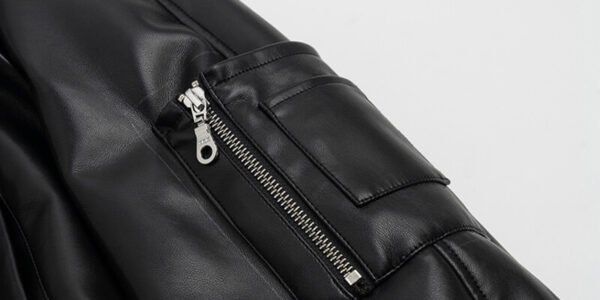
The center zipper, side pockets, and sleeve pocket concentrate visual and physical weight around the jacket. Poor underarm balance can make these details appear skewed, especially when the wearer reaches forward and the front panel rotates against the sleeve.
The sample review should inspect zipper waviness, pocket opening distortion, sleeve-pocket tilt, and collar balance in static and moving positions. These observations reveal whether the pattern distributes movement cleanly without asking the hardware or coated surface to compensate for insufficient ease.
Set The Buyer Approval Checkpoint
The buyer should approve the underarm construction only after reviewing the jacket on a representative size with the intended layering allowance. Front-view appearance alone cannot establish whether the cropped hem, sleeve fullness, and armhole curve cooperate during actual movement.
Record the accepted armhole measurements, sleeve volume, rib-knit tension, lining behavior, and trim positions as the production reference. If mobility improves only by visibly enlarging the sleeve or changing the silhouette, the buyer must choose which commercial priority takes precedence.
Buyer Questions
What should the first sample prove?
It should prove reach comfort, hem stability, sleeve recovery, zipper alignment, and underarm appearance across forward and overhead movement in the intended size.
Is the jacket suitable for layering?
The broad sleeve and boxy body suggest layering potential, but final allowance depends on lining, insulation, grading, and the buyer's approved measurement chart.
Which underarm option should buyers compare?
Compare the base armhole against a modestly opened curve or gusseted option, judging mobility, seam behavior, hem lift, and visual proportion together.
What is the commercial minimum?
VeeWen's exact commercial minimum is MOQ: 100 pieces per style, with final production proceeding after specifications, approvals, and workmanship expectations are documented.
Approve The Mobility Sample
Send your measurement chart, layering intent, and trim direction to VeeWen for a focused underarm review, then approve the construction package against movement, proportion, and hardware alignment.


Reviews
There are no reviews yet.