

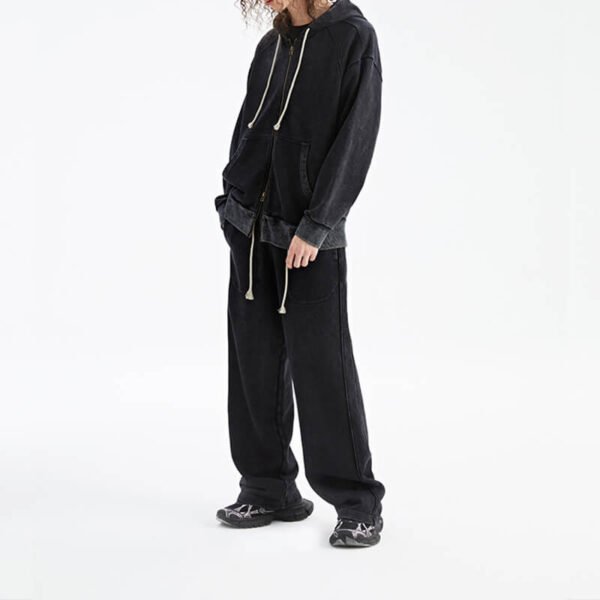
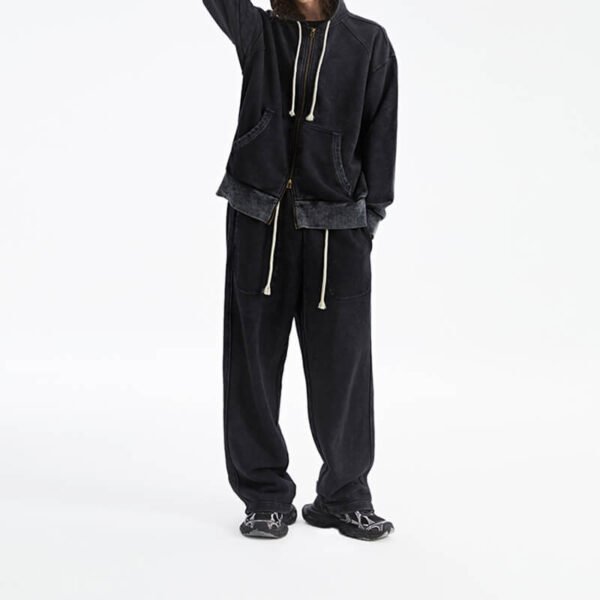



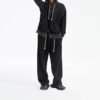


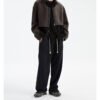


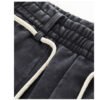
These vintage-effect wide-leg pants require a comfort-led development decision at the waistband: label position, elastic pressure, drawcord length, and front-rise contact must work together. The supplied image makes those zones visible, allowing VeeWen to structure a practical worn-sample approval before production.
Comfort Starts Where the Label Sits
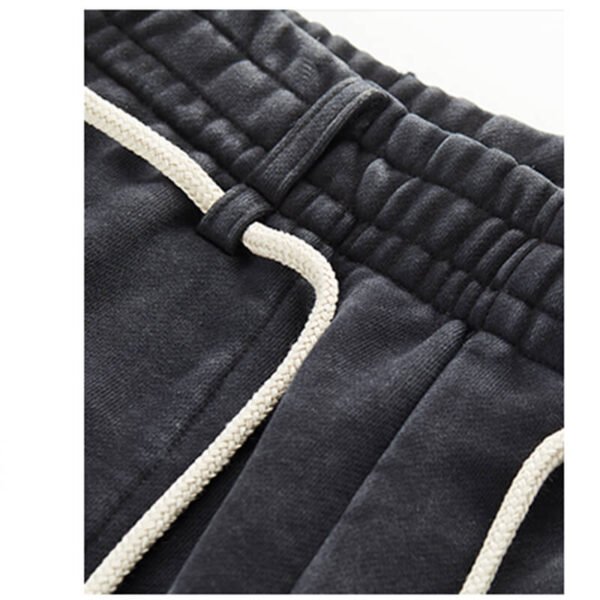
The gathered waistband is the primary contact zone, so label placement cannot be treated as a separate branding exercise. A stiff, bulky, or poorly positioned label may press against the wearer when elastic gathers contract, particularly during sitting or active movement.
The supplied image shows the waistband sitting high and close to the torso, with drawcord channels immediately below. Development should test inside-back, side-seam, and printed alternatives against skin contact, waistband recovery, and the intended private-label presentation.
Drawcords Create a Second Contact Zone
Two long light-colored drawcords extend visibly over the front, making their length, tip treatment, and exit position part of both comfort and appearance. Excess length can swing during movement, while insufficient length can complicate adjustment for different wearers.
A sample review should assess whether the cords lie flat, twist, or press into the abdomen beneath an outer layer. The buyer should also confirm whether the contrast is intentional, because the visible cords become a prominent design feature against the washed-black ground.
Wide Legs Amplify Movement Feedback
The wide-leg cut creates air and movement through the thigh and calf, but it also changes how the waistband feels during walking, sitting, and stepping. A relaxed lower silhouette cannot compensate for an elastic opening that feels restrictive or unstable.
The image shows broad legs descending into softly pooling hems near the shoes. Review should therefore include stride movement, hem clearance, and front-rise balance, ensuring the trouser retains its intended volume without pulling the waistband or shifting the label against the wearer.
Vintage Wash Changes the Approval Logic
A tonal black wash gives the surface visible depth without introducing a bright contrast pattern. That means label visibility, cord color, seam appearance, and contact marks should be reviewed against the final washed surface rather than an unprocessed fabric approximation.
The supplied image presents subtle variation across the front and lower legs, but it does not verify a recipe, shade tolerance, or wash performance. A buyer should approve a representative washed sample and define acceptable tonal range before bulk cutting or finishing.
VeeWen Workflow: Comfort Brief Before Branding Lock
For this style, VeeWen's workflow should begin with a wear-zone brief identifying waistband contact, drawcord exits, front rise, side seams, and likely label positions. This turns the image's visible details into measurable development questions for pattern and trim decisions.
The first sewn sample should be evaluated worn and laid flat, then revised around elastic pressure, label softness, cord behavior, and leg movement. Once those points are approved, the buyer can lock branding placement without compromising the trouser's comfort architecture.
The Buyer Checkpoint Is a Worn Waist Test
Approve this style only after a wearer can sit, walk, and adjust the drawcords without sharp pressure, twisting, or distracting movement. The label should remain legible and secure while avoiding the gathered area's most active contact point.
Request confirmation of finished measurements, elastic recovery, drawcord specifications, label construction, wash variation, and fabric composition. These technical details are not verified by the supplied image, so they belong in the sample comments and final production approval.
Buyer Questions
Where should the label be placed on these pants?
The best location depends on comfort testing. Inside-back, side-seam, or printed options should be compared against waistband pressure, visibility, durability, and the gathered construction.
Are the long drawcords fixed by the supplied image?
No. Their visible length and contrast are evidence of the sample appearance, but final length, tip treatment, anchoring, and cord material require buyer approval.
Can the wide-leg fit be adjusted?
Yes. The leg width, rise, hem opening, and pooling can be refined through measurement review while preserving the intended relaxed movement and vintage presentation.
What is the commercial minimum for this style?
VeeWen's exact commercial minimum is MOQ: 100 pieces per style. Final wash, trim, label, measurement, and material specifications should be confirmed before production.
Approve Comfort Before Label Placement
Share your size chart, label artwork, and preferred wash direction for a comfort-focused sample review. VeeWen will organize waistband, drawcord, and movement checkpoints before MOQ: 100 pieces per style production planning.



Reviews
There are no reviews yet.