


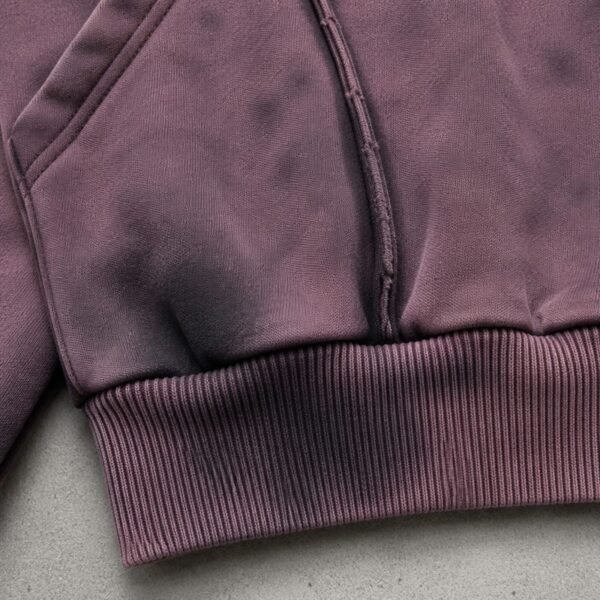













Built around the tension between a soft, spray-washed hand and dependable shape retention, this pullover hoodie uses heavy French terry as the development reference. The mauve surface, tonal cross appliques, rib texture, and drawstring hood define a tactile streetwear direction requiring controlled finishing and disciplined fit approval.
Wash Intensity Sets the Softness Ceiling
The surface shows a muted plum-mauve ground with irregular darker spray deposits, suggesting a finish intended to create a broken-in hand. That process can soften the face, but it also introduces shade movement, making approval dependent on a defined tonal range across panels and sizes.
VeeWen's development checkpoint should separate handfeel from appearance by approving washed strike-offs and a laundered sample against the same standard. The buyer should review softness, surface recovery, and dimensional change together, because a more aggressive wash may improve touch while reducing the hoodie's original balance.
French Terry Must Retain Its Block
Heavy French terry is the supplied construction reference, so the fabric's body should support a substantial pullover silhouette after finishing. However, composition, GSM, and recovery performance are not verified here; those variables can materially change drape, shrinkage, cuff behavior, and the perceived softness of the final garment.
The technical decision is to preserve enough structure for the hood, shoulder line, and hem to sit cleanly after laundering. VeeWen should compare prewash and postwash measurements at prototype stage, then adjust pattern allowance or finish intensity when softness begins to compromise length, width, or opening recovery.
Appliques Add Relief and Recovery Risk
The image clearly shows multiple tonal cross-shaped pieces with raised edges and darker relief against the mauve knit field. This is not a flat graphic effect; the dimensional placement changes local handfeel and may restrict stretch, so applique scale, edge security, and panel positioning require separate approval.
During product development, VeeWen should lock the applique artwork, placement map, attachment method, and wash sequence as one package. The buyer's checkpoint is a laundered decorated sample: confirm the crosses remain visually defined, do not distort the body, and continue matching the intended tonal surface.
Hood Balance Reveals Shape Retention
The source wording specifies a drawstring hood, while the supplied visual evidence emphasizes a textured, substantial garment surface. A hood built from the same softening program may become comfortable but unstable; excess weight or shrinkage can pull the neckline forward and change the wearer's balance.
VeeWen's fit review should evaluate neckline rise, hood opening, drawcord exit positions, and front-body relationship after the wash process. Approval should require the hood to sit naturally without dragging the shoulders, while the buyer confirms whether a firmer rib or adjusted seam allowance is necessary.
Color Variation Needs a Commercial Standard
Spray dye creates intentional irregularity, yet commercial production still needs a repeatable boundary. The image shows darker deposits distributed unevenly over a muted plum-mauve base, so panels may not match identically; uncontrolled variation could make the same style appear inconsistent across a shipment.
VeeWen should translate the visual direction into approved shade bands, placement expectations, and panel tolerance before bulk cutting. The buyer must decide whether variation is welcomed across each garment or controlled within a narrower range, then approve a representative sample set rather than one isolated piece.
VeeWen Workflow Converts the Trade-Off
VeeWen can develop this style by sequencing fabric confirmation, wash strike-off, applique placement, first pattern sample, and laundered fit review around the softness-versus-retention question. Each checkpoint should preserve the previous approval, so a softer revision does not quietly alter color, dimensions, or decoration.
The final development gate is a coordinated buyer review of handfeel, measurements, hood balance, applique stability, and shade variation after laundering. Once those decisions are recorded, VeeWen can prepare the production specification for MOQ: 100 pieces per style, with remaining variables confirmed commercially.
Buyer Questions
What softness level should buyers request?
Request a defined handfeel target supported by washed strike-offs, then compare softness against hood balance, cuff recovery, measurements, and applique stability after laundering.
Is the fabric composition verified?
No. Heavy French terry is the supplied material reference, while fiber composition, GSM, and recovery characteristics require confirmation through the approved development specification.
How should spray variation be approved?
Approve representative shade bands and panel tolerances, then review multiple laundered samples to confirm irregularity remains intentional, repeatable, and commercially acceptable.
What is the minimum order quantity?
MOQ: 100 pieces per style. Final commercial terms remain subject to approved fabric, artwork, measurements, construction details, and quotation.
Approve the Softness-to-Structure Balance
Send your target handfeel, measurement sheet, applique artwork, and shade expectations. VeeWen can align strike-offs and laundered fit samples for a focused approval before production planning.


Reviews
There are no reviews yet.