







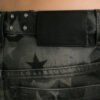

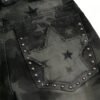


This cargo pant concept depends on disciplined grading rather than decoration alone. The wide leg, star field, riveted pockets, horizontal distressing, and irregular hems must retain their intended visual rhythm as measurements expand, contract, and shift across the approved size range.
Why the Grade Controls the Design
A generous leg can become visually heavy when the waist, pocket width, and hem opening grow at different rates. Grading should preserve the relationship between the fitted waistband and relaxed lower silhouette, keeping the garment intentional rather than simply enlarged.
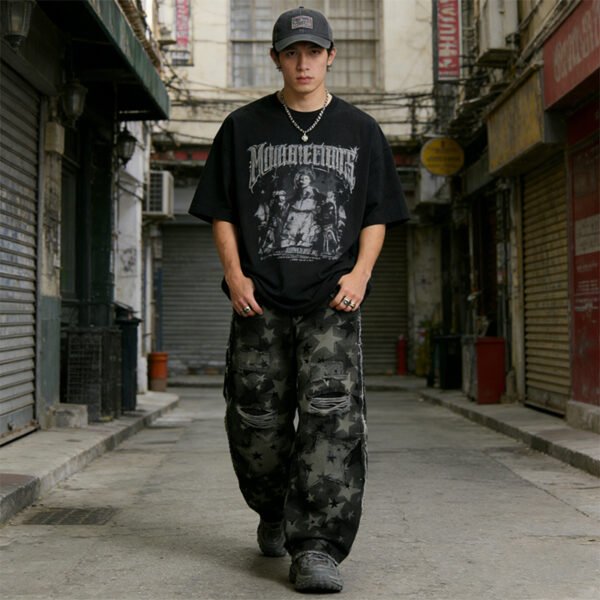
The image shows the widest visual mass through the thighs and lower legs, while pocket openings remain compact near the waist. That contrast should guide grade rules, so larger sizes gain comfort without allowing pocket hardware or printed stars to dominate proportionally.
Pocket Scale and Rivet Placement
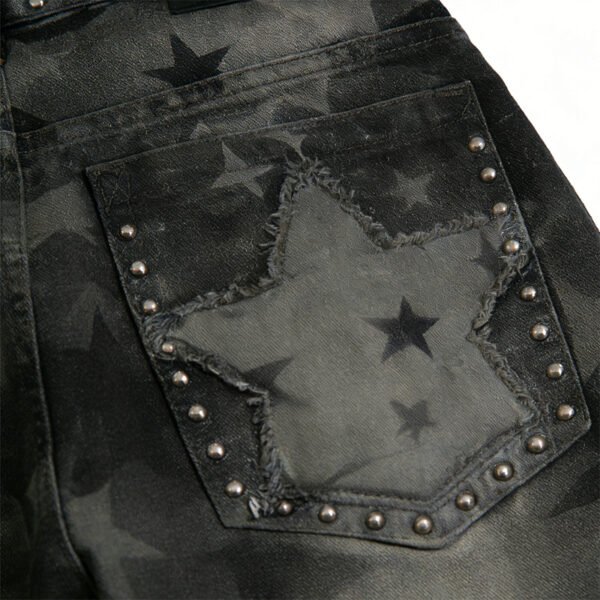
Rivets create concentrated points of attention around the front pockets and waistband. Their spacing therefore needs a controlled grade, because unchanged intervals can look crowded on smaller sizes or visually weak on larger sizes, especially against a dense star print.
During development, VeeWen should establish pocket opening length, pocket bag position, and rivet count from the approved base size, then test proportional adjustments. The checkpoint is whether hand access, hardware spacing, and front balance remain consistent throughout the size set.
Print Rhythm Through Size Changes
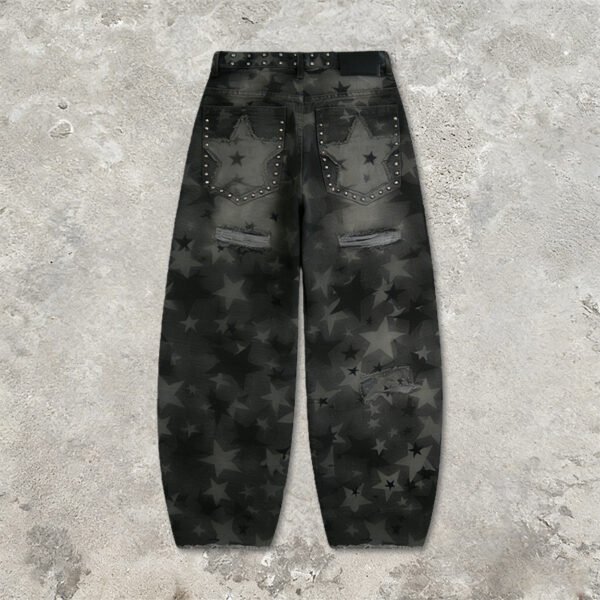
The tonal star pattern uses varied shapes and scales across a dark ground, so pattern placement affects perceived leg width. Enlarging the print repeat mechanically may distort the intended rhythm, while repeating one fixed panel can create obvious duplication between sizes.
A practical approval route is to define the artwork repeat, placement tolerances, and panel-matching priority before grading. VeeWen's development team can then review printed cutting markers alongside the size set, confirming that stars support the silhouette instead of creating accidental focal points.
Distress Placement and Wear Logic
Horizontal distressed openings are visible across both legs, with larger disruptions concentrated around the upper and middle areas. Their position changes the apparent knee line and can make one size look shorter or longer if the grading ignores body landmarks.
The sample approval should map each abrasion zone from waist, hip, and knee references rather than from raw garment edges. Buyers should decide whether distress dimensions scale with size or remain controlled, because each option changes consistency, labor, and visual intensity.
Hem Opening and Lower-Leg Balance
The lower hems appear broad, softly irregular, and less structured than the waistband. That finish supports a relaxed streetwear attitude, but an oversized hem can overwhelm footwear when the inseam increases without a matching opening and leg-shape adjustment.
VeeWen's size-set review should compare inseam, calf width, hem opening, and side-seam fall together. The buyer checkpoint is a complete fit review on representative body sizes, confirming the pant stacks or breaks as intended without hiding the print or distress work.
VeeWen Development Checkpoint
VeeWen can translate this concept into a measurable development sequence: lock the base pattern, define grade increments, place artwork and distress maps, then inspect hardware positions across the full requested size set before production approval.
The commercial decision is not simply whether the sample looks strong in one photograph. Approve the style when proportion, pocket usability, print rhythm, distress placement, and hem behavior remain coherent across sizes, with MOQ: 100 pieces per style recorded for planning.
Buyer Questions
What should be graded first on these cargo pants?
Start with waist, rise, thigh, knee, hem opening, pocket width, and hardware spacing, then review whether artwork and distress locations remain visually balanced across sizes.
Can the star artwork be changed during development?
Yes, artwork direction can be discussed during development, but repeat scale, panel placement, color contrast, and print registration should be approved before grading review.
How should distressing be approved?
Approve distress maps against body landmarks and specify whether openings scale by size. Confirm abrasion character, edge treatment, reinforcement needs, and acceptable placement tolerance before bulk cutting.
What is the minimum order?
The exact commercial minimum is MOQ: 100 pieces per style. Final quantities, colorways, size ratios, materials, and packaging details should be confirmed in the quotation stage.
Approve the Complete Cargo Size Set
Send the target size chart, artwork direction, preferred distress intensity, and hardware references. VeeWen can organize the proportional review around a base sample, graded size set, and MOQ: 100 pieces per style.


Reviews
There are no reviews yet.