







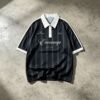
Built around a striped jersey body, contrast polo details, and a large back graphic, this style needs disciplined zipper-scale planning. VeeWen can develop the puller, zipper path, and nearby artwork clearance as one operational package before approval for repeatable assembly and clean presentation.
Why Puller Scale Matters on This Polo
A zipper puller is not only a hardware choice; it occupies a moving envelope around the opening. On this polo, that envelope must coexist with a contrast collar, striped ground, and large back decoration without creating visual crowding or snagging risk.
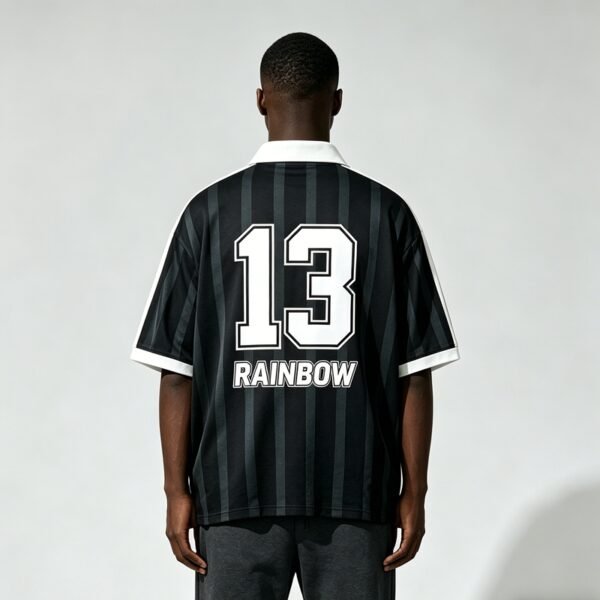
The supplied rear image does not show a zipper, so the hardware configuration remains a development decision rather than a verified feature. That uncertainty makes scale testing important, especially if a future opening is added near the collar or upper chest.
Reading the Visual Evidence
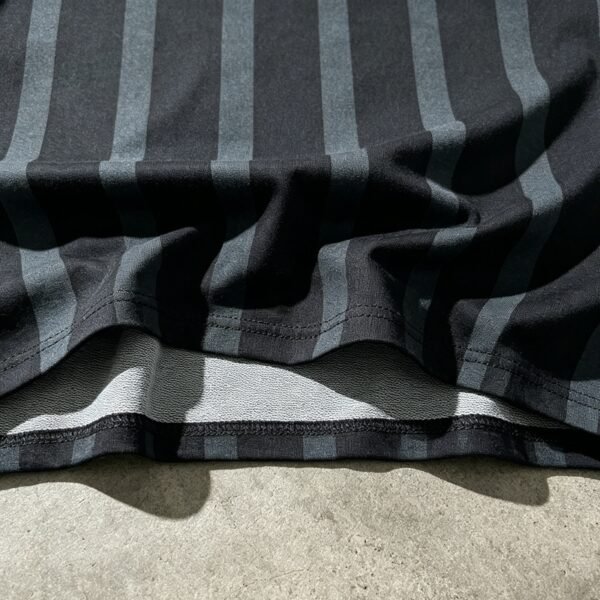
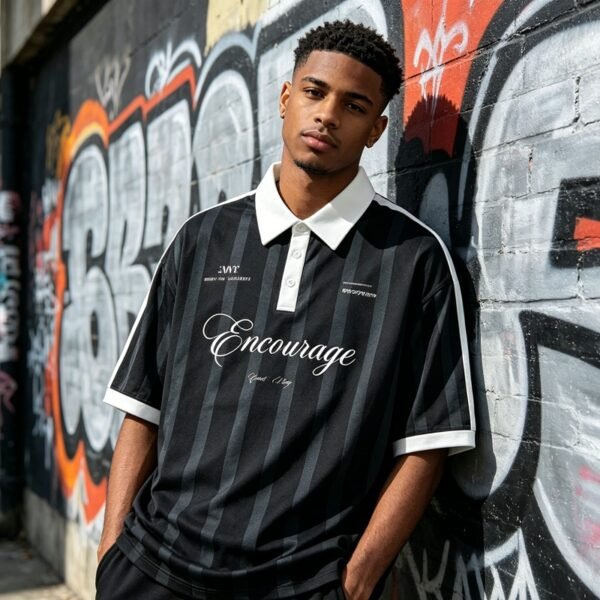
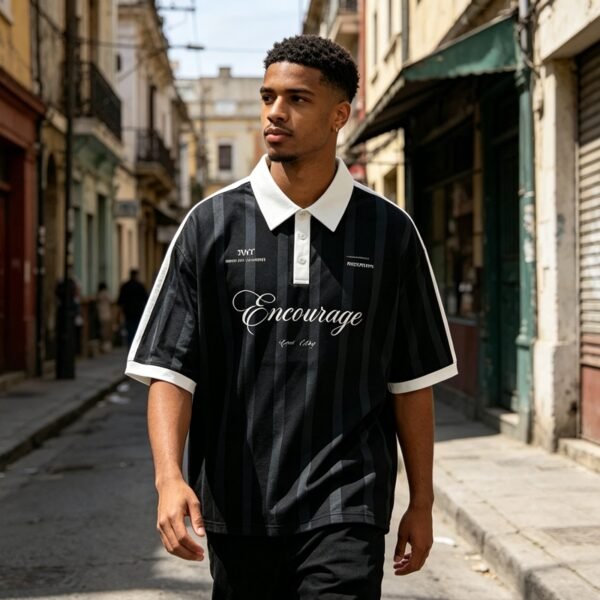
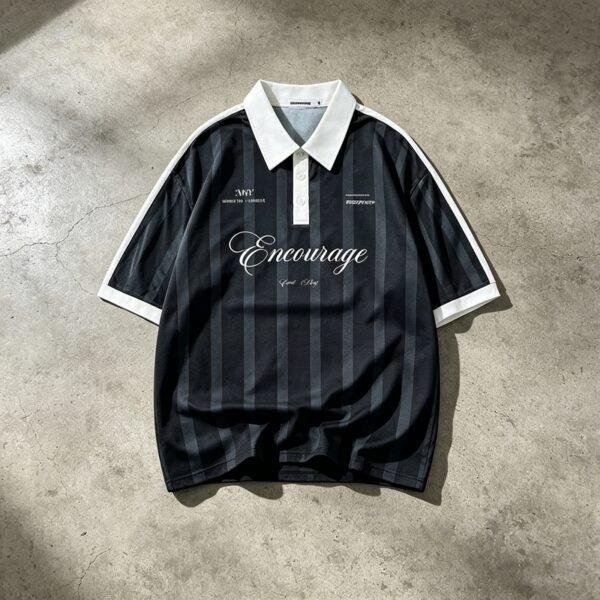
The black and charcoal vertical stripes create repeated narrow channels across the jersey surface. Any zipper tape, puller, or top stop introduced into the front must be positioned deliberately so it does not interrupt the stripe rhythm or appear misaligned against the garment center.
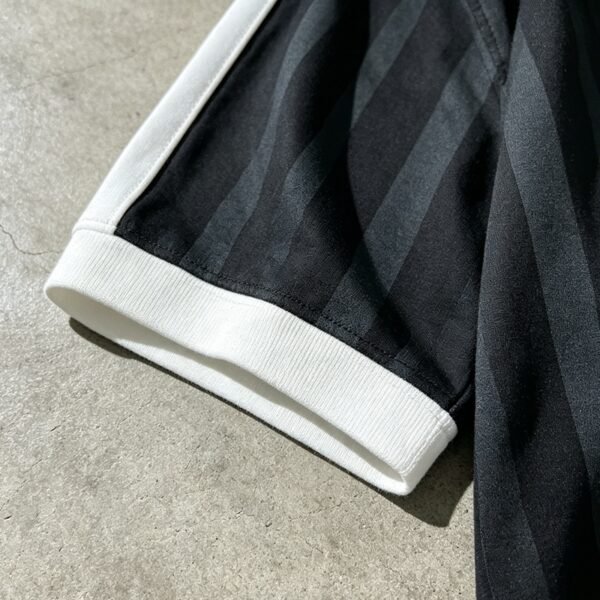
White collar and sleeve details establish a strong boundary around the darker body, while the rear numeral occupies substantial visual area. These observations support a controlled hardware hierarchy, where the puller remains functional and proportionate instead of competing with the graphic language.
Graphic Clearance and Movement
A large printed graphic needs a stable, unobstructed field, while a zipper requires movement, handling, and access around its teeth or coil. Keeping those zones separate reduces the chance that opening action disturbs decoration or that hardware visually cuts through the intended composition.
If the design uses a front zipper, VeeWen should map the center line, top stop, puller swing, and artwork boundary together. If the garment remains a conventional polo, the same review can govern placket hardware, snaps, or any future closure substitution.
Material and Surface Considerations
The source title states a polyester composition, but the supplied image alone cannot verify fiber content, fabric weight, stretch, or recovery. Those variables affect how a zipper opening sits, whether stripes distort, and how the printed graphic behaves after handling.
A development sample should therefore test the chosen jersey together with the proposed closure and decoration. The buyer can then assess surface smoothness, stripe registration, collar stability, and whether the puller feels appropriately scaled for the intended retail positioning.
VeeWen Development Workflow
VeeWen can convert this argument into a focused development gate by first marking the closure position, operating envelope, stripe alignment points, and graphic exclusion zones on the tech pack. This keeps hardware decisions connected to pattern engineering instead of treating them as late accessories.
During sample review, the buyer should inspect the puller in open and closed positions, then check the garment from front, side, and rear views. VeeWen's MOQ: 100 pieces per style supports moving an approved construction into a defined production brief.
Approval Checkpoint for Production
Approval should be based on interaction between hardware and the whole garment, not on puller appearance alone. Confirm that the selected scale clears the neckline, does not distort the jersey, and preserves the visual balance established by the stripes and rear graphic.
The final checkpoint is a signed construction and artwork review covering closure type, puller dimensions, placement tolerances, graphic boundaries, and material references. Any unconfirmed detail should remain marked To Confirm until the buyer accepts the physical sample.
Buyer Questions
Is a zipper visible in the supplied reference image?
No. The supplied main image shows the rear of the polo, so zipper presence, location, and puller dimensions must be established during technical development.
Can the rear graphic be changed for a private-label program?
Yes. The graphic can be redeveloped around the approved artwork file, placement map, decoration method, and clearance requirements without retaining source-specific wording.
What should buyers review first in the sample?
Review closure operation, puller proportion, stripe alignment, collar behavior, and graphic separation before evaluating secondary trims or final color approvals.
What is the minimum commercial order?
VeeWen's commercial minimum is MOQ: 100 pieces per style, subject to the approved construction, material reference, decoration plan, and production documentation.
Approve the Hardware Envelope
Send VeeWen your artwork, closure preference, target measurements, and reference images. We will align puller scale, stripe placement, and graphic clearance into a reviewable product-development package before production approval.


Reviews
There are no reviews yet.