













A sun-faded oversized tee succeeds when its worn surface does not make the garment look structurally tired. This development record centers interlining and edge stability, connecting neckline, pocket, hem, abrasion, and grading decisions into one approval path for dependable streetwear production.
Why Edge Stability Controls a Faded Tee
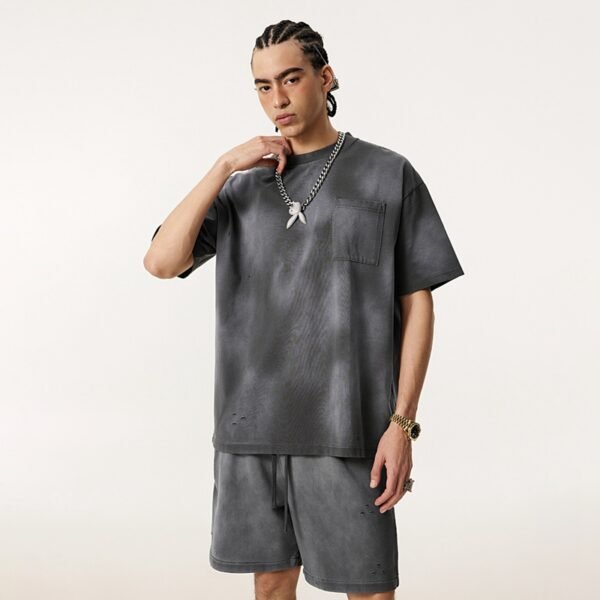
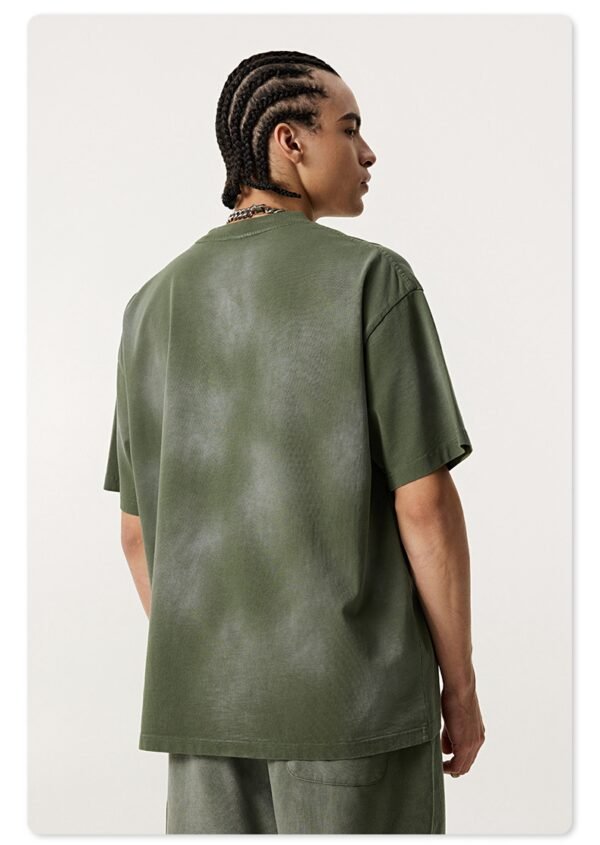
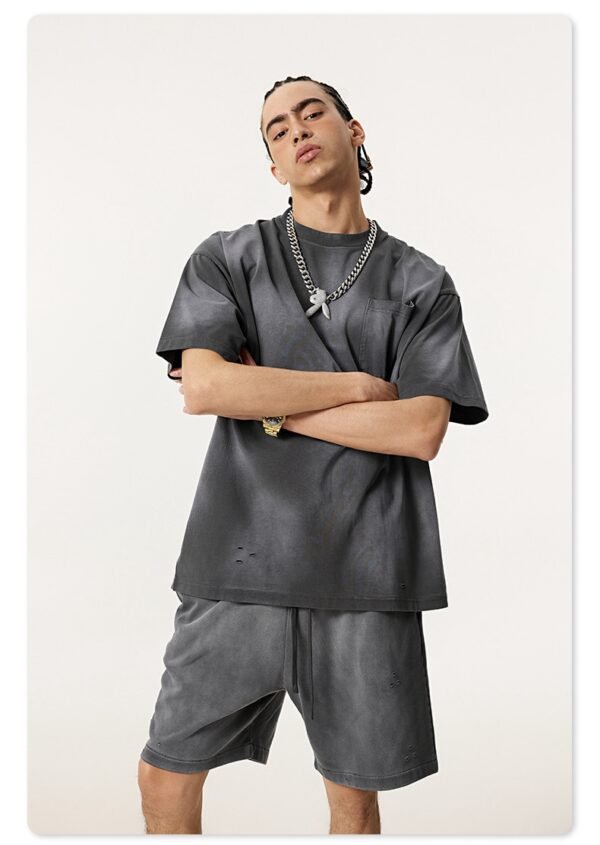
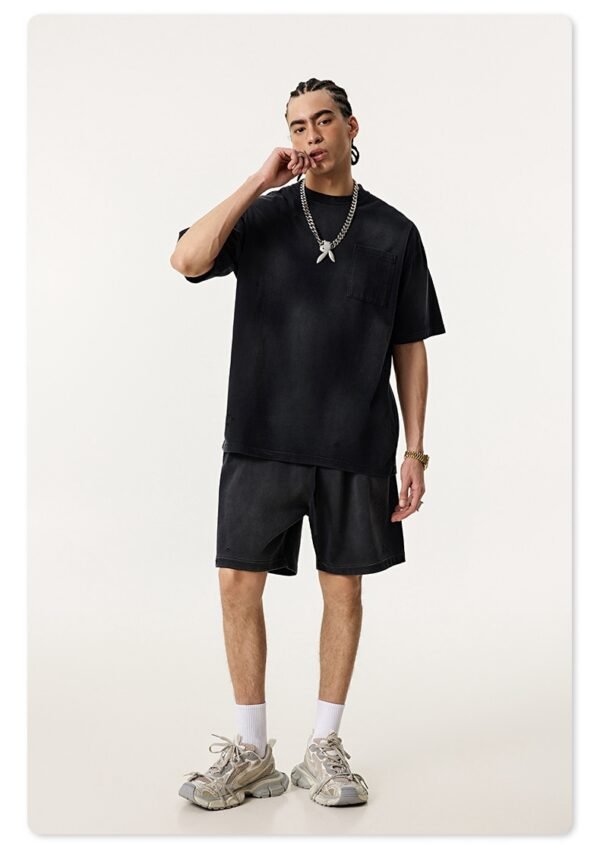
A faded surface attracts attention to texture, while an oversized shape magnifies waviness at the neckline, pocket, and hem. The supplied image shows a broad black tee whose appeal depends on relaxed volume staying crisp enough to look designed rather than misshapen.
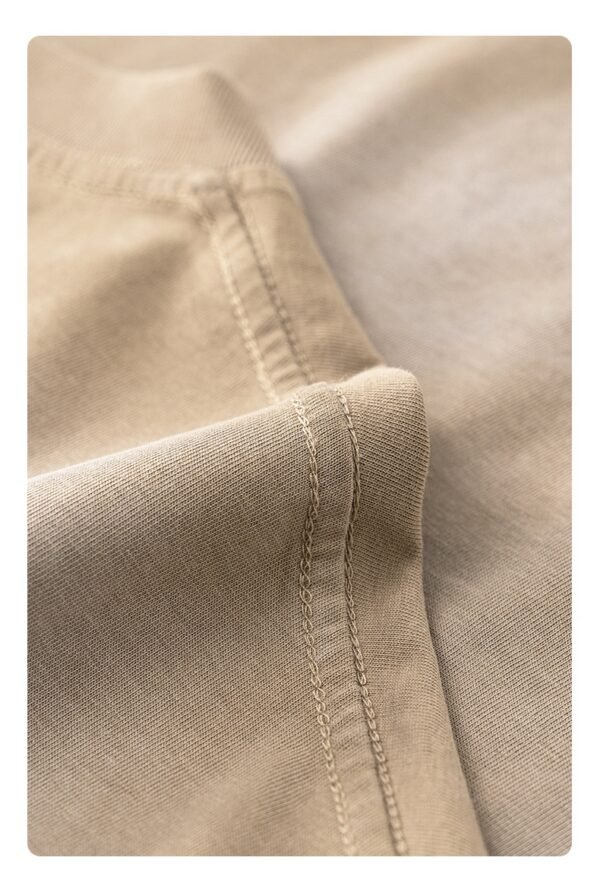
Interlining decisions influence how those boundaries hold during cutting, sewing, finishing, and laundering. The objective is not maximum stiffness. It is a compatible support level that maintains edge definition without fighting the soft, worn character requested by the visual reference.
Neckline Recovery and Wearability
The crew neckline is a high-contact edge that frames the face and determines whether the shirt looks premium. On an oversized body, a loose or twisted neck can make the entire garment appear larger and less controlled, especially when the fabric has been abraded.
VeeWen should evaluate neckline support alongside rib width, seam construction, and opening measurement. The buyer checkpoint is recovery after handling and wash simulation, confirming that the collar remains smooth, centered, and proportionate to the dropped-shoulder silhouette.
Pocket Stability on a Soft Body
The image includes a chest pocket on the wearer's left side, creating a defined rectangular edge against a dark, softened body. Pocket mouth alignment, corner shape, and attachment tension must remain stable so the detail reads intentional after fading and repeated handling.
Pocket interlining should be selected with the base fabric and treatment intensity in mind. Excess support may create an unwanted rigid patch, while insufficient support can produce rippling. Review the pocket on a relaxed body and during movement before approving the construction.
Abrasion Around Structural Edges
Light abrasion can add depth across the body, but uncontrolled treatment near seams may weaken appearance or exaggerate puckering. The supplied image shows subtle worn marks near the lower torso, suggesting a restrained finish that should preserve the shirt's basic geometry.
The development workflow should separate surface effect zones from protected construction zones. VeeWen can mark neckline, pocket, shoulder, sleeve opening, and hem boundaries on the treatment specification, giving the buyer a clear basis for comparing samples.
Oversized Grading and Proportion
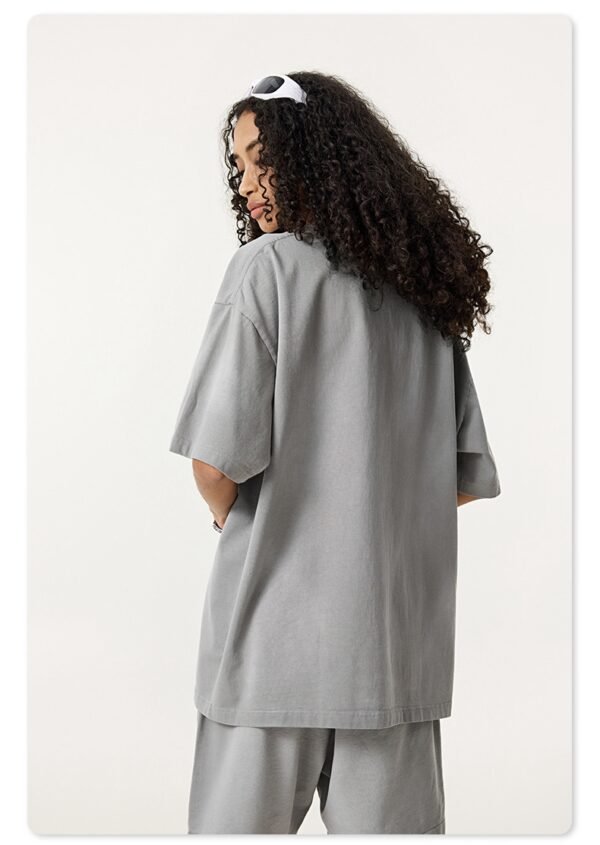
Oversized fit is more than adding width; shoulder drop, sleeve opening, body length, and pocket scale must move together. If grading changes those relationships unevenly, edge stability may be technically acceptable while the garment loses its intended visual proportion.
Reviewing graded size representations is essential because the same neckline support can behave differently across dimensions. Confirm pocket placement, hem level, sleeve width, and collar relationship in the smallest, middle, and largest planned sizes before final approval.
VeeWen Development Approval
VeeWen's product-development workflow should record the chosen interlining, neckline construction, pocket method, abrasion boundaries, and measurement tolerances in one controlled technical package. That package turns a visual washed reference into repeatable decisions for sampling and production.
The buyer should approve the style when edge recovery and surface character coexist across the size range. Confirm the final material composition, GSM, treatment intensity, and laundering expectations separately, since those details are not fully verified by the supplied image.
Buyer Questions
Why is interlining important for an oversized T-shirt?
Oversized proportions expose edge distortion more clearly. Suitable interlining supports the neckline and pocket without making the softened garment feel rigid or visually disconnected from its faded surface.
Does the image verify a dual-cotton composition?
No. Dual-cotton wording appears in the source title, but exact fiber percentages and construction details require confirmation from the approved material and technical specification.
Which areas need the closest inspection?
Inspect the neckline, chest pocket, shoulder seams, sleeve openings, and hem. These edges define proportion and are most likely to reveal distortion after finishing or laundering.
What is the minimum commercial quantity?
The commercial minimum is MOQ: 100 pieces per style. Confirm the final color, size ratio, treatment recipe, and material specification before production planning begins.
Approve the Edge-Stability Development Brief
Share the target washed shade, abrasion references, size range, and material options for review. VeeWen will coordinate interlining and edge checkpoints around MOQ: 100 pieces per style.


Reviews
There are no reviews yet.