
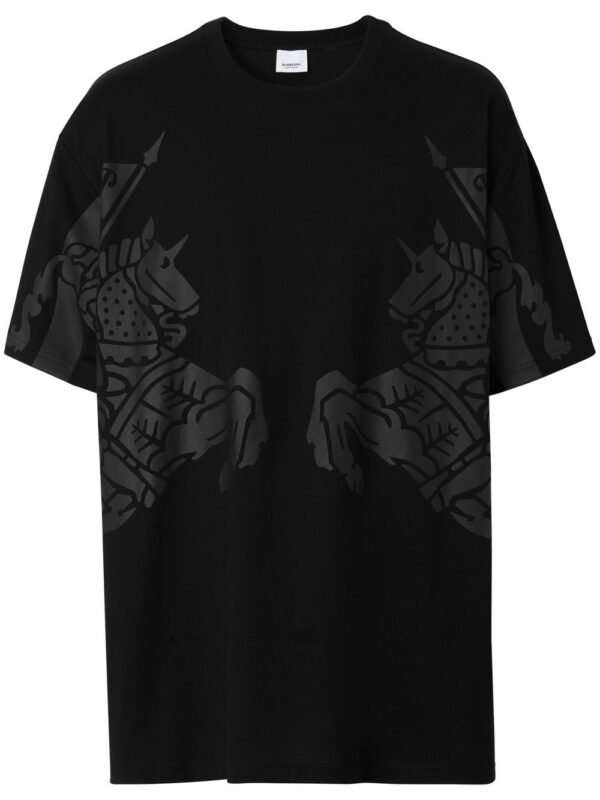
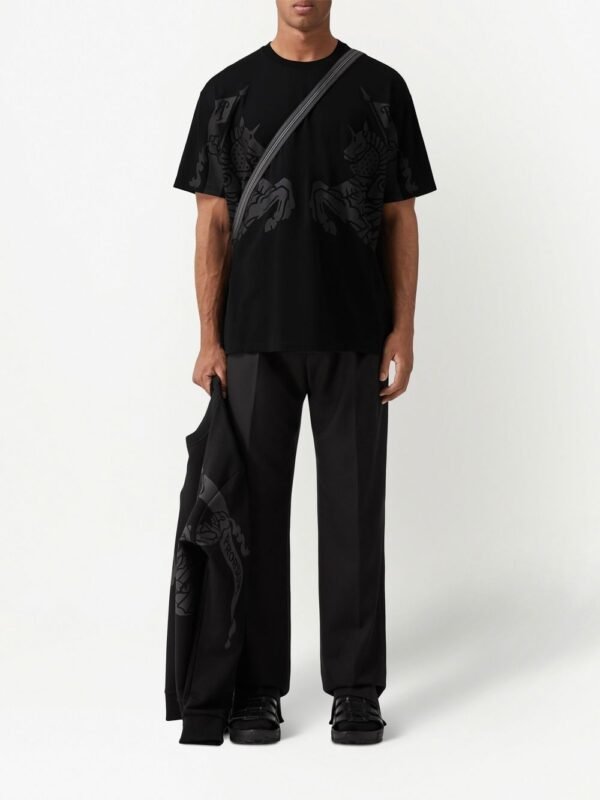

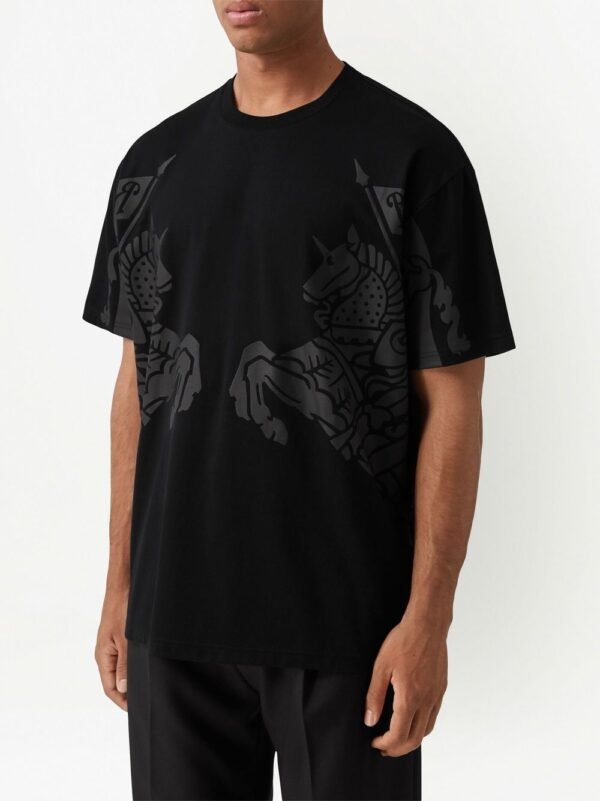

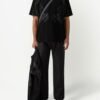
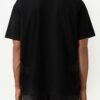
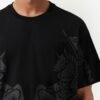
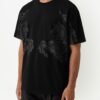
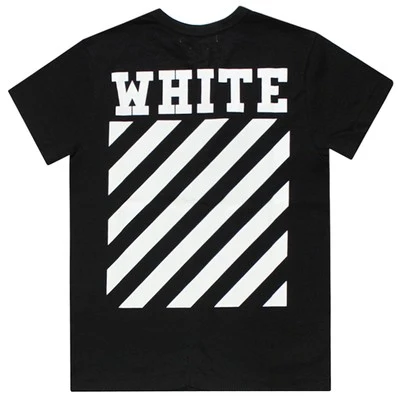
This T-shirt is a development study in proportion, not merely volume. The supplied black sample shows a relaxed oversized body, short sleeves, and a symmetrical tonal graphic that concentrates attention across the upper garment. VeeWen can translate that visual balance into a repeatable block for buyer approval.
Proportion Starts With the Lower Edge
On an oversized T-shirt, added width can make the garment look shapeless when the lower opening expands at the same rate. The supplied image suggests a broad torso balanced by a relatively disciplined straight hem, giving the silhouette visual containment.
The development checkpoint is therefore dimensional, not descriptive. Review body length, underarm depth, side seam angle, and finished hem opening as one system, because a small change at the lower edge can alter how the entire garment hangs.
Reading Rise and Body Length Together
Although rise and inseam are trouser terms, the same proportional logic applies here through shoulder drop, armhole depth, side seam length, and lower body balance. The image reads oversized because these distances cooperate, rather than because one measurement dominates.
VeeWen should establish a graded measurement map that protects the intended relationship across sizes. Buyers should examine front and back hang on the sample, checking whether added length preserves relaxed ease or creates a visually heavy lower panel.
Graphic Placement Reinforces Width
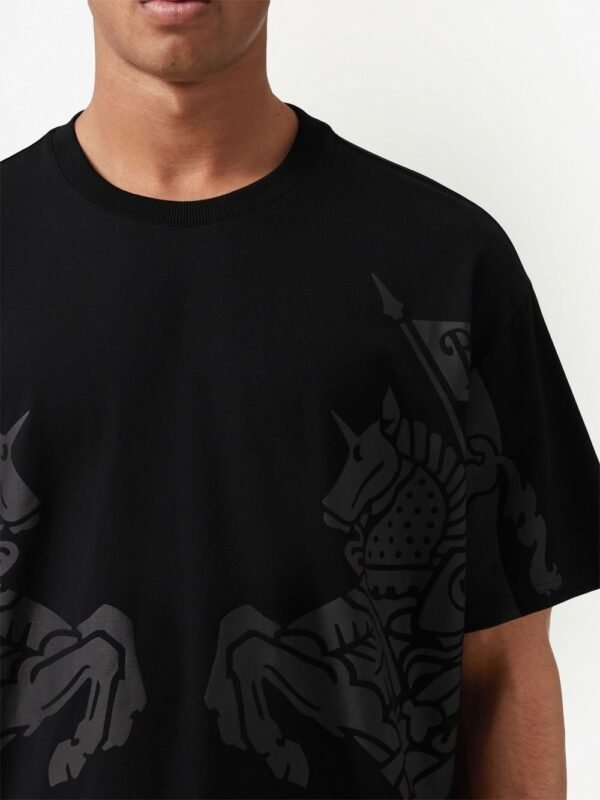
The supplied image shows dark tonal artwork extending across both sleeves and the upper side body, with a quieter central chest. That arrangement makes the garment appear wider while preserving a clean focal area for styling and layering.
Artwork scale must follow the approved block rather than being positioned independently. Confirm the graphic distance from sleeve hems, armholes, and side seams after the body dimensions are locked, since proportion changes can otherwise make symmetrical artwork appear unintentionally crowded.
Production Workflow for This Argument
VeeWen's product-development workflow should begin with a proportion brief defining target body length, hem opening, sleeve length, and armhole depth. The first sample then tests whether the oversized shape remains contained at the lower edge under normal handling.
After fit comments, the pattern team can update the block before finalizing artwork placement and print execution. The buyer approval checkpoint is a measured sample review, where silhouette photographs and physical measurements confirm the same proportion decision.
Trade-Offs Buyers Should Anticipate
A generous body improves relaxed streetwear presence, but excessive hem opening can weaken structure and make the garment difficult to style beneath outer layers. A shorter body may sharpen the outline, while reducing coverage and changing the perceived volume.
Tonal printing keeps the graphic sophisticated and wearable, yet lower contrast can reduce visibility under dim lighting or after washing. Buyers should decide whether the priority is understated depth or stronger shelf recognition before approving artwork color values.
Approval Gate Before Bulk Cutting
Approve the style when the sample demonstrates stable front and back hang, a controlled hem opening, and consistent sleeve balance across the intended size range. The tonal graphic should remain centered visually even where it crosses seams or curved body areas.
Before bulk cutting, sign off the measurement chart, graded proportions, artwork placement map, and print appearance standard. This checkpoint protects the manufacturing argument by ensuring the final garment communicates designed volume rather than uncontrolled oversizing.
Buyer Questions
Is the cotton composition verified?
No. Cotton appears in the supplied source wording, but the fiber percentage, yarn specification, and final material certificate remain To Confirm.
What should the first sample measure?
Measure body length, chest width, sleeve length, armhole depth, side seam, and hem opening together to evaluate the complete proportion system.
Can the tonal graphic be changed?
Yes. Artwork scale, placement, and contrast can be developed with the block, subject to buyer approval of the final print appearance.
What is the minimum order?
The commercial minimum for this development record is MOQ: 100 pieces per style, with final specifications approved before bulk cutting.
Approve the Proportion Block
Send your target measurements and artwork file to VeeWen for a proportion-led development review, then approve the physical sample before confirming grading, print placement, and MOQ: 100 pieces per style.



Reviews
There are no reviews yet.