


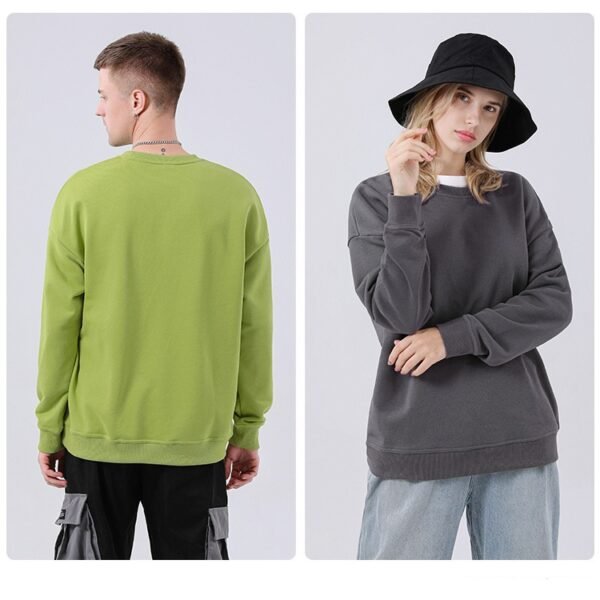


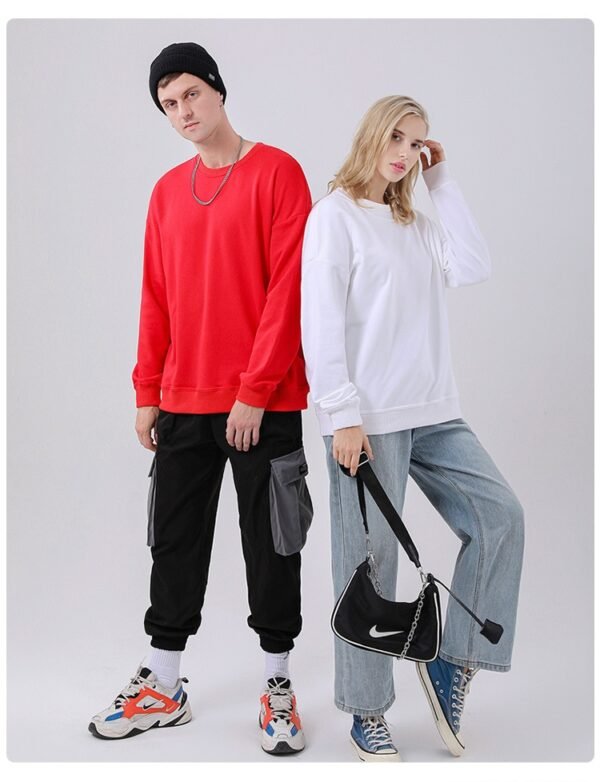





Built around side-seam spirality after laundering, this custom unisex drop-shoulder sweatshirt treats wash stability as a silhouette requirement. The broad body, relaxed shoulder, ribbed neckline, and coordinated color range create a clear base for testing whether the garment remains balanced after care exposure.
Spirality Changes The Intended Silhouette
Side-seam spirality occurs when knitted panels or sewing tensions encourage the seam to rotate after laundering. On a drop-shoulder sweatshirt, that movement can shift the body balance, distort sleeve alignment, and make a relaxed shape appear unintentionally twisted.
The supplied image shows a broad, clean front that depends on stable side transitions. Development should therefore judge the garment after laundering, not only on the pressing table, because a visually correct first sample may change materially during care exposure.
Panel Grain And Knit Tension Matter
Knit direction, roll tension, relaxation, and cutting alignment can all influence how a side seam behaves. A sweatshirt with generous volume may hide small irregularities initially, yet the same rotation becomes obvious when sleeves, cuffs, or hem no longer sit symmetrically.
VeeWen should record panel direction and sewing sequence during sample development. Stabilizing every component can improve seam control, but excessive restraint may reduce softness or create localized stiffness, so the buyer must balance shape retention with the intended casual hand.
Drop Shoulders Need Fixed References
The drop-shoulder construction places the armhole and sleeve seam lower than a conventional sweatshirt, increasing the visual importance of shoulder slope and side alignment. If the side seam rotates, the sleeve may advance or retreat, changing how the garment hangs from the body.
Use the neckline center, shoulder seam, cuff position, and hem side points as repeatable references. Photographing the same measurements before and after laundering can expose cumulative movement that a single flat measurement would fail to capture.
Rib Trims Reveal Movement
The ribbed crewneck, cuffs, and hem create stable-looking boundaries around the softer sweatshirt body. Their recovery and attachment tension can either reinforce a balanced silhouette or emphasize distortion when the main panels rotate after laundering.
Review rib width, joining tension, and seam matching alongside side-seam behavior. Tighter rib attachment may hold edges neatly but can pull the body inward; looser attachment improves ease but may make rotation and uneven hem placement more visible.
Color Assortments Require Shared Control
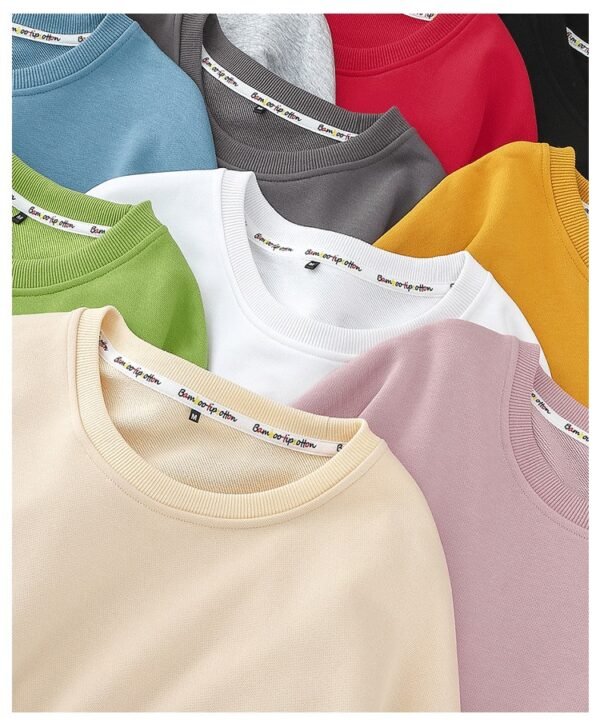
The supplied image presents one sweatshirt shape across lime green, mustard, pink, cream, white, gray, blue, red, and black references. A broad color assortment is commercially useful, but each shade may behave differently because dyeing and finishing can affect knit relaxation.
Test at least representative light, dark, and heather-like shades before approving the assortment. The objective is not identical appearance under every condition, but consistent seam orientation, shoulder balance, cuff placement, and acceptable post-laundry movement across the range.
VeeWen Workflow Approval Checkpoint
VeeWen's product-development workflow should make laundering a gate between fit approval and specification release. Build the drop-shoulder sample, document panel direction and seam construction, launder under the buyer's intended care method, then compare fixed reference points.
The buyer should approve side-seam orientation and overall balance on a post-laundry sample before grading all sizes. Confirm tolerance for rotation, rib recovery, sleeve alignment, and hem placement so production decisions reflect the garment's finished state.
Buyer Questions
Why is side-seam spirality central to this sweatshirt?
Spirality can rotate the body and sleeve relationship after laundering, undermining the relaxed drop-shoulder balance. Controlling it protects the silhouette buyers approved during fit development.
Does the image prove the sweatshirt is cotton?
No. The imagery shows sweatshirt knit construction but does not verify fiber content or percentages. Composition, weight, recovery, and finishing details require source confirmation.
Which wash test should buyers request?
Request a laundering review using the intended care method, with before-and-after reference photographs and measurements for side-seam orientation, shoulder position, cuffs, and hem alignment.
Can the color range be developed together?
Yes, but representative light, dark, and heather-like shades should be reviewed first because dyeing and finishing may influence relaxation, appearance, and seam stability.
Approve The Post-Laundry Silhouette
Share your size chart, intended care method, knit preference, and color references with VeeWen. We will develop the sweatshirt around seam-stability review and the MOQ: 100 pieces per style checkpoint.



Reviews
There are no reviews yet.