


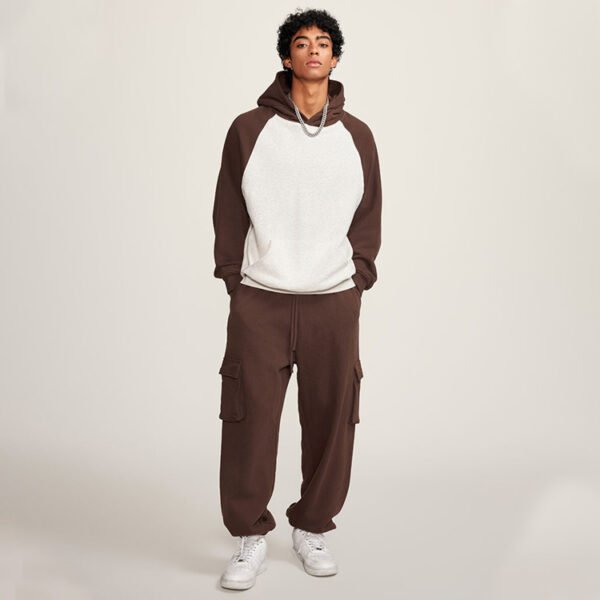





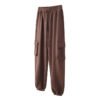


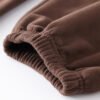

This unisex cargo jogger is developed around proportion control rather than decoration alone. The supplied imagery shows relaxed legs, layered utility pockets, a visible drawstring waist, and gathered ankles, making zipper length a critical approval point for keeping the front body intentional and wearable.
Calibrating Zipper Length Against the Front Body
A zipper that is too short can make the upper front appear visually dense, especially beside a wide rise and long drawstring. A zipper that extends too far may divide the relaxed body and compete with the cargo pocket architecture.
The image does not visibly confirm a front zipper, so this is a development decision rather than a claimed existing detail. VeeWen should test zipper termination points against the rise, waistband casing, and first pocket edge before approval.
Protecting Relaxed Volume Through the Rise
The primary burgundy styling shows generous hip and thigh volume, with the front body reading as soft and uncompressed. A zipper opening must preserve that ease, because excessive shaping or narrow panels would contradict the intended loose jogger character.
Pattern review should examine how the zipper facing affects the center-front seam and rise curve. The buyer should approve the fit on a full-size sample, checking seated comfort, opening behavior, and whether the front still hangs cleanly.
Making Cargo Pockets Work With the Opening
Two stacked cargo pockets are visible on the outer leg, creating a clear utility statement and a concentrated block of front-side detail. Their depth, flap proportions, and attachment lines should remain distinct from any center-front zipper.
A long zipper can visually pull attention inward while the pockets pull it outward. The technical review should therefore compare pocket height, zipper visibility, and front-body symmetry, ensuring the garment feels organized when viewed directly and in motion.
Using the Drawstring as a Counterweight
The burgundy example shows long drawstring ends descending from the elasticated waistband, adding a deliberate vertical line at center front. That line can help explain a moderate zipper, but excessive combined length may make the upper body look cluttered.
VeeWen's development review should coordinate eyelet position, cord length, zipper pull scale, and waistband exposure. The buyer should choose whether the drawstring remains prominent or becomes quieter when the front opening is introduced.
Finishing the Leg Without Losing Proportion
Gathered ankle cuffs visibly narrow the lower leg after a broad upper silhouette, creating the characteristic jogger taper. This contrast means the front zipper should not imply a sharply tailored garment, or the top and bottom proportions will disagree.
Cuff height and opening tension should be reviewed with the approved leg width. A balanced sample will retain relaxed movement through the thigh while allowing the ankle to gather neatly over footwear without twisting the side cargo pockets.
VeeWen Development Checkpoint
VeeWen can route this style through a proportion-led development sequence: first freeze the relaxed block and pocket map, then compare zipper options on the front body. This keeps the manufacturing axis connected to the garment's actual visual hierarchy.
At the approval checkpoint, the buyer should review front, side, and seated views together. Confirm zipper length, facing behavior, pocket clearance, drawstring prominence, and cuff balance before authorizing the final technical package at MOQ: 100 pieces per style.
Buyer Questions
Is a front zipper confirmed on this jogger?
No. The supplied primary image does not clearly show one, so zipper presence, length, type, and placement should remain To Confirm during technical development.
Can the cargo pocket layout be changed?
Yes, pocket count, dimensions, flap treatment, and placement can be developed, provided the revised map preserves front-body balance and the approved loose silhouette.
What fit should the sample demonstrate?
The sample should demonstrate generous hip and thigh ease, a relaxed leg line, functional pocket clearance, and controlled gathering at the ankle without twisting.
What is the minimum commercial quantity?
The exact commercial minimum is MOQ: 100 pieces per style. Final color, trim, grading, and construction approvals should precede production planning.
Approve the Front-Balance Direction
Send your preferred zipper treatment, pocket map, color direction, and size range. VeeWen can prepare the proportion review around MOQ: 100 pieces per style for buyer approval.


Reviews
There are no reviews yet.