
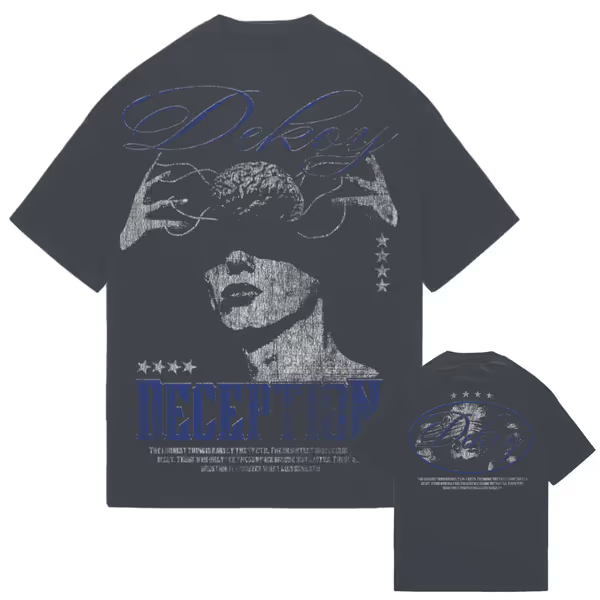


This custom vintage black tee is developed around a practical hardware question: how much puller presence adds function without disturbing a restrained streetwear silhouette. VeeWen can translate the reference into controlled dimensions, attachment placement, and clearance checks before production approval.
Why Puller Scale Changes the Garment
A zipper puller is visually small but operationally important. Oversized hardware can dominate a dark tee, while an undersized puller may be difficult to grip. The development target is a proportion that reads intentional, remains accessible, and supports repeated opening without unnecessary visual weight.
The vintage black surface makes contrast and reflection especially consequential. A bright metal, matte molded piece, or tonal puller will each change perceived scale. VeeWen should therefore evaluate puller finish beside the approved garment shade, rather than selecting hardware in isolation.
Operational Clearance at the Opening
Clearance describes the working space around the puller, zipper tape, seam allowance, and adjacent body fabric. If that space is too narrow, fingers, threads, or surface treatments can interfere with operation. The sample must prove smooth movement through the complete opening range.
If the opening sits near a seam, collar, pocket, or layered attachment, tolerance becomes more important than appearance alone. The technical review should mark the puller path, stop position, and minimum fabric separation so pattern and sewing teams share one measurable reference.
Vintage Surface Versus Hardware Read
A vintage finish introduces controlled irregularity through shade, abrasion, or washing, but hardware needs stable placement and repeatable function. Excessive surface contrast around the attachment can make a modest puller appear larger, changing the balance intended by the reference.
The commercial trade-off is clear: stronger hardware contrast improves discoverability, while tonal treatment protects a quieter look. Buyers should decide whether the puller is a focal detail or a discreet utility feature, then align finish, tape, and stitching choices accordingly.
Pattern and Sewing Implications
Puller placement is not only a trim decision. It affects opening length, reinforcement, seam sequence, and the amount of fabric available for clean attachment. A pattern adjustment made after sewing specifications are fixed can create distortion, uneven edges, or compromised operational access.
VeeWen's development review should connect the chosen puller dimensions to pattern marking and machine handling. The first sample should record attachment method, reinforcement location, edge distance, and movement result, giving the buyer a concrete basis for approval or revision.
VeeWen Development Workflow
For this tee, VeeWen's workflow should begin with a hardware brief tied to the reference images, followed by a measurement sheet defining puller length, width, thickness, and position. The purpose is to convert visual scale into controllable construction information before sampling begins.
After the sample, VeeWen can review operation, clearance, appearance, and wash interaction as one decision set. The buyer's checkpoint is a signed hardware and placement approval, followed by confirmation that the same requirements remain in the production specification.
Buyer Approval Checkpoint
Before approval, inspect the puller in the closed and fully open positions, then operate it repeatedly while checking nearby seams and fabric. Confirm that the hardware remains easy to grip without catching, twisting, scratching, or pulling the vintage surface.
The final decision should document accepted dimensions, finish, position, and tolerance. If any element remains uncertain, hold the style at sample revision rather than releasing an attractive but operationally unresolved detail into the bulk order.
Buyer Questions
What should be measured first on this tee?
Measure puller length, width, thickness, attachment position, and surrounding clearance, then record these dimensions beside the approved reference image.
Can the vintage effect change hardware selection?
Yes. Wash contrast and surface variation can alter perceived hardware scale, so finish and puller appearance should be reviewed together during sampling.
What is the main production risk?
The main risk is insufficient operating space around seams or treated fabric, causing catching, distortion, difficult gripping, or inconsistent opening performance.
What is the commercial minimum?
MOQ: 100 pieces per style. Final development should confirm materials, trims, measurements, grading, decoration, and approved tolerances before ordering.
Approve the Hardware Direction
Send the target measurements, preferred puller finish, and reference placement to VeeWen for sample development, then approve operation and clearance before releasing the style to production.


Reviews
There are no reviews yet.