
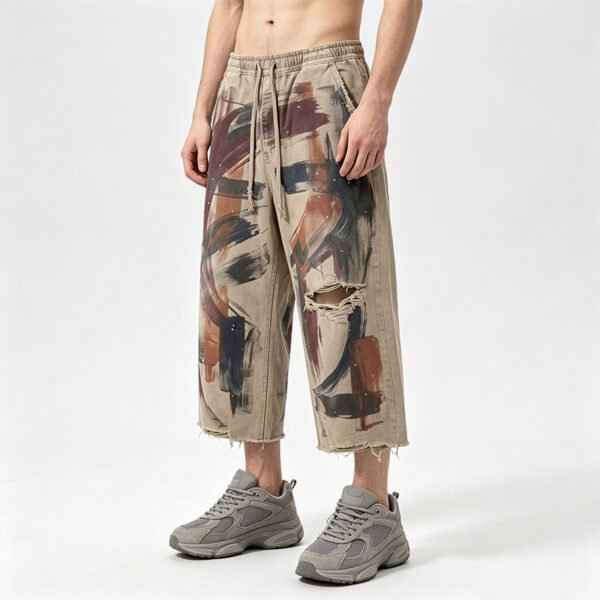

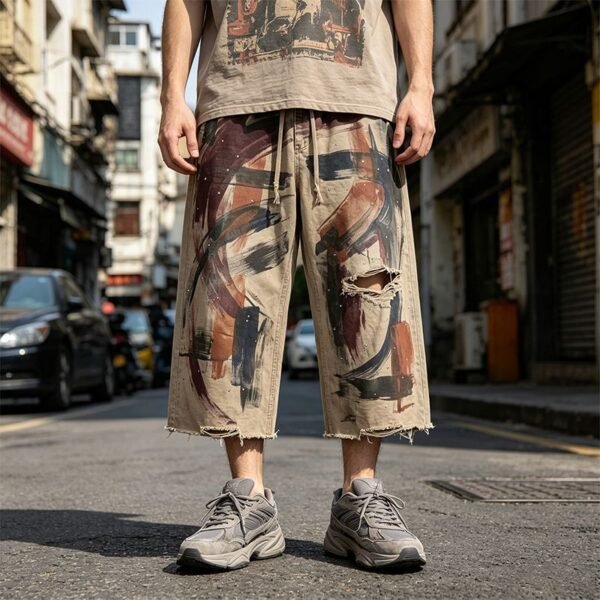
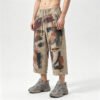
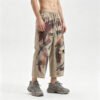
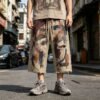


This cropped pant is built around controlled irregularity: a quiet stone base, layered brushstroke color, open knee distressing, and raw hems. Its commercial risk is visual drift, so the development record treats lighting, color perception, and placement repeatability as approval checkpoints from artwork through bulk cutting.
Color Perception Starts With the Base Ground
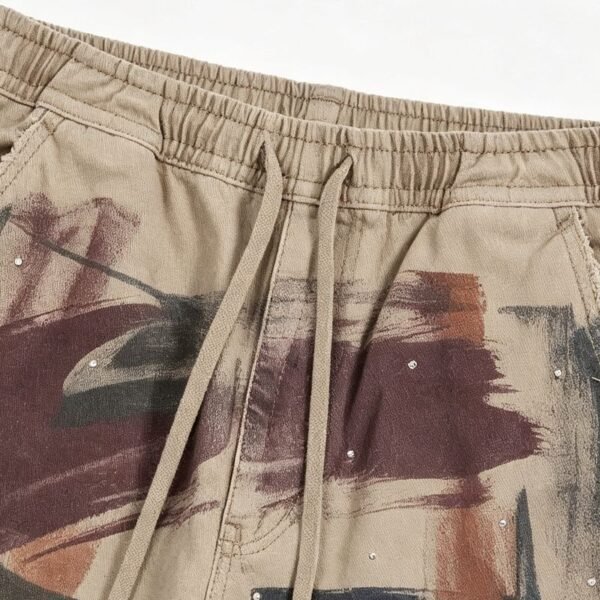
The beige ground is not a neutral backdrop; it changes how every overprinted tone reads. In the image, burgundy, rust, navy, and charcoal remain softened rather than vivid, so the base fabric shade must be fixed before artwork approval.
A small ground-color shift could make the same artwork appear warmer, darker, or more saturated. VeeWen should therefore establish a physical base swatch and inspect it beside approved artwork under one documented lighting setup before cutting begins.
Irregular Artwork Needs Controlled Variation
The visible marks are broad, broken, and directional rather than a uniform repeat. That irregularity gives each leg energy, but it also creates a risk that panel placement will become visually unbalanced when garment pieces are cut from larger printed or treated yardage.
Development should map the principal brushstroke zones against front, back, and pocket panels, then define acceptable movement boundaries. The goal is controlled variation: the pants should feel individual while preserving the same tonal hierarchy and signature color relationships.
Lighting Becomes a Production Tool
Color approval under inconsistent lighting can disguise meaningful differences between samples. A charcoal stroke may read nearly black in one environment, while rust can appear brighter or more orange elsewhere, changing the perceived balance of the complete garment.
VeeWen's workflow should compare the approved standard, development sample, and preproduction sample side by side under the agreed lighting condition. Photos can support communication, but the physical review remains decisive because screens and surrounding colors can distort judgment.
Construction Must Protect the Color Story
The elastic waist, drawcord, angled pockets, and cropped leg create clean structural zones around a highly active surface. If seams twist or pocket bags pull, brushstroke placement can appear misaligned even when the artwork itself matches the approved reference.
Pattern review should confirm grain direction, panel balance, and pocket opening position before bulk cutting. The buyer should assess whether the artwork remains coherent after assembly, especially around the knee opening and lower leg where distressing interrupts the color field.
Distressing Requires Its Own Approval Boundary
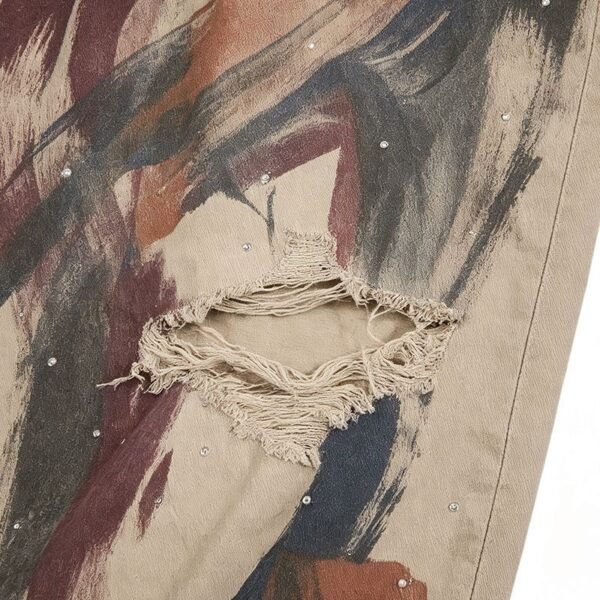
The image shows a concentrated knee opening with frayed edges, plus uneven raw hems that reinforce the vintage direction. These details are visually important, yet excessive abrasion could weaken the surrounding fabric or overwhelm the carefully controlled color contrast.
VeeWen should separate color approval from distress approval, using a marked placement template and defined intensity range. The buyer needs to confirm opening size, fray character, and distance from seams before authorizing production, because repair after treatment may alter both appearance and color.
Translate the Axis Into Bulk Controls
For this style, VeeWen's product-development workflow should carry one color board through artwork placement, fabric approval, sample review, and preproduction inspection. Each checkpoint should record lighting conditions, reference swatches, and acceptable tonal movement for the finished garment.
At MOQ: 100 pieces per style, the buyer should approve the final color standard together with a complete representative sample, not isolated fabric alone. The release decision is whether the assembled pants preserve the intended muted contrast, irregular rhythm, and distressed balance.
Buyer Questions
Can the brushstroke colors be changed for a private-label collection?
Yes, the artwork palette can be developed around a buyer-supplied color standard, subject to sampling and confirmation of achievable contrast on the selected fabric.
How should color approvals be reviewed for this pant?
Review the base swatch, artwork strike-off, complete sample, and preproduction sample together under one agreed lighting condition before production authorization.
Can the knee distressing and raw hems be modified?
Yes, distress placement and intensity can be adjusted during development, but the buyer should approve marked templates before treatment and bulk cutting.
What is the minimum order for this style?
The exact commercial minimum is MOQ: 100 pieces per style, with final specifications and development approvals confirmed before production scheduling.
Approve the Color Standard Before Sampling
Send the target palette, reference lighting condition, preferred fabric direction, and distressing intent. VeeWen can then organize the sample checkpoints needed to validate this pant's complete visual balance.


Reviews
There are no reviews yet.