





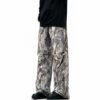


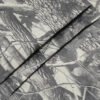
This custom camouflage cargo pant is developed around a practical balance: denim must carry oversized utility details while remaining flexible enough to fall cleanly through the leg. The visible pocket load, monochrome woodland surface, and adjustable hems make weight-to-drape approval the central development checkpoint.
Why Weight Controls the Silhouette
A heavier denim can hold the wide leg and pocket shapes with authority, but excessive mass may create a rigid fall and restrict movement. A lighter construction can drape more naturally while losing the structured utility character shown in the supplied image.
The correct target is therefore defined by behavior at key points, not GSM alone. The development sample should be reviewed standing, walking, and gathered at the hem, with attention to knee collapse, pocket projection, and leg opening recovery.
Reading the Image as a Construction Brief
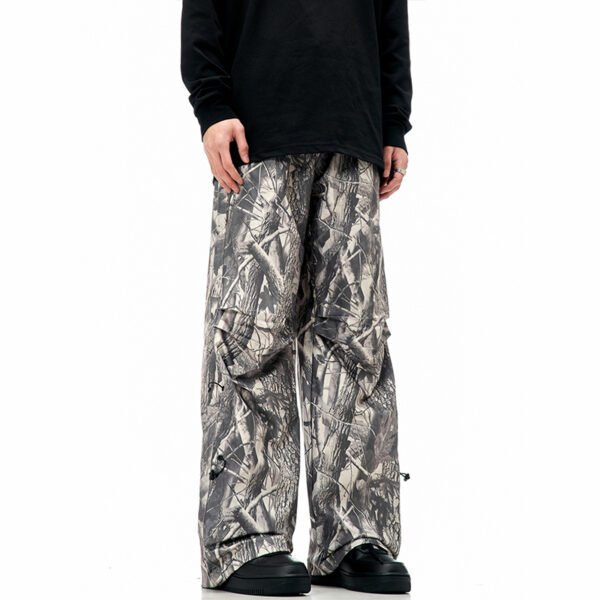
The image presents a monochrome camouflage pant with broad legs, prominent flap pockets, and a lower hem that appears adjustable through exposed drawcord hardware. These details establish a visual language of layered utility rather than a minimal five-pocket denim format.
Pocket placement must be checked against the leg width because oversized compartments can pull the outer seam forward or make the thigh appear heavier. The sample should confirm flap alignment, pocket balance, and comfortable access without changing the intended relaxed proportion.
Camouflage Surface and Vintage Direction
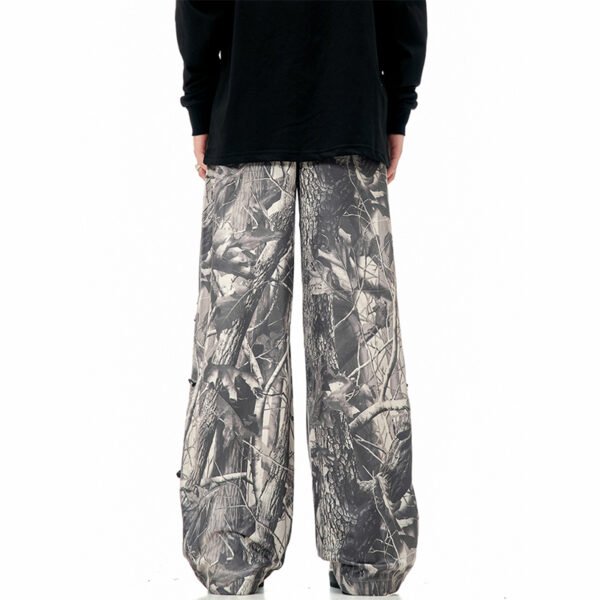
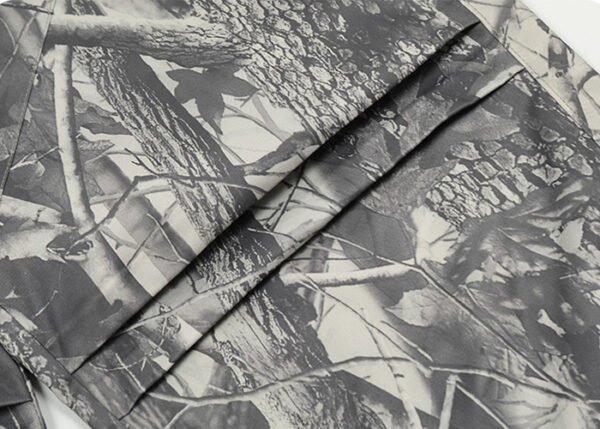
The supplied visual uses low-contrast gray, black, and off-white camouflage, allowing the pocket architecture to remain prominent without a bright color interruption. This tonal approach supports a vintage streetwear direction while keeping the garment adaptable across dark and neutral styling.
A vintage appearance should be specified through approved wash references, contrast limits, and placement expectations rather than vague aging language. Buyers should decide whether the surface should remain crisp and graphic or develop softer abrasion, because each choice changes perceived weight and handfeel.
Hem Volume as a Wearer-Controlled Variable
The visible drawcords create a second silhouette within the same garment. Releasing them emphasizes the long, open leg, while tightening them gathers the hem around footwear and concentrates fabric at the ankle. That adjustment makes lower-leg drape an intentional styling feature.
Cord length, exit position, stopper security, and channel construction should be approved with the fabric weight. A thick denim may need stronger cord control and a more generous channel, while a softer fabric may require restraint to prevent excessive bunching or twisting.
VeeWen Development Workflow
VeeWen should translate this concept into a fabric behavior matrix covering candidate denim weights, handfeel, wash response, pocket stability, and hem gathering. The first approval should isolate the textile and base block before adding every trim, so the buyer can identify the true cause of silhouette changes.
After the fabric direction is selected, VeeWen can refine pocket dimensions, flap proportions, drawcord routing, and grading around the approved fall. The production record should retain the chosen fabric reference, wash standard, and fit comments so later colorways preserve the same design logic.
Buyer Approval Checkpoint
Approval should begin with a side-by-side review of fabric swatches and a fully constructed sample. Confirm whether the leg hangs open or collapses softly, whether cargo pockets remain balanced, and whether the hem adjustment creates useful styling without damaging comfort.
The commercial decision is to approve the relationship between denim weight and intended drape before confirming final quantities. Buyers should record acceptable tolerance for handfeel, pocket projection, wash variation, and gathered hem volume, then release the style at MOQ: 100 pieces per style.
Buyer Questions
What fabric information is currently verified?
The source identifies denim fabric, while fiber composition, GSM, stretch, and performance are unverified. VeeWen should confirm these through approved swatches and development documentation.
How should buyers choose the denim weight?
Choose weight by observing leg fall, pocket stability, movement, and hem gathering together. A swatch alone cannot predict the final silhouette once utility details are added.
Can the camouflage colors be customized?
Yes, the tonal camouflage direction can be developed through an approved artwork or reference. Confirm ground color, contrast, repeat scale, and wash interaction before bulk approval.
What is the minimum order quantity?
The commercial minimum is MOQ: 100 pieces per style. Final grading, color allocation, trims, and approved construction details should be documented before production release.
Approve the Fabric Behavior Before Bulk Development
Send your target silhouette, camouflage reference, and preferred handfeel to VeeWen. We can organize the fabric, pocket, wash, and hem decisions around one reviewable development sample at MOQ: 100 pieces per style.


Reviews
There are no reviews yet.