
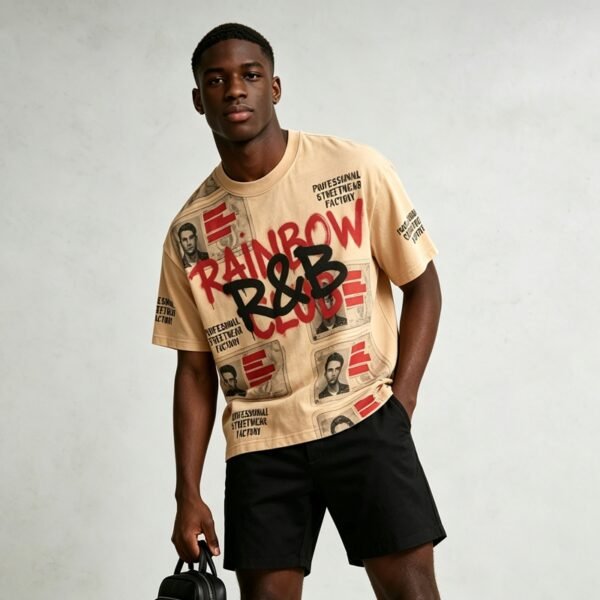
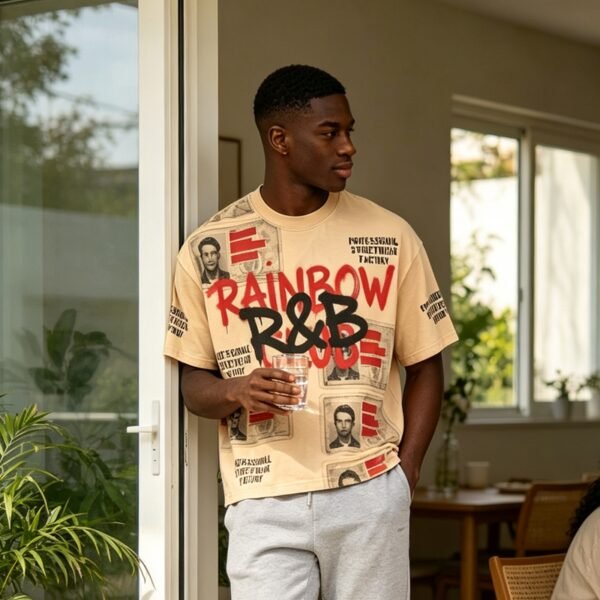


This custom vintage graphic T-shirt should be developed around a controlled relationship between fabric weight and drape. The supplied image shows a softly structured, waist-length body carrying dense artwork, so approval must balance shape retention, hand feel, wash response, and decoration stability.
Read the Silhouette Before Selecting Weight
The image presents a relaxed tee with a body that projects modestly from the torso. Its near-waist hem and broad sleeves indicate that fabric cannot be excessively fluid, or the garment may lose the intentional vintage proportion.
Conversely, an overly heavy construction could make the short body feel rigid and amplify bulk around the chest. VeeWen development should therefore compare several weight options after washing, observing shoulder spread, sleeve opening, hem behavior, and movement during fitting.
Wash Response Changes the Drape Equation
Garment washing can relax yarns, soften the hand, and introduce dimensional change, but the final drape depends on the starting fabric structure. The source wording confirms a garment-wash direction; it does not establish shrinkage, weight, or finished measurements.
The approval sample should be measured before and after the intended wash route, then reviewed on-body under the same styling conditions. Particular attention belongs on the cropped hem, neck rib recovery, sleeve hang, and whether the washed surface supports a clean graphic field.
Artwork Density Requires Stable Support
The supplied front image shows multiple portrait blocks, lettering, and red geometric elements distributed across the torso. That density makes fabric movement highly visible, especially where the body bends or the hem folds during wear.
A fabric with insufficient body may distort the composition and create inconsistent visual tension across sizes. A fabric with excessive firmness may resist the worn-in attitude. Development should evaluate artwork registration, surface hand, and image clarity on washed panels before bulk approval.
Neckline and Sleeve Balance Matter
The crew neckline appears close and clean against a substantial upper body, while the sleeves extend with a relaxed opening. These proportions help the tee feel deliberate rather than simply oversized, making rib structure and shoulder construction part of the drape decision.
VeeWen's pattern review should connect neck rib tension, shoulder width, sleeve pitch, and side-seam position to the selected fabric. The checkpoint is a fitted sample in multiple sizes, ensuring the neckline remains stable while the body keeps its intended relaxed fall.
Translate the Argument into Development
VeeWen should treat fabric weight as a controlled variable in the development brief, alongside wash route, artwork coverage, and finished body measurements. Each sample round can isolate one change, allowing the buyer to distinguish fabric behavior from pattern or decoration effects.
The practical approval package should include fabric references, prewash and postwash measurements, artwork placement views, and fit photographs. This workflow turns the visual evidence into a repeatable decision record rather than relying on an unmeasured impression of heaviness.
Define the Bulk Approval Checkpoint
Approval should occur when the chosen fabric produces the desired drape after washing and carries the artwork without excessive stiffness, distortion, or surface imbalance. The buyer should judge the garment in motion, not only on a flat inspection table.
Before confirming the style, review size grading, wash tolerance, neck recovery, print appearance, and final measurements against the approved sample. If any element shifts the silhouette away from the supplied reference, revise the specification before production proceeds.
Buyer Questions
What fabric weight should this T-shirt use?
The supplied evidence does not state GSM. Select weight through washed swatch and sample comparisons, approving the option that preserves relaxed structure without stiffness.
Is the cotton composition verified?
The source title states cotton construction, but final composition should still be confirmed through the selected mill reference and production specification.
How should the graphic be evaluated?
Review artwork clarity, hand feel, placement, and wash response on the finished fabric, especially across the cropped hem and high-movement torso areas.
What is the minimum order quantity?
The commercial minimum is MOQ: 100 pieces per style. Final costing and production planning require the approved fabric, artwork, colorway, and construction details.
Approve the Drape Direction
Send the preferred artwork, target measurements, and wash intention to VeeWen for fabric-led development. Request comparative samples before approving the weight, drape, decoration, and final bulk specification.


Reviews
There are no reviews yet.