
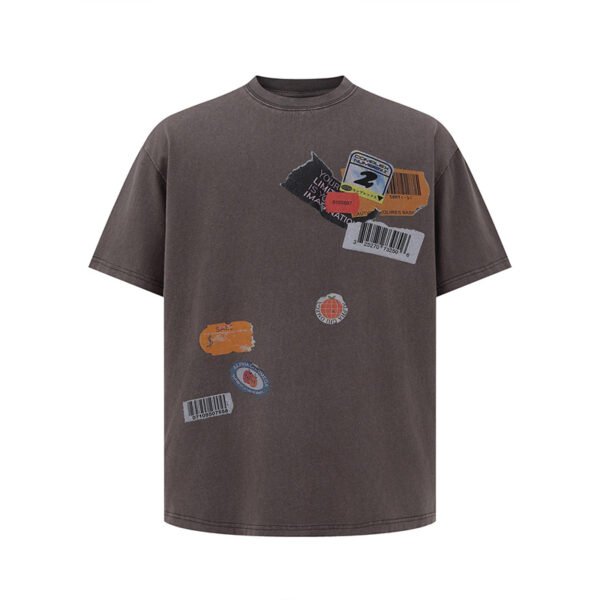

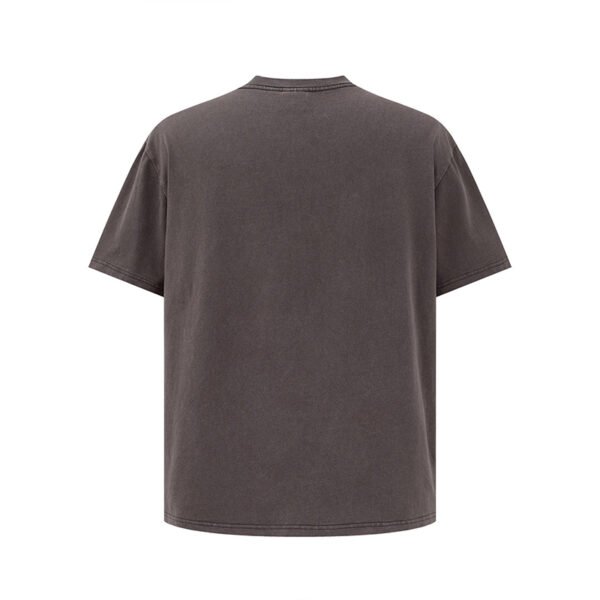

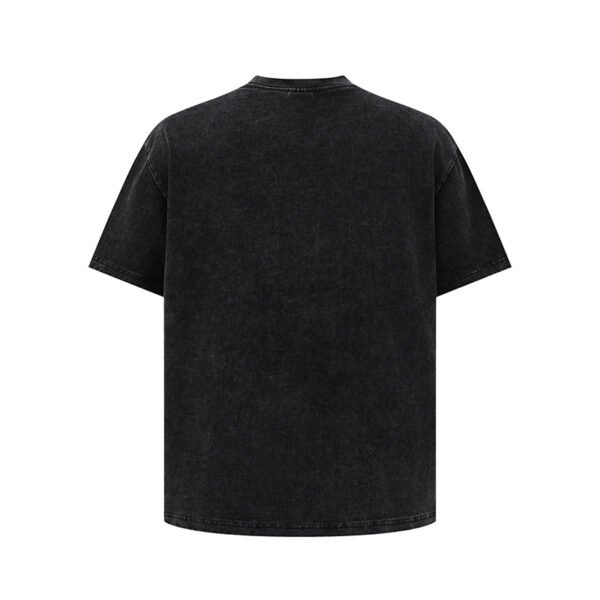


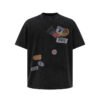
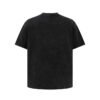
This custom vintage graphic crew neck T-shirt is built around marker direction and material consumption. The supplied image shows a tonal washed body carrying several differently oriented label-style graphics, so cutting efficiency must be balanced against surface direction, print placement, and consistent visual rhythm.
Why Marker Direction Matters Here
This T-shirt appears simple in silhouette, but its surface and artwork create a directional cutting question. The body shows tonal wash variation, while the front includes graphics that read in different orientations. Marker efficiency must therefore protect the intended visual arrangement.
If panels are freely rotated, consumption may improve while surface direction, shade perception, or graphic reading changes. If every piece follows one direction, presentation becomes easier to control but fabric use may increase. The correct rule should be agreed before grading.
Reading the Graphic Layout
The front carries a prominent upper graphic, smaller central and lower marks, and barcode-like elements placed at varying angles. Those details are visible evidence that artwork is not a single centered print. Each placement needs a defined relationship to the body grain and finished wash appearance.
The graphic density also affects cutting tolerance because panels cannot be treated as interchangeable when artwork positions are fixed. VeeWen should document placement zones by size, then assess whether the approved marker preserves sufficient clearance around seams, hems, and sleeve edges.
Consumption Across Size Grading
A relaxed crew-neck body normally grades through width and length, while sleeves and neck rib follow their own measurements. As sizes expand, artwork zones may shift relative to the center front, changing the amount of fabric required for stable placement and print clearance.
Marker planning should test the complete size curve rather than rely on the base size. Larger bodies may increase roll usage disproportionately when one-way direction is required. The buyer should review consumption by size group and identify where yield assumptions become commercially sensitive.
VeeWen Development Workflow
VeeWen can apply this argument by recording the fabric's usable width, surface direction, and acceptable rotation rule before creating the production marker. The graded T-shirt block and each artwork zone should then be overlaid to identify conflicts between yield and visual consistency.
At sample review, compare a direction-controlled layout with a yield-focused alternative. Measure the resulting usage, inspect artwork orientation, and review the washed appearance across panels. This creates a specific approval checkpoint for the shirt rather than treating marker work as an invisible factory calculation.
Trade-Offs in Yield Optimization
A one-way marker can protect tonal flow and keep the washed appearance visually aligned, but it may consume more material. A rotated marker can reduce usage, yet it may expose shade differences or make directional artwork look inconsistent across body panels and sleeves.
There is also a balance between larger graphic clearance and tighter placement. More clearance supports repeatability and reduces trimming risk, while tighter spacing may improve yield. The buyer should select tolerances according to the intended retail presentation and acceptable production variation.
Approval Gate Before Cutting
Before bulk cutting, approve the grain-direction rule, usable finished width, size-based consumption table, artwork placement map, and treatment sequence. Confirm whether sleeves, body panels, and rib components follow the same direction or require separate handling during marker preparation.
The decision is ready when a post-treatment sample demonstrates acceptable surface continuity, graphic orientation, and measurements across the approved size range. VeeWen can then release the chosen marker against the product specification and MOQ: 100 pieces per style.
Buyer Questions
Why cannot every T-shirt panel be rotated freely?
Rotation may alter surface direction, shade perception, or artwork orientation. The acceptable rule depends on the approved wash appearance and graphic presentation requirements.
Should marker consumption be reviewed by size?
Yes. Grading changes body and sleeve dimensions, while artwork clearance remains important. Size-based usage shows where one-way cutting most affects commercial planning.
Can the graphics be repositioned to improve yield?
Possibly, but repositioning changes the product argument. Any adjustment should be approved against the intended visual hierarchy, seam clearances, and size-specific placement.
What should the buyer request from VeeWen?
Request usable-width confirmation, directional marker options, size-based consumption, artwork placement rules, treatment measurements, and a sample review before bulk authorization.
Approve the Directional Marker
Share the graded size range, artwork files, and wash reference with VeeWen for a direction-led consumption review. Confirm the marker rule and post-treatment appearance before approving MOQ: 100 pieces per style.



Reviews
There are no reviews yet.