
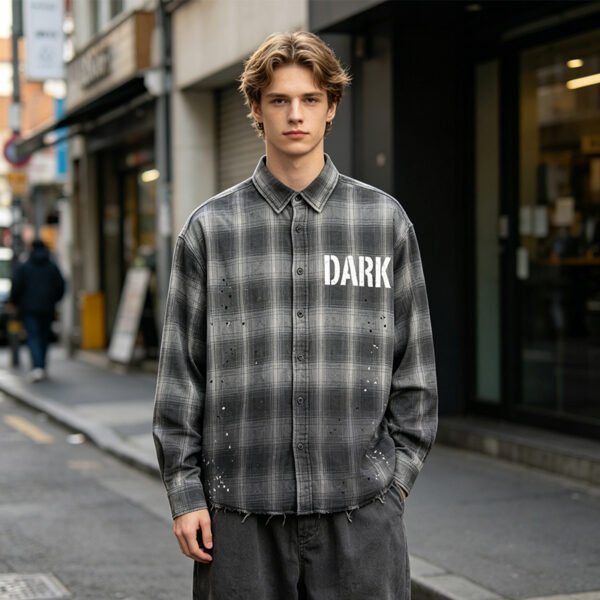
This plaid shirt should be costed through its marker logic before styling is finalized. The supplied image shows a repeat spanning collar, sleeves, cuffs, placket, and body, plus chest artwork and a raw-looking hem, so usable fabric width and matching direction directly influence yield and appearance.
Plaid Repeat Drives Marker Consumption
A visible plaid repeat turns fabric width into a design variable, not merely a costing input. The image shows checks continuing across the front, sleeves, collar, and cuffs, so marker planning must protect grain direction and repeat placement while minimizing avoidable offcut.
Usable width should be assessed after allowing for selvage, shrinkage, and any tubular or irregular edge limitations. Wider fabric may improve marker efficiency, but repeat matching can consume that advantage. Record actual usable width and compare markers across the approved size range.
Matching Panels Without Hidden Waste
The front placket, collar, and sleeve pieces create several opportunities for mismatched checks to become immediately visible. Set a matching hierarchy before cutting: prioritize center fronts and collar first, then balance sleeves and pocket or cuff elements according to the final construction.
A relaxed shirt can tolerate some ease variation, but it cannot conceal inconsistent plaid direction at key visual lines. The development sample should show the intended repeat relationship clearly, allowing the buyer to distinguish acceptable asymmetry from a marker decision that weakens the garment's presentation.
Artwork Adds a Second Layout Constraint
The white chest artwork occupies a high-visibility area over the plaid, making placement dependent on both panel geometry and repeat alignment. Reserve the artwork zone after confirming the front pattern, because shifting the print to save fabric may create an unbalanced relationship with the checks.
Scattered light marks and distressed details introduce further process coordination. If applied before sewing, they must remain consistent across cut panels; if applied afterward, handling can affect alignment. Confirm the sequence through sampling so the print, distressing, and plaid read as one intentional surface.
VeeWen Development Checkpoint
VeeWen's product-development workflow should begin with a fabric-width worksheet linked to the actual plaid repeat, pattern dimensions, and planned size range. This makes the first sample useful for both visual approval and consumption review, rather than separating design judgment from commercial feasibility.
At review, compare the photographed appearance with the physical sample from front, side, and seated views. Approve the marker direction only when the checks remain coherent at the placket, collar, sleeve joins, and cuffs, and the artwork sits within its intended visual field.
Raw Edges Change the Cost Equation
The lower edge appears deliberately unfinished, which can reduce some hemming operations but increases sensitivity to fabric fray, wash response, and cutting consistency. A raw finish is therefore not automatically lower cost; its stability and acceptable fringe length must be defined during development.
Long sleeves and multiple cuff components also add cutting and sewing exposure. Reducing panel complexity may improve consumption, but it could remove the structured details that frame the plaid. Evaluate savings against the desired silhouette, repeat continuity, and perceived vintage character.
Locking Width Before Bulk Cutting
Before bulk cutting, confirm fabric composition, weight, usable width, repeat size, shrinkage allowance, and the approved marker assumptions. None of those technical values are supplied in the image evidence, so they should remain open development fields until the fabric source is verified.
The buyer's final decision is whether the projected consumption supports the target commercial position without sacrificing matching. Approve the shirt only after reviewing the marker, cutting layout, print placement, and raw-edge behavior together on the selected fabric.
Buyer Questions
Why does plaid width affect this shirt?
Usable width determines marker efficiency while repeat matching consumes additional space, especially across center fronts, sleeves, collar, cuffs, and other visible panels.
Should plaid matching be identical everywhere?
Prioritize center fronts and collar, then define acceptable relationships for sleeves and cuffs so appearance remains intentional without creating unnecessary fabric waste.
When should artwork placement be finalized?
Finalize artwork after the front pattern and repeat direction are approved, ensuring the print remains balanced against the plaid and survives the selected finishing sequence.
What is the minimum commercial quantity?
VeeWen's exact commercial minimum is MOQ: 100 pieces per style, subject to final specifications, approved materials, and the agreed production scope.
Approve the Marker Before Styling Lock
Share the intended plaid repeat, fabric width, size range, and artwork placement with VeeWen for a consumption-led sample review before cutting approval.



Reviews
There are no reviews yet.