

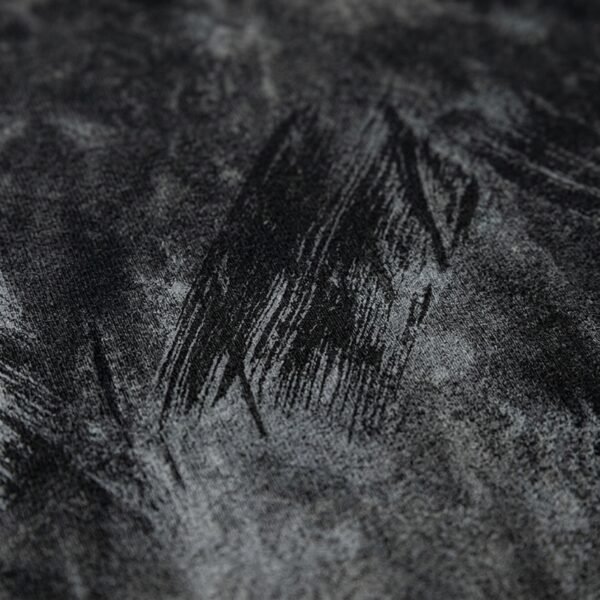






This oversized crewneck T-shirt is built around a production question often hidden by its vintage surface: how fabric width and cutting consumption preserve tonal balance. The charcoal ground, pale spray variation, broad proportions, and clean rib framing create a practical development brief for controlled scale-up.
Why Width Changes the Surface Story
The photographed front has non-repeat pale-grey variation spread across a broad charcoal body. Because the effect is not a fixed graphic, usable fabric width influences where tonal fields land on each marker, affecting balance between front, back, sleeves, and graded sizes.
A narrow usable width may increase piecing, waste, or directional compromises, while a wider width can improve marker flexibility. The buyer should confirm finished width after treatment, not rely solely on greige specifications, because spray, wash, relaxation, and edge behavior can change consumption assumptions.
Planning Consumption Around Oversized Proportions
The silhouette uses substantial body width, dropped shoulders, and loose sleeves, so consumption is driven by horizontal dimensions as much as garment length. Marker planning should account for front and back panels, sleeve orientation, rib allowance, and any shrinkage before setting a reliable material requirement.
The trade-off is between preserving the generous silhouette and improving yield. Reducing width may lower consumption but change the visual attitude shown. VeeWen should present the marker logic with the approved measurement chart, making any yield-driven adjustment visible before sample approval.
Managing Non-Repeat Spray Distribution
The surface reads as irregular tonal clouding, with lighter concentration across the torso and darker edges around the neckline and sleeves. That variation should be treated as a placement field rather than a repeatable print, because panel orientation can materially alter the finished visual.
A production plan can designate preferred light and dark zones while accepting controlled drift within them. Buyers should decide whether front and back require comparable intensity or whether the front may carry stronger contrast, since that choice changes both cutting orientation and material usage.
Edges Frame the Vintage Effect
The crew neckline, sleeve hems, and lower edge appear visually calmer than the torso, creating a useful frame around the mottled center. Maintaining that framing depends on separating edge cleanliness from body spray intensity during development and documenting where treatment should stop or soften.
If spray reaches the ribs and hems too aggressively, the garment may lose definition and look uniformly cloudy. If the boundary is too sharp, the surface can appear artificially blocked. Sampling should compare soft transitions with controlled edge reserves while checking the effect after laundering and pressing.
VeeWen Development Checkpoint
VeeWen's product-development review should connect the approved measurement chart to the fabric-width plan, marker layout, and spray field. The team can then identify which panels require directional placement and how much usable cloth is needed after the intended surface treatment.
The buyer should approve one complete size-set logic before bulk planning: finished width, length, sleeve dimensions, rib allowances, and acceptable tonal range. This checkpoint prevents consumption decisions from quietly narrowing the oversized fit or redistributing the strongest spray areas away from the intended visual focus.
Approval Risks and Scale-Up Decisions
The main risk is scale drift: larger sizes may absorb different spray fields, while inefficient markers may force substitutions in width or panel direction. A clear tolerance should distinguish acceptable tonal variation from a materially different garment appearance or unapproved fabric waste.
Before approval, inspect multiple sizes for body balance, edge framing, surface intensity, and marker consistency. The buyer's decision is whether the planned width and consumption protect the signature mottled effect at the agreed minimum order without sacrificing the relaxed proportions.
Buyer Questions
Why is fabric width important for this T-shirt?
Width controls marker flexibility, panel orientation, and yield, which directly influence how the non-repeat spray-dye fields appear across fronts, backs, sleeves, and graded sizes.
Is the cotton composition verified?
The supplied source title explicitly states 100% cotton, while fabric weight, finished width, treatment response, and shrinkage still require development confirmation.
Can spray intensity vary between garments?
Yes, controlled variation may be appropriate for this surface, but VeeWen should document tonal limits, edge behavior, and panel priorities before production approval.
What is the commercial minimum?
MOQ: 100 pieces per style. Final planning remains subject to confirmed fabric specifications, approved marker assumptions, accepted spray standards, and production documentation.
Approve the Width and Yield Plan
Share your size chart, target fabric weight, preferred tonal range, and intended order quantity so VeeWen can review marker consumption and spray-dye balance together.


Reviews
There are no reviews yet.