


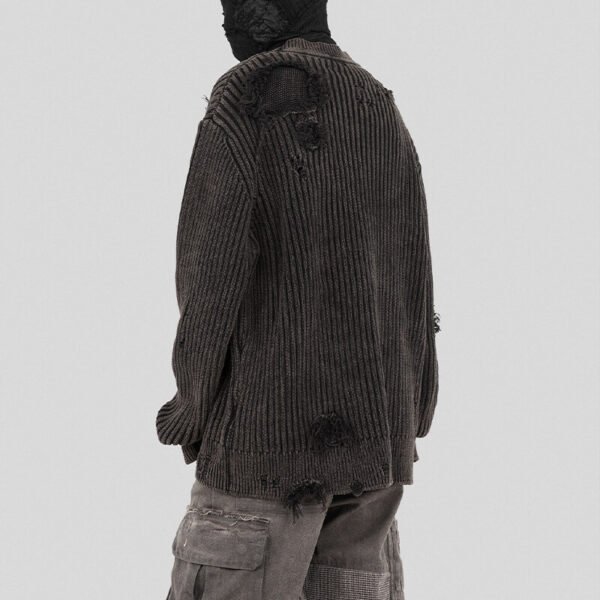

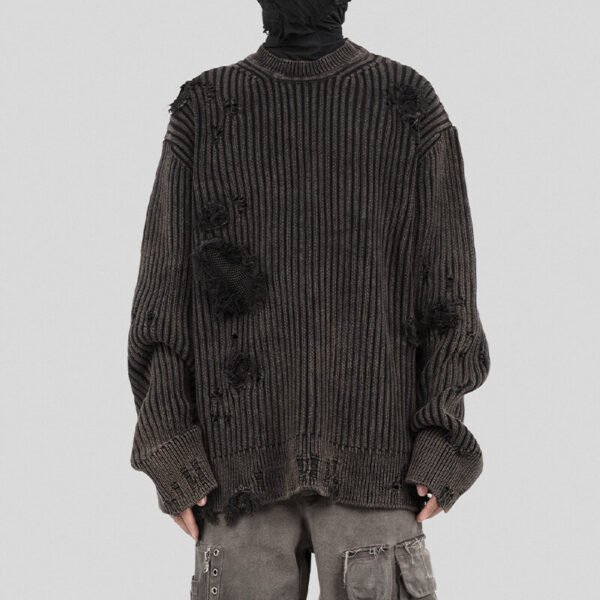
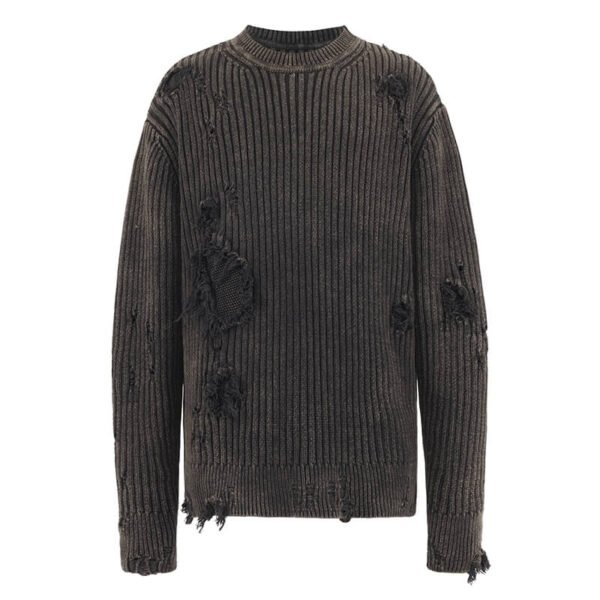



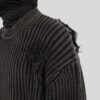
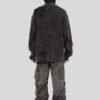

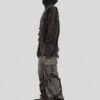


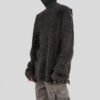


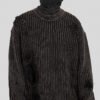

This oversized rib-knit sweater is developed around a controlled contrast: garment treatment creates the aged surface, while restrained hardware plating protects the design from becoming costume-like. The photographed back shows vertical ribs, a dark tonal body, distressed shoulder detailing, and a raised collar that make texture the primary commercial signal.
Texture Carries the Product Argument
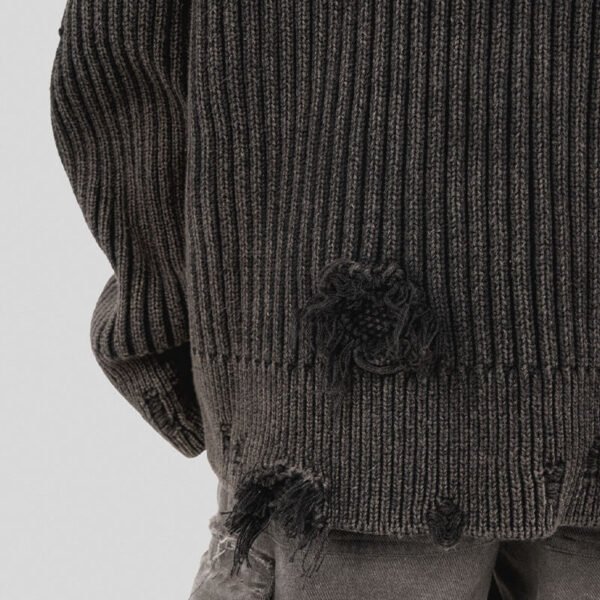
The close-up back image makes the rib structure impossible to miss: narrow vertical channels repeat across the body and create shadow without relying on contrast color. This construction gives buyers a tactile merchandising story, provided the ribs remain even after treatment and finishing.
The distressed shoulder panel interrupts that regular rhythm with frayed edges and a rougher exposed texture. That interruption is commercially useful because it creates a focal point, but it also requires controlled placement, consistent repetition, and clear limits against excessive fiber loss.
Garment Treatment Versus Hardware Plating
A treatment-led design gains character through fading, abrasion, and localized distressing across the knitted surface. Hardware can support the attitude, yet plated components introduce another color, gloss, corrosion, and attachment variable that may compete with the sweater's tonal depth.
For this reason, the first development approval should isolate the treatment before selecting decorative hardware. Compare untreated, washed, and distressed samples under consistent inspection, then decide whether metal accents clarify the concept or dilute the dark, textile-led identity.
Dark Color Needs Controlled Variation
The photographed surface reads as charcoal rather than flat black because raised ribs catch light differently from recessed channels. That visual variation should be treated as part of the design target, not mistaken for an uncontrolled shade fault during sample review.
A buyer should define acceptable limits for body shade, collar shade, and distressed panels before bulk knitting or treatment. Swatch references, lighting conditions, and wash-stage photographs can keep the intended aged effect aligned across components and production lots.
Oversized Proportion Requires Measurement Discipline
The source wording identifies an oversized silhouette, while the image evidence emphasizes a substantial back and broad shoulder area. Oversizing is therefore a pattern decision, not simply a larger size grade, and it should be expressed through body width, sleeve balance, and shoulder drop.
VeeWen's development workflow should translate the visual reference into a measurement sheet covering chest, length, shoulder, sleeve, cuff, and collar recovery. Approve the proportion on a fit sample before treatment, because wash and abrasion can alter drape, dimensions, and perceived volume.
Construction Risk Sits at Distressed Zones
Frayed shoulder detailing creates the strongest evidence of vintage character, but distressed knit edges can expose weak transition points. The risk is concentrated where intact rib columns meet deliberately damaged areas, especially around seams, armholes, and any reinforced attachment.
Development should map each distressed location against seam lines and movement zones, then inspect the sample from both sides. The approval checkpoint is not maximum damage; it is a repeatable visual boundary that survives handling while retaining the intended irregularity.
VeeWen Workflow Checkpoint
VeeWen should begin with a construction-led sample: confirm yarn reference, rib scale, collar dimensions, oversized measurements, and clean baseline finishing before applying the aged treatment. This sequence separates fit decisions from surface decisions and makes later corrections easier to attribute.
After treatment, the buyer should review appearance, handfeel, dimensional change, edge stability, and any proposed hardware together. The final development gate is a signed treatment map and trim decision, followed by size-set approval against the approved reference.
Buyer Questions
What material is specified for this sweater?
The supplied source title references acrylic fabric, but no percentage, yarn count, GSM, or performance claim is verified. Confirm the final composition before costing.
Can the distressed placement be customized?
Yes, placement can be developed through an approved treatment map covering location, intensity, edge limits, and repeatability. Confirm the visual boundary before production sampling.
Should hardware be included in the first sample?
Begin with the treatment-led knit sample unless hardware is central to the brief. This isolates garment appearance before plating, attachment, and trim coordination are approved.
What is the commercial minimum?
The exact commercial minimum is MOQ: 100 pieces per style. Final ordering remains subject to approved specifications, color direction, measurements, and production documentation.
Approve the Treatment Direction
Send your reference measurements, target shade, and distress placement notes to VeeWen. We will organize the treatment map, fit checkpoint, trim decision, and MOQ: 100 pieces per style discussion.

Reviews
There are no reviews yet.