


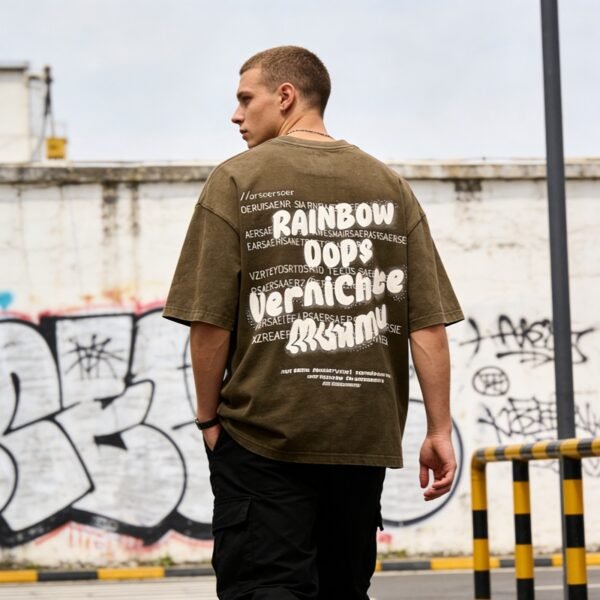
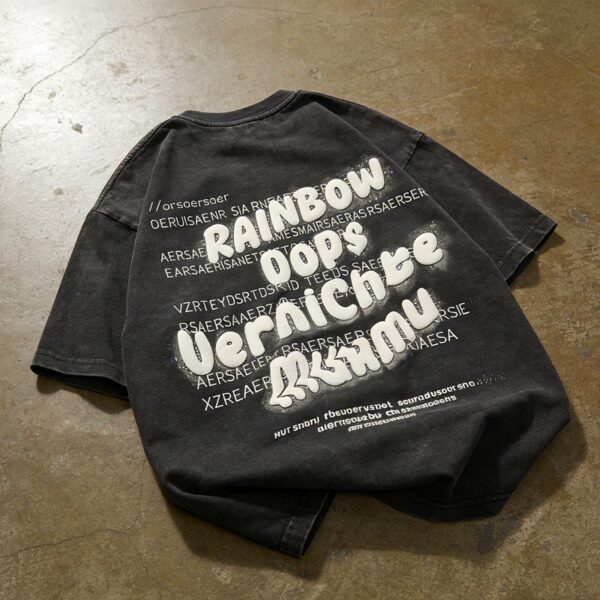







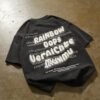

This custom vintage wash T-shirt is built around a controlled contrast problem. The garment treatment creates an uneven dark ground, while raised and flat off-white graphics occupy the same chest field. Hardware plating should remain a separate decision, preventing trim requirements from obscuring print and wash approval.
The Finish Problem Behind the Graphic
A vintage wash changes the visual ground beneath the artwork, while dimensional print adds height and shadow to selected lettering. If both variables are developed together without separation, the buyer may struggle to identify whether contrast loss comes from the wash or the print system.
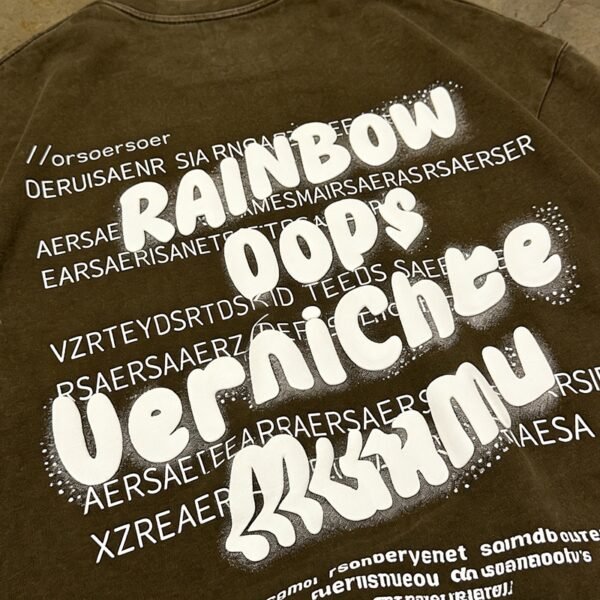
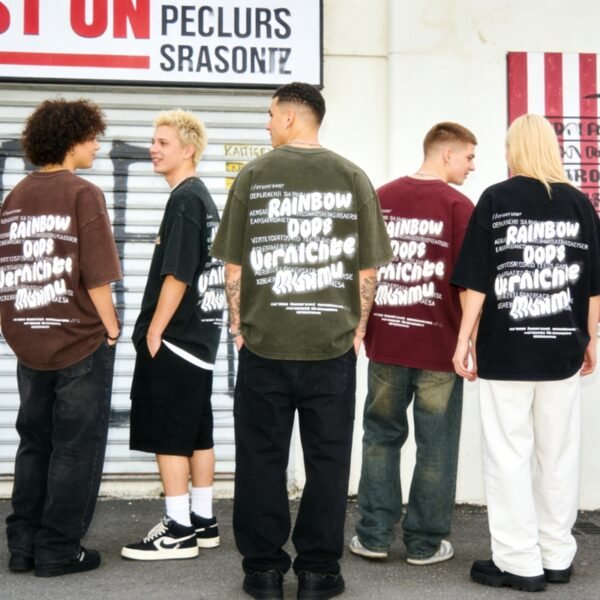
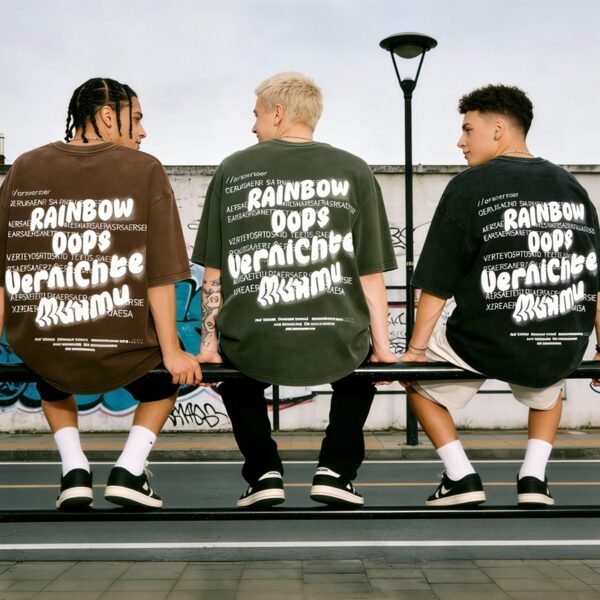
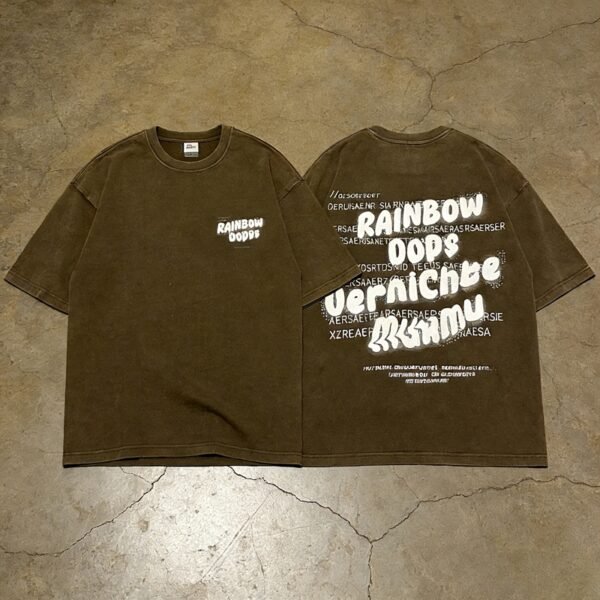
The supplied close-up shows raised off-white lettering over a dark olive-brown surface with smaller flat text behind it. That layered field makes relief, opacity, registration, and tonal variation more important than a simple one-color print approval.
Why Hardware Plating Is a Separate Variable
The image contains no visible buttons, rivets, eyelets, snaps, or other plated hardware. This absence matters because plating introduces a different production question involving substrate, finish, attachment, and potential contact with the treated garment surface.
If the final design adds a metal label, neck detail, or decorative trim, it should be specified independently from the wash recipe. The buyer should decide whether hardware is necessary, rather than allowing an assumed plated finish to complicate an otherwise print-led T-shirt.
Controlling the Washed Ground
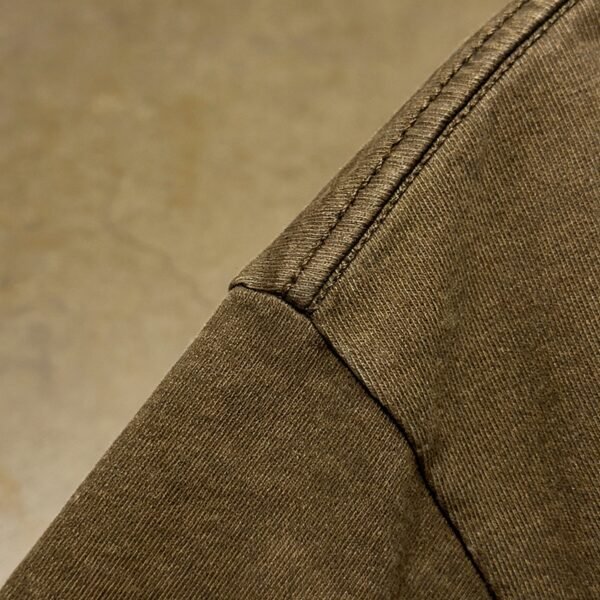
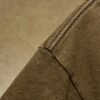
The dark ground shows tonal irregularity consistent with a treated appearance, but the image cannot verify the process, recipe, or repeatability. Development should therefore define acceptable shade movement around the graphic, neckline, shoulder seams, and larger uninterrupted fabric areas.
A wash can soften the hand and alter surface friction, which may influence how raised print sits and reads. VeeWen should compare pre-treatment and post-treatment panels to determine whether relief remains pronounced without creating unwanted cracking, flattening, or edge distortion.
Building Dimensional Print Reliably
Raised lettering requires a controlled deposit, stencil, or comparable application method that creates visible height without closing small internal spaces. The large white forms in the image provide a useful approval reference, while the smaller background text demands separate registration and legibility review.
The graphic should be divided into dimensional and flat layers in the artwork file. This allows VeeWen to confirm relief height, opacity, spacing, and curing behavior independently, reducing the risk that the washed ground makes secondary text disappear or appear misaligned.
VeeWen Development Workflow Checkpoint
VeeWen should route this style through a treatment-and-graphic matrix rather than one blended approval. The matrix can list ground shade, wash intensity, raised-print parameters, flat-print registration, and any hardware requirement as distinct checkpoints for the buyer.
The key review should use treated fabric with the final graphic applied, not an untreated print strike-off alone. Approve the chest artwork after washing, then separately sign off any plated component, its attachment method, and its interaction with the garment surface.
Trade-Offs and Final Approval
A stronger wash may deliver more visible vintage character, but it can reduce graphic contrast and increase shade variation between pieces. A higher raised print may improve tactility, yet can add stiffness or make handling and care requirements more demanding.
Before bulk commitment, the buyer should approve a post-treatment graphic panel and a complete T-shirt sample. Confirm the intended wash range, relief appearance, secondary-text clarity, and whether plated hardware is included, excluded, or still subject to development.
Buyer Questions
Is cotton content fully verified for this T-shirt?
The source wording identifies cotton, but no percentage is supplied. Treat composition and GSM as To Confirm until the selected fabric and documentation are approved.
Does the reference require plated hardware?
No plated hardware is visible in the supplied image. Confirm whether the final design needs metal trims, then specify plating, attachment, and garment interaction separately.
How should the raised print be approved?
Review the raised layer after the selected wash treatment, checking relief, opacity, internal spaces, edge definition, and the legibility of smaller flat graphic elements.
What is the commercial minimum?
The commercial minimum is MOQ: 100 pieces per style. Final quantities, color allocation, artwork, and treatment specifications should follow the approved development record.
Separate the Finish Decisions
Send the final artwork, wash direction, fabric target, and hardware decision to VeeWen. The next checkpoint is a treated graphic sample confirming contrast, relief, registration, and any trim interaction.


Reviews
There are no reviews yet.